Is the Trinity in Psalms?
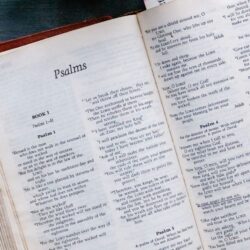
Psalms is one of the longest books in the Bible. Based on what many scholars and experts assert, we would expect to find this doctrine in such a long and prominent Bible book. Is the Trinity in Psalms?
Does it strike you as odd that even the most scholarly proponents of the doctrine admit it is neither understandable nor explainable?
“The most difficult thing about the Christian concept of the Trinity is that there is no way to completely understand it or explain it. God is infinitely greater than we are; therefore, we should not expect to be able to fully understand Him. But we do trust the Bible, which teaches that the Father is God, Jesus is God, and the Holy Spirit is God. At the same time, the Bible also teaches there is only one God. So, the one God exists in three Persons.
It’s possible to understand some facts about the Trinity and some of the relationships the different Persons of the Trinity have to one another. But, ultimately, how a single Being can exist in three distinct Persons is incomprehensible to us. Our inability to understand, however, does not mean the doctrine of the Trinity is untrue or unbiblical. The word Trinity is not found in Scripture. It is a useful term in discussions of the triune God, as we speak of three coexistent, co-eternal divine Persons who are One. Although the word itself is not found in the Bible, the concept represented by the word Trinity certainly is.”-–GotQuestions.org
Psalm 2:2 – “The kings of the earth take their stand And the rulers take counsel together Against Yahweh and against His Messiah” (LSB). This verse is quoted at Acts 4:26 – “against the Lord and against His Messiah.” (CSB). – Jesus is referred to as God’s Messiah to the world. Thus, Yahweh God is in control of Jesus, which means Yahweh God is superior to Jesus. Without equality, the Trinity doctrine collapses. It also shows that Yahweh and Jesus are not the same “being”, “essence”, or “substance”, which are all Trinitarian terms.
Psalm 2:11,12 – “Serve Yahweh with fear . . . Kiss the Son” (LSB). “Worship the LORD with reverence” (NASB). “This phrase emphasizes the importance of reverence and awe in worshiping God” (Bible Hub Study Bible). It shows that Yahweh is the one to serve and worship, while submitting to his Messiah, the Son of God, Jesus Christ.
Psalm 5:1,2,7 – “O Yahweh . . . my King and my God . . . I will worship in fear of you” (LSB). Yahweh is referred to as the God to worship. Yahweh is not Jesus the Son of God, the Messiah.
Psalm 8:4,5 – “What is man that You remember him, And the son of man that You care for him? Yet you have made him a little lower than the angels and You crown him with glory and majesty” (LSB). Who made Jesus lower than angels? Who crowned Jesus? Who brought Jesus back to life? It was “Yahweh our Lord” (Psalm 8:1,9 LSB). Why does Jesus taste death for everyone?
Psalm 8:4,5 is quoted at Hebrews 2:6,7, and then explained to apply to Jesus. “We do see Jesus, who was made lower than the angels for a little while, now crowned with glory and honor because he suffered death, so that by the grace of God he might taste death for everyone” (Hebrews 2:9 NIV). Indeed, “God presented Christ as a sacrifice of atonement, through the shedding of his blood” (Romans 3:25 NIV).
Jesus is said to ‘have been made lower than angels’ while he was on earth. Since “Yahweh” is “my holy God, who never dies” (Habakkuk 1:12 NJB), and, unlike Jesus, has never been “seen” (John 1:18; 1 John 4:9), Jesus cannot be “Yahweh”. Also, Yahweh God has never been less than anyone else, so Jesus cannot be God.
Psalm 9:7 – “Yahweh abides forever; He has established His throne for judgment” (LSB). “This phrase emphasizes the eternal nature of God, contrasting the temporary nature of human life and kingdoms. In biblical context, God’s eternal existence is a recurring theme, as seen in passages like Isaiah 40:28, which speaks of the everlasting God. The Hebrew word for “abides” suggests a continuous, unchanging presence, reinforcing the idea of God’s immutability. This eternal aspect of God provides assurance to believers that His promises and His presence are constant and reliable, unlike the fleeting nature of earthly powers” (Bible Hub Study Bible). Yahweh has always been “eternal” (1 Timothy 1:17 NIV), in contrast to Jesus, who had an “origin” to his life (Micah 5:2), and also “was dead” (Revelation 1:18).
Psalm 16:4 – “The pains of those who have bartered for another god will be multiplied” (LSB). Psalm 16:2,7,8 (LSB) presents “Yahweh” as being “the true God” (Jeremiah 10:10 LSB). Jesus further clarified this for us by identifying his “Father” as “the only true God” (John 17:3). However, by promoting Jesus as God, in addition to the Father as God, Trinitarians have, unfortunately, “bartered for another god’, who is the one borrowed from pagan mythology, namely, the dual-natured eternal, God-man. Despite Trinitarian denials, this ‘other god’, who is part of a 3-in-1 God, is essentially a form of polytheism.
Psalm 18:2 – “Yahweh is my rock and my fortress and my deliverer, My God, my rock, in whom I take refuge” (LSB). The use of “rock” here is clearly figurative, or symbolic of Yahweh, the God to take refuge in. However, Trinitarians have sometimes claimed ‘strained out a gnat’ by connecting this with 1 Corinthians 10:4, “all drank the same spiritual drink, for they were drinking from a spiritual rock which followed them, and the rock was Christ” (LSB). The “rock” here is also plainly identified as being “a spiritual rock”, and identifies it as “Christ”. Trinitarians, in their effort to grab for any straw to support their dogma, connect this “rock”, Christ”, as being the Old Testament “rock”, Yahweh. However, the symbolism is different. This “rock” is a something to be “drinking from”. Trinitarians fail to connect the important truth that “Jesus stood and cried out, saying, ‘If anyone is thirsty, let him come to Me and drink. “He who believes in Me, as the Scripture said, ‘From his innermost being will flow rivers of living water'”‘” (John 7:37,38 LSB).
Psalm 22:1 – “My God, my God, why have you forsaken me?” This was predictive of Jesus crying out to God, as recorded at Matthew 27:46; Mark 15:34, and is a very clear indication that Jesus isn’t God. Obviously, Jesus is not claiming to be God, because he’s crying out to God, his God. Anyone who calls out to “My God”, can’t be God himself.
Psalm 23:1 – “Yahweh is my shepherd” (LSB). Yahweh God is the ultimate shepherd. Trinitarians, however, claim that since Jesus said, “I am the good shepherd; the good shepherd lays down His life for the sheep” (John 10:11 LSB), Jesus is Yahweh God. However, later in John 10, Jesus said, “My Father, who has given them to Me, is greater than all” (John 10:29 LSB). This means that Jesus not only can’t be Yahweh, he’s not even equal to Yahweh, as Trinitarians claim.
Psalm 24:1 – “The earth is Yahweh’s (LSB). The earth belongs to Yahweh because he created it. “The God, Yahweh, Who created the heavens . . . Who spread out the earth” (Isaiah 42:5 LSB). Jesus is not the creator, because “God . . . spoke to us through a son . . . through whom he created the universe” (Hebrews 1:1,2 NAB). Yahweh God created everything through Jesus.
Psalm 25:1,2 – “To You, O Yahweh, I lift up my soul, O my God, in You I trust” (LSB). The Hebrew parallelism poetry indicates that Yahweh is God, the one to whom prayers should be directed (Matthew 6:9), as the supreme being.
Psalm 29:2 – “Ascribe to Yahweh the glory of His name’ (LSB). Trinitarians claim Jesus is Yahweh, but the scriptures prove otherwise. Jesus said, “I came in the name of my Father” (John 5:43). “Do we not all have one Father? Has not one God created us?” (Malachi 2:10 NASB). Yahweh is identified as the Father only in the scriptures, when we look at them objectively.
Psalm 30:12 – “O Yahweh my God, I will give thanks to You forever” (LSB). Yahweh is identified as God, the one who one is to be prayed to, as Jesus instructed, “Pray, then, in this way: ‘Our Father who is in heaven'” (Matthew 6:9 LSB).
Psalm 31:5 – “Into Your hand I commit my spirit, You have ransomed me, O Yahweh, the God of truth” (LSB). The fulfillment of this prophecy is recorded by Luke: “Jesus, crying out with a loud voice, said, ‘Father, INTO YOUR HANDS I COMMIT MY SPIRIT.’ Having said this, He breathed his last” (Luke 23:46 LSB). These two scriptures identify Yahweh as the Father. Yahweh ransomed Jesus from death, which is another reason why Jesus can’t be God, because “Yahweh . . . God . . . never dies” (Habakkuk 1:12 NJB).
Psalm 32:10 – “He who trusts in Yahweh, lovingkindness shall surround him” (LSB). “I will put my trust in him” (Hebrews 2:13 NAB). Connecting these two scriptures indicates that Yahweh is God the Father only, not the Son, the holy Spirit, or Trinity. Notice the confirmation of this fact: “This phrase emphasizes the theme of trust and reliance on God, which is a central tenet throughout the Bible. The speaker, likely Jesus, expresses His complete dependence on the Father, highlighting His humanity and His role as the perfect example of faith. This echoes the sentiment found in Isaiah 8:17” (Bible Hub Study Bible note).
Psalm 33:6 – “By the word of Yahweh the heavens were made” (LSB). Yahweh is the “God” who “In the beginning . . . created the heavens and the earth” (Genesis 1:1), “through the Son” (Hebrews 1:1,2). This is why “Jesus Christ, the Son of God” (Mark 1:1), cannot be Yahweh God.
Psalm 34:20 – “He keeps all his bones, Not one is broken” (LSB). The eyewitness account of the death of Jesus, in reporting the fulfillment of this prophecy, records that, “one of the soldiers pierced His side with a spear, and immediately blood and water came out . . . these things came to pass in order that the Scripture would be fulfilled, ‘NOT A BONE OF HIS SHALL BE BROKEN'” (J0hn 19:34-36 LSB). Since “Christ died”, and “was dead” (1 Corinthians 15:3; Revelation 1:18), and “Yahweh . . . God . . . never dies” (Habakkuk 1:12), Jesus Christ cannot be God.
Psalm 35:1 – “Contend, O Yahweh, with those who contend with me” (LSB). The Psalmist David’s prayer is to Yahweh, the same God the “Father” that Jesus instructed us to pray to (Matthew 6:9).
Psalm 36:5,7 – “Your lovingkindness, O Yahweh . . . How precious is your lovingkindness, O God!” (LSB). Yahweh is identified as God. Jesus also referred to him in this same way, “LOVE YAHWEH YOUR GOD WITH ALL YOUR HEART . . . ” (Mark 12:30 LSB margin), quoting Deuteronomy 6:5. Jesus indicated he isn’t Yahweh (Matthew 22:41-44).
Psalm 37:3,7,9,17,18,34 – “Commit your way to Yahweh . . . Be still in Yahweh . . . those who hope for Yahweh, they will inherit the land . . . Yahweh sustains the righteous. Yahweh knows the days of the blameless . . . Hope for Yahweh and keep His way” (LSB). These phrases all indicate that Yahweh is God.
Psalm 38:1; Psalm 39:12; Psalm 40:5,8,9,13,17; 41:4,10,13 – “O Yahweh, reprove me not in Your wrath . . . ” (LSB). “Hear my prayer, O Yahweh” (LSB). “Many. O Yahweh my God, are the wondrous deeds You have done . . . I desire to do Your will, O my God . . . O Yahweh, You know . . . Be pleased, O Yahweh, to deliver me; Make haste, O Yahweh, to help me . . . Do not delay, O my God” (LSB). “O Yahweh, be gracious to me . . . Blessed be Yahweh, the God of Israel” (LSB). David is praying to Yahweh as his God. Jesus directed us to pray to the Father (Matthew 6:9). Yahweh is God the Father. Jesus indicated that he is not Yahweh God (Matthew 22:41-46).
Psalm 45:6 – “Your throne, O God, is forever and ever. The scepter of your kingdom is a scepter of uprightness” (ESV). – The footnote on this verse in the NAB (Psalm 45:7) explains: “O God: the king, in courtly language, is called ‘god’, i. e., more than human, representing God to the people”. Like the Israelite king, Jesus is called “god”, due to the fact that he represents God to the people. “God is your throne forever and ever”. Psalm 45:6 is also accurately translated: “God has enthroned you for all eternity” (Psalm 45:6 REB). “Your throne is a throne of God, endures forever and ever” (Psalm 45:6 NRSV). “Your throne is from God forever and ever” (Psalm 45:6 NJB). Psalm 45:6 predicts the Son of God, Jesus Christ as God’s king upon God’s throne.
“About the Son he says, ‘Your throne, O God, will last forever and ever'” (Hebrews 1:8). This is quoted from Psalm 45:6, which refers to the Israelite king as “God”. “God is your throne forever and ever.” Hebrews 1:8 (NRSV margin; AAT). Jesus and God are separate and distinct individuals, with God superior. They are not of the same “essence”, “substance”, or “being”, as Trinitarians claim.
Psalm 45:11 – “Then the king will desire your beauty, Because He is your Lord, bow down to him” (LSB). The Israelite king is not only called “God” in verse 6, he is also called “Lord” here in verse 11. This is, of course, predictive of Christ, but the point is that a powerful human, who is obviously not God, is also called “God” and “Lord”. It shows us that simply being called “God” and “Lord” doesn’t make someone Almighty God. Examining the scriptures with an open mind in their context thus exposes the unscriptural nature of Trinitarian claims.
Psalm 47:1,2 – “Make a loud shout to God . . . For Yahweh Most High is fearsome” (LSB) . “God” is referred to as “Yahweh Most High”. The scriptures tell us that “God” the “Father” is “Yahweh” (Malachi 2:10,12 ESV; LSB), and “Yahweh” is “God Almighty” exclusively (Genesis 17:1 LSB).
Psalm 48:1 – “Who swear by the name of Yahweh And bring remembrance to the God of Israel” (LSB). “Yahweh” is referred to as “the God of Israel”. The scriptures tell us that “God” the “Father” is “Yahweh” (Malachi 2:10,12 ESV; LSB), and “Yahweh” is “God Almighty” exclusively (Genesis 17:1 LSB).
Psalm 50:1 – “The Mighty One, God, Yahweh, has spoken” (LSB). The above same principles of identification apply here, which exclude Jesus and the holy Spirit from being God.
Psalm 51:11 – “Do not take from me your holy spirit” (NAB). Not only the phraseology, but the fact that the holy spirit is referred to as “your holy spirit”, that is God’s holy spirit, indicates it is not a person. Since “the holy Spirit” is “the Spirit of your Father” (Luke 12:12; Matthew 10:20), it is the holy Spirit of God the Father. Without the holy Spirit being a person, the Trinity doctrine collapses.
Psalm 54:1,6 – “O God, save me by your name . . . I will give thanks to your name, O Yahweh” (LSB). These statement emphasize the fact that God’s name is “Yahweh”. Trinitarians like to use the title LORD to describe God because it hides the fact that God has a unique name, that sets him apart from all others, including Jesus. This has influenced translators to substitute LORD where the Old Testament text has YHWH (Yahweh).
Psalm 55:22,23 – “Cast your burden upon Yahweh and He will sustain you . . . You, O God, will bring them down . . . But I will trust in You”. Once again, the fact that God’s name is Yahweh is emphasized. Never do we see God called Jesus, the holy Spirit, or the Trinity.
Psalm 59:1,3; 65:1,2; 69:1,6,13,16,32,33 – “Deliver me from my enemies. O my God . . . Fierce men launch an attack against me . . . O Yahweh”. “O God . . . You who hear prayer”. “Save me, O God . . . O Lord Yahweh of hosts . . . my prayer is to You, O Yahweh . . . Answer me, O Yahweh . . . You who seek God . . . for Yahweh hears the needy” (LSB). The Psalmist, David, prays earnestly to Yahweh God for saving help, and extols God’s saving power. Jesus confirmed that prayer is to go to Yahweh God the Father (Matthew 6:9). We should have “no other gods before” “Yahweh your God” (Exodus 20:1,2 LSB), including in our prayers. There is no Biblical directive, or authorization to pray to anyone else; not to Jesus, not to the holy spirit, not Mary, or “saints”, and not to any Trinity.
Psalm 70:1; 71:1,4,5 – “O God, hasten to deliver me; O Yahweh, hasten to my help!” (LSB). “In You O Yahweh, I have taken refuge . . . Protect me O my God . . . O Lord Yahweh, You are my trust from my youth” (LSB). Here, once again, the Psalmist, David, prays earnestly to Yahweh God for saving help, and extols God’s saving power. Jesus confirmed that prayer is to go to Yahweh God the Father (Matthew 6:9). We should have “no other gods before” “Yahweh your God” (Exodus 20:1,2 LSB), including in our prayers. There is no Biblical directive, or authorization to pray to anyone else; not to Jesus, not to the holy spirit, not Mary, or “saints”, and not to any Trinity.
Psalm 72:18 LSB – “Blessed be Yahweh God . . . who alone works wondrous deeds”. Yahweh God the Father alone is exclusively said to be the one “who alone works wondrous deeds”, as “the only true God” (John 17:1,3). This eliminates anyone else from being “the only true God”, including Jesus, who was foretold in this Psalm to “have dominion from sea to sea And from the River to the ends of the earth” (Psalm 72:8 LSB).
Psalm 77:1,11,16 – “My voice rises to God . . . I shall remember the deeds of Yah . . . The waters saw You, O God” (LSB). The psalmist prays to “Yah”, an abbreviation of Yahweh, referring to him as God.
Psalm 82:1 – “God takes His stand in the congregation of the one true God; He judges in the midst of gods” (LSB margin). We can see from the scriptures, that “the one true God , , , judges in the midst of the gods”, means others can rightly be called “gods”.
Psalm 82:6 – “I said, ‘Gods you are, and sons of the Most High'” (NETS). “I said, Gods ye are, Yea, sons of the Highest are ye all” (EB). Israelite judges and rulers are called “Gods”, which proves that being called “God” doesn’t make someone Yahweh God Almighty. In responding to the false charge that they were “stoning” him, “for blasphemy, because [he], a mere man claim[ed] to be God” (John 10:33 NIV), Jesus reasoned with his false accusers, “God said ‘I say, you are “gods”‘”, quoting from Psalm 82:1,6. If those sinful people who received God’s word, Israelite judges and rulers, are called gods, Jesus reasoned, why do you call it blasphemy when I say, “I am God’s Son?”- My father set me apart, and sent me into the world. – Jesus had said all along that he was “God’s Son”, not “God the Son”. In fact, the term, “God the Son”, is never used in the Bible.
Psalm 83:18 – “That they may know that You alone — Your name is Yahweh — Are the Most High over all the earth” (LSB). Yahweh is exclusively the supreme being, “the Most High over all the earth”. “Yahweh appeared to Abraham and said to him, ‘I am God Almighty” (Genesis 17:1 LSB). Yahweh, early on in the scriptures, identifies himself as, “God Almighty”. Later on, the “one God”, “Yahweh”, is identified as being the “father” (Malachi 2:10,12 LSB; NASB). Jesus clarified the matter even further by saying his “Father” is “the only true God” (John 17:1,3). Since Jesus plainly said, “the Father is greater than I am” (John 14:28 GWT), he is obviously not even equal to his Father.
Psalm 84:8 –“O Yahweh God of hosts, hear my prayer . . . How blessed is the man who trusts in You” (LSB). The psalmist prays to Yahweh God, requesting him to hear his prayer. Since Jesus instructed us to pray to the “Father”, we can conclude that “Yahweh God” is the “Father” (Psalm 84:8; Matthew 6:9).
Psalm 89:6-8 – “Who in the sky is comparable to Yahweh? Who among the sons of the mighty is like Yahweh, A God greatly dreaded in the council of the holy ones, And fearsome above those who are around Him? O Yahweh God of hosts, who is like You, O mighty Yah?” (LSB). “In ancient Near Eastern cultures, the heavens were populated with various deities and spiritual entities. However, this verse asserts that none of these can compare to the LORD, the God of Israel. This echoes the monotheistic belief central to the Hebrew faith, distinguishing it from surrounding polytheistic religions. The rhetorical question underscores God’s uniqueness and sovereignty” (Bible Hub Study Bible). LORD is actually a substitution, not a translation, for “Yahweh”, whom this study Bible admits is unique among all the so-called gods. The name “Yahweh”, not LORD, sets him apart from all others.
Psalm 89:26,27 – “He will call to Me, ‘You are my Father, my God, and the rock of my salvation.’ I shall also make him My firstborn, The highest of the kings of the earth” (LSB). Trinitarian commentators sometimes claim that King David, and/or his son, King Solomon, is/are referred to here. But that cannot be, since neither of them were firstborn sones. Therefore, these verses are obviously predictive of Jesus, and quote “Yahweh” (verse 15,18) as speaking, highlighting the fact that Jesus is his “firstborn”, the “highest of the kings of the earth”. This harmonizes with New Testament statements, such as Jesus referring to “my Father” as “my God” (John 20:17 ESV; Revelation 3:12 ESV), and Jesus being referred to as “the firstborn of all creation . . . the firstborn from the dead, so that He Himself will come to have first place in everything”, and “the Lord of lords and king of kings” (Colossians 1:15,18 LSB; Revelation 17:14 NAB).
Psalm 90:2,13 LSB – “Even from everlasting to everlasting, You are God . . . O Yahweh”. “Yahweh” is referred to as “God”. Only “Yahweh” is “from everlasting” (Psalm 90:2,13 LSB), Jesus life had an “origin” (Micah 5:2 NRSV). However, because their dogma asserts that Jesus is eternal, Trinitarians claim that “only begotten” means “‘unique’ or ‘one of a kind'” (The Forgotten Trinity, p 58). “Whose origin is from of old, from ancient days” (Micah 5:2 NRSV). The Bible is very clear that Jesus had an “origin”, a beginning to his life. Only “Yahweh” “God” is “from everlasting” (Psalm 90:2,13 LSB). Since Jesus’ life had a beginning, he has not been eternal. “He will be great and will be called the Son of the Most High, Yahweh God will give Him the throne of His father David” (Luke 1:32 LSB margin). Jesus has forefathers, such as David, but Yahweh God doesn’t have any forefathers, since he is “from eternity” (Psalm 90:2 NAB). This is another reason why Jesus cannot be God.
In Matthew 22:42-45, Jesus shows that the Messiah would be greater than David. But he also shows us something else. In asking, “What do you think about the Christ, whose Son is he?”, Jesus proves that David’s “Lord” is the Christ, and also that Christ is the “Lord” that Yahweh was speaking to. In saying that Christ would be at Yahweh’s right hand, it also proved that Christ cannot be Yahweh, which exposes as fraudulent a key component of Trinitarianism. Verse 45 – The answer is that Jesus is more than the son of David, he is the Son of God, but he is not greater than, or equal to, Yahweh, who is God the Father. Jesus clearly shows by this that he is not Yahweh.
Psalm 91:1,2 – “He who abides in the shadow of the Most High Will abide in the shadow of the Almighty. I will say to Yahweh, ‘My refuge and my fortress, My God, in who I trust'” (LSB). The opening lines of Psalm 91 identify him in four ways: (1) “Most High”; (2) “the Almighty”; (3) “Yahweh”; and (4) “God”. The first three of these exclude all others, including Jesus.
Psalm 92:1,2,13 – “It is good to give thanks to Yahweh, And to sing praises to your name, O Most High . . . Planted in the house of Yahweh, They will flourish in the courts of our God” (LSB). In Psalm 92, he is called by three titles: (1) “Most High”; (2) “Yahweh”; and (3) “our God”. These three titles exclude all others, including Jesus. Even though some are called “God” in a sense (Exodus 7:1; Psalm 45:6; 82:1,6; John 1:1), they are not “our God”.
Psalm 94:1,10 – “O Yahweh, God of vengeance” (vs. 1 LSB). “He knows everything” (vs. 10 NLT). Yahweh God is the one who knows everything. “The one who has perfect knowledge is with you” (Job 36:4 NIV). There is only one individual who has ever had “perfect knowledge”. Yahweh God the Father is ‘the one with perfect knowledge’. Referring to “Yahweh”, the psalmist says, “He knows everything” (Psalm 94:1 LSB, 10 NLT). Does Jesus have perfect knowledge? No. Jesus admitted that he did not know when the end would be, but only his Father did (Matthew 24:36; Mark 13:32).
Psalm 94:22,23 – “Yahweh has been my stronghold And my God . . . Yahweh our God will destroy them” (LSB). It is very clear from this Psalm that Yahweh is God.
Psalm 95:3 – “For Yahweh is a great God And a king above all gods” (LSB). It is obvious that Yahweh alone is “the great God”, the one over everything and everyone else. The Trinity, with its God the Father, God the Son, and God the holy Spirit, is, in reality, a form of polytheism.
Psalm 95:7 – “Come, let us worship and bow down. Let us kneel before Yahweh our Maker. For he is our God” (LSB). This Psalm makes clear that Yahweh is God and is the one and only one to be worshipped. Notice how this verse is quoted and applied in the New Testament: “Therefore, as the holy Spirit says, ‘Oh, that today you would hear his voice'” (Hebrews 3:7 NAB). Trinitarians sometimes use this verse to ‘prove’ the holy Spirit is a person, in support of the Trinity doctrine. However, Hebrews 4:4-7 indicates that God spoke through David, the writer of Psalm 95, which is quoted in Hebrews 3:7-11. Saying, “the holy Spirit says,” is simply an indiction that David, the writer Psalm 95, was “inspired by God” (2 Timothy 3:16). As David himself said, “the spirit of Yahweh speaks through me” (2 Samuel 23:2 NJB). Thus, Hebrews 3:7 gives no evidence of anything about the Trinity doctrine.
Psalm 96:4,8,13 – “Great is Yahweh and greatly to be praised: He is more fearsome than all other gods . . . Worship Yahweh . . . he is coming to judge the earth” (LSB). Yahweh is the only God to be praised and worshipped. Jesus said, “the true worshippers will worship the Father” (John 4:24). Christians are told to, “worship God” (Revelation 19:10;22:9). Yahweh is the supreme judge of all the earth. “God . . . will judge the world with justice through a man he has appointed, and he has provided confirmation for all by raising him from the dead” (Acts 17:30,31 NAB). Yahweh is obviously not Jesus, and Jesus is obviously not God.
Psalm 97:1,7 – “Yahweh reigns . . . Worship Him, all you gods” (LSB). Yahweh is the only one to be worshipped. Notice how verse 7 reads in the Greek Septuagint Version (LXX) which early Christians often used and quoted from: “Let all who do obeisance to carved images be put to shame, those who boast in their idols. Do obeisance to him, all his angels” (NETS). The last phrase of this verse in the Greek Septuagint Version is quoted at Hebrews 1:6, and applied to Jesus. The Greek word for “obeisance” is “proskyneo”, which basically means “to bow down to”, “do homage to”, and can include worship, but doesn’t intrinsically mean worship. In fact, Jesus himself said that “the true worshippers will worship the Father” (John 4:24), so worship is not the best rendering of proskyneo here. Due to Trinitarian bias, many translations render proskyneo as “worship” here, but Jesus said, “You will worship the Father” (John 4:21). However, most translations translate Hebrews 1:6 like this: “Again when he leads the firstborn into the world, he says: ‘Let all the angels of God worship him'” (NAB). Any “worship’ given to Jesus would only be relative, since “God” is said to “lead the firstborn into the world”. However, Hebrews 1:6 is better rendered, “Again, when he brings his First-born into the world, he says: Let all the angels of God pay him homage [Greek, proskyneo]'” (NJB), and Hebrews 1:6 -“Again, when he presents his firstborn to the world, he says, ‘Let all God’s pay him homage'” (REB), and “he says, ‘And let all God’s angels bow before [Greek, proskyneo] him'” (AAT). Jesus is given great honor, but not worship.
Psalm 99:5,6,8,9 – “Exalt Yahweh our God And worship at the footstool of His feet . . . They would call upon Yahweh and He would answer them . . . O Yahweh our God, You answered them; You were a forgiving God to them . . . Exalt Yahweh our God and worship at His holy mountain, For holy is Yahweh our God” (LSB). In this Psalm, “Yahweh” is called “our God” several times. He is worshipped, answers prayers, forgives, is called “holy” and worshipped. These are all qualities of Almighty God, and set him apart from everyone else, including Jesus.
Psalm 100:1-3 – “Make a loud shout to Yahweh, all the earth. Serve Yahweh with gladness; Come before Him with songs. Know that Yahweh, He is God; It is He that has made us and not we ourselves; we are His people and the sheep of His pasture” (LSB). This Psalm gives lots of evidence that Yahweh is the one true Almighty God, the Creator, who is to be praised, exalted, and served. All this sets him apart from all others, including Jesus.
“You send out your spirit, they are created”—Psalm 104:30 NAB. According to the scriptures, Yahweh sends out his holy Spirit to do his work, so the holy Spirit cannot be Yahweh, nor can it be a person.
Psalm 101:1 – “To, You, O Yahweh, I will sing praises” (LSB). Praises are sung to God. Yahweh is God.
Psalm 102:1 – “O Yahweh, hear my prayer! . . . You, O Yahweh, abide forever” (LSB). Jesus advised us to pray to “Our Father” (Matthew 6:9). Yahweh is God the Father. Only ‘Yahweh God never dies’ (Habakkuk 1:12 NJB). Since “Christ died” and “was dead” (1 Corinthians 15:3; Revelation 1:18), Jesus cannot be God.
Psalm 102:25,26 – “Of old you founded the earth, And the works of Your hands. “Even they will perish, but You will remain” (LSB). This quote from Psalm 102:25-27 is applied in the New Testament to the Son of God, Jesus Christ, so it is claimed by Trinitarians that this makes Jesus God. “But, of the Son he says . . . ‘In the beginning, Lord, you founded the earth, and the heavens are the work of your hands; they will perish, but you remain; they will all wear out like clothing; like a cloak you will roll them up, and like clothing they will be changed. But you are the same, and your years will never end.'”( Hebrews 1:8,10-12 NRSV). Since it is stated here in Hebrews chapter 1 just a few verses earlier that it was “the Son” “through whom he [God] created the universe” (1:3 NAB), it could not be the case that Jesus is Yahweh God. Since, “it was through [the Son] God created everything” (Colossians 1:15,16 NLT), Jesus could correctly be said to have “founded the earth, and the heavens,” that is, he is the proxy through whom God worked to create the universe.
Psalm 104:30 – “Send forth your spirit, they are created” (NAB). The holy Spirit is described as “your [God’s] Spirit”. This verse identifies the holy Spirit as God’s “power” (Luke 1:17; Acts 1:8) being sent forth for creation, as it was described at the beginning of the Bible. “And the Spirit of God was hovering over the surface of the waters” (Genesis 1:2 LSB). Since the Hebrew word “ruach” can also be translated as “breath” (Psalm 104:30 NLT), we have even more evidence against the Trinitarian claim of the personhood of the holy Spirit.
Psalm 106:47,48 – “Save us, O Yahweh our God . . . To give thanks to Your holy name” (LSB). Yahweh is identified as “our God”. His people should ‘give thanks to his holy name’. Yahweh is identified as our ultimate savior. Trinitarians claim that since Jesus is “our Savior” (2 Peter 1:11), he is God. However, a careful examination of the scriptures reveals that Jesus is “always able to save those who approach God through him” (Hebrews 7:25 NAB), and also “the only God, our savior, through Jesus Christ” (Jude 25 NAB). The scriptures reveal that, although Jesus is our Savior, Yahweh God is our ultimate savior.
Psalm 110:1 – “Yahweh says to my Lord: ‘Sit at My right hand Until I put your enemies as a footstool for Your feet'” (Psalm 110:1 LSB). “The LORD (Father) says to my Lord (the Messiah, His Son), “Sit at My right hand Until I make Your enemies a footstool for Your feet’.” (Psalm 110:1 Amplified Bible). According to the scriptures, Jesus is not Yahweh, and Yahweh is someone other than Jesus, who is supreme over everyone, including Jesus. However, Trinitarians, using equivocation, would have us believe the scripture reads something like, ‘God said to God’, or “Yahweh said to Yahweh”. But that’s not what the scripture says, so don’t fall for this Trinitarian sleight of hand. According to the Hebrew text, the scripture reads, ‘YHWH is speaking to Adonai (Lord)’. Jesus is to sit at Yahweh’s right hand, which proves he isn’t Yahweh. Also, Yahweh will make Jesus’ enemies Jesus’ footstool, which shows that Yahweh is more powerful than Jesus, and is the one who is in control. According to the scriptures, Jesus is the Son of Yahweh, so he can’t be Yahweh. In Matthew 22:44 Jesus shows that the Messiah would be greater than David. Matthew 27:45 shows us that Jesus is more than the son of David, he is the Son of God, but he is not greater than, or equal to Yahweh, who is God the Father. Jesus clearly shows by this that he is not Yahweh. (Also see Isaiah 9:6; Matthew 14:33; Psalm 45:16).
Psalm 110:1 is quoted at Acts 2:34,35, and applied as follows, “God has made Him both Lord and Christ—this Jesus whom you crucified” (Acts 2:36 LSB). “God” is thus shown to be Yahweh, who is clearly both separate from, and superior to, Jesus Christ. The two are obviously not of the same “substance”, “essence”, “nature”, or “being”.
Hebrews 10:13 – “He waits for his enemies to be made his footstool.” Who will make them his footstool? – His Father, Almighty God, who is more powerful than he is. “A declaration of YHWH to my Lord: ‘Sit at my right hand, Until I make Your enemies Your footstool'” (Psalm 110:1 LSV). Yahweh God will make Jesus’ enemies his footstool. This lack of equality is good evidence the Trinity is not in Hebrews.
“I called upon the name of Yahweh . . . I shall . . . call upon the name of Yahweh . . . To You I shall . . . call upon the name of Yahweh” (Psalm 116:4,13,17 LSB). The name “Yahweh” marks him as unique among all others, and appears 6,823 times in the Hebrew-Aramaic text of the Old Testament.
“The stone which the builders rejected Has become the chief corner stone. This is from Yahweh; It is marvelous in our eyes”(Psalm 118:22,23 LSB). Jesus quoted and applied this scripture to himself in conclusion to his parable of the vineyard (Matthew 21:42; Mark 12:10). In the parable, the “son” represents Jesus, and “the owner of the vineyard” represents Jesus’ Father (Matthew 21:33,37-40). “The vine-growers . . . killed” the landowners’ son, represents Jesus death at the instigation of the religious leaders. Both of these facts debunk the Trinity doctrine.
Psalm 130:1 – “Out of the depths I called to You, O Yahweh. O Lord, hear my voice” (LSB). The psalmist, under inspiration, is praying to Yahweh God. Jesus said we should pray to the “Father in heaven” (Matthew 6:9), indicating that Yahweh God is the Father. This debunks the Trinitarian claim that Jesus is also Yahweh God.
Psalm 132:11,12 – “Yahweh has sworn to David a truth from which He will not turn back: Of the fruit of your body I will set upon your throne . . . Their sons also shall sit upon your throne forever” (LSB). “This promise indicates the establishment of a ruler from David’s line, signifying both a literal and a prophetic fulfillment. Historically, this was partially realized through Solomon and subsequent kings of Judah. However, the ultimate fulfillment is seen in Jesus Christ, who is recognized as the eternal King in the New Testament. The throne symbolizes authority, governance, and the continuation of David’s dynasty. In a prophetic sense, this points to the eschatological hope of Christ’s eternal reign, as described in Revelation 11:15, where He is declared the King of kings” (Bible Hub Study Bible). The prophecy is quoted and explained by Peter at the start of Christianity: “Since he was a prophet and knew that God had sworn an oath to him to seat one of his descendants upon his throne.” (Acts 2:30 – NAB) – God controlled everything, and he seated Jesus on “the throne of his father, David” (Luke 1:32), as foretold in fulfillment of Psalm 132:11. God is clearly shown to be someone other than Jesus, and greater than Jesus. Both of these facts debunk the Trinity doctrine.
Psalm 135:1-3,5,6 – “Praise the name of Yahweh . . . In the courts of the house of our God! Praise Yah, for Yahweh is good . . . I know that Yahweh is great And that our God is greater than all gods. Whatever Yahweh pleases, He does” (LSB). There are several things mentioned in this Psalm that set Yahweh apart from, and higher than, everyone else, including Jesus. His ‘name is praised’. He is called “our God”. He is “greater than all gods”, and ‘does whatever he pleases’. In sharp contrast, Jesus admitted, “I seek not to please myself but him who sent me” (John 5:30 NIV). These facts clearly elucidate Yahweh God the Father’s superiority over Jesus, and the lack of any equality. This lack of equality devastates the Trinity doctrine’s claim of such equality.
Psalm 136:1,2 – “Give thanks to Yahweh . . . the God of gods” (LSB). What a powerful expression of the uniqueness of the single all powerful being in existence, that he alone, among any other possible claimants, is “THE God of gods”. While Yahweh and Jesus share the title “Lord of lords”, the title “the God of gods” is unique to Yahweh. This shows Yahweh God the Father’s supremacy over Jesus, as his “God and Father” (Revelation 1:6), debunking the “Jesus is God” and “equality” myths of Trinitarianism.“The phrase emphasizes the monotheistic belief central to the faith of Israel, asserting that Yahweh is the ultimate authority above all spiritual entities. This is consistent with passages like Deuteronomy 10:17, which describes God as “God of gods and Lord of lords,” highlighting His unmatched power and authority.” (Bible Hub Study Bible).
The Psalmist asks: “Yahweh . . . Where shall I go to escape your spirit? Where shall I flee from your presence” (Psalm 139:7 NJB). Yahweh’s spirit represents God’s presence, which shows the holy Spirit isn’t a person. The Hebrew word “ruach” can also be translated “breath” (Psalm 104:30 NLT), which is another powerful clue that the holy Spirit is not a person. This scripture also does not mean that Yahweh God is omnipresent, as many claim. It means that Yahweh God can “send” his “spirit” (Psalm 104:30 NRSV) anywhere. The thought of Psalm 139:7 is similar to Jeremiah 23:24, “‘Can a man hide himself in hiding places So I do not see him?’ declares Yahweh. Yahweh can see anywhere and everywhere by means of his holy Spirit.
Psalm 146:1,2; 147:1 – “Praise Yah! . . . I will sing praises to my God”. “Praise Yah! For it is good to sing praises to our God” (LSB). “Yahweh” is referred to as “God”. Jesus, in his quote and application of Psalm 110:1 at Matthew 22:41-45, indicated that he isn’t Yahweh, but is the Son of Yahweh.
Psalm 149:1,4,6 – “Sing to Yahweh a new song . . . For Yahweh takes pleasure in His people . . . Let the exaltations of God be in their throats” (LSB). Once again, “Yahweh” is referred to as “God”. Jesus, in his quote and application of Psalm 110:1 at Matthew 22:41-45, indicated that he isn’t Yahweh, but is the Son of Yahweh.
Is the Trinity in Psalms? No, an objective analysis of the entire lengthy book of Psalms book reveals the Trinity is not in Psalms.