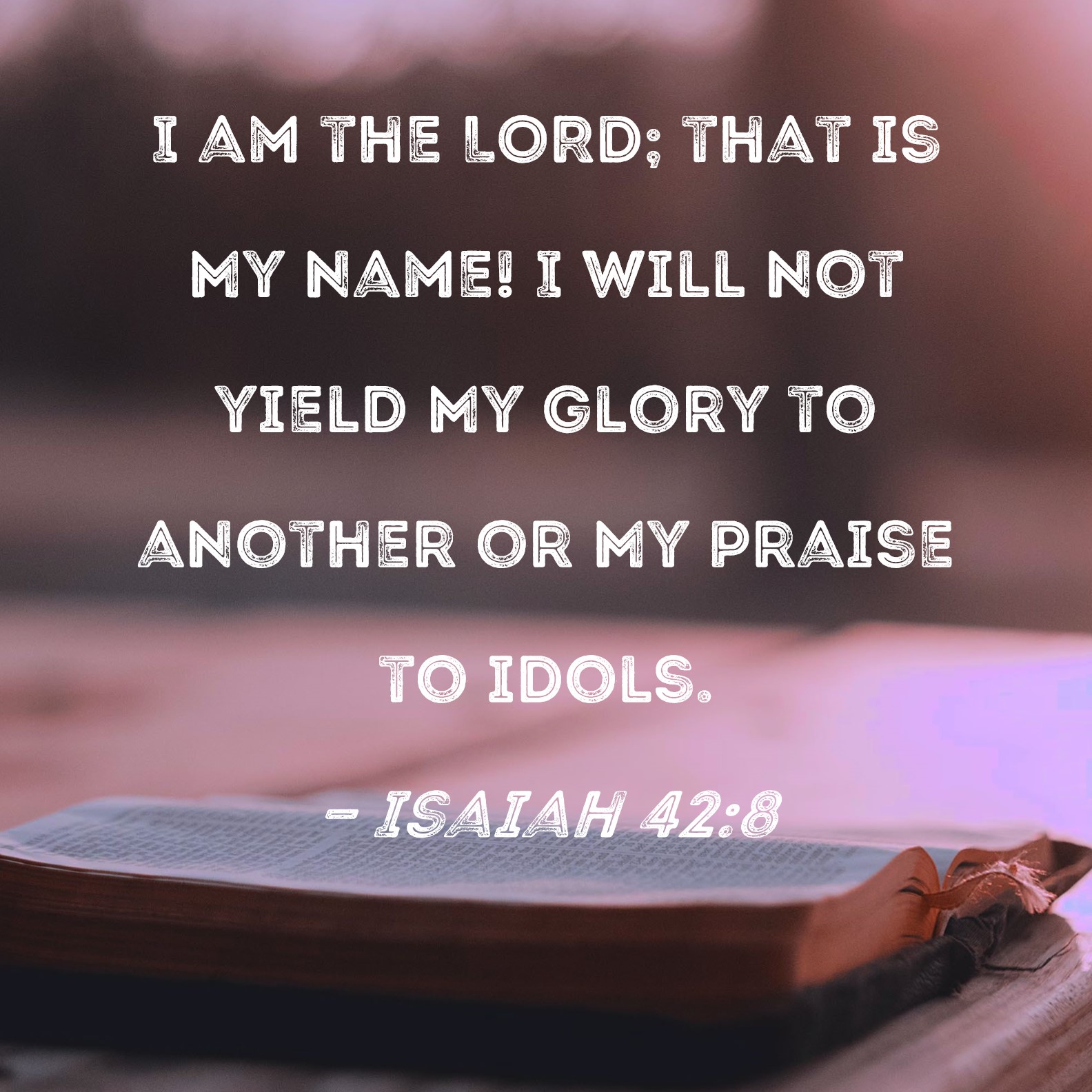
Most Bible translations substitute “LORD” for “Yahweh” in Bible translations, as we see in the picture below. Is there any authorization to substitute “LORD” for “Yahweh”?
Notice the following accurate translation of Yahweh, not LORD.
Isaiah 42:8 – “‘I am Yahweh, that is My name; I will not give My glory to another” (LSB). The name of Yahweh is very important to Almighty God, and in the scriptures.
THE PROBLEM
“It is almost if not quite certain that the Name was pronounced ‘Yahweh'”. (NRSV preface). That is true.read more
Advantages of the Legacy Standard Bible & New American Bible
What are the advantages of the Legacy Standard Bible and New American Bible?
There are many English translations of the Bible. What are the advantages of using the Legacy Standard Bible and New American Bible?
The Legacy Standard Bible (LSB), and the New American Bible (NAB) are very helpful translations for a number of reasons. They both adhere to a very high standard of accuracy in their rendering of the Hebrew-Aramaic, and Greek scriptures into modern English, and combating Trinitarian bias that infects almost all Bible translations.
There is some controversy as to how should John 1:1 be translated. Trinitarians often use the verse to support their contention that Jesus is the eternal Almighty God. John 1:1 is often translated as, “and the Word was God”, and used to assert the Son of God, Jesus Christ is Almighty God? How about “a god”?
The traditional rendering in English is:
“In the beginning was the Word, and the Word was with God, and the Word was God.”
There are many other variations of rendering John 1:1 which are more accurate according to the Greek text, both in translation or paraphrase, John 1:1c also exist:read more
The vast majority of translations of the Bible use “LORD” for God’s name. Why does the Legacy Standard Bible use “Yahweh” instead of the usual “LORD’ for God’s name?
TRADITIONAL VIEW
“‘Yahweh declares, ‘ . . . My people shall know My name'”—Isaiah 52:5,6 LSB
First of all, notice the reasons given for substituting “LORD” for “Yahweh” in the preface to to NRSV:
Careful readers will notice that here and there in the Old Testament the word Lord (or in certain cases God) is printed in capital letters. This represents the traditional manner in English versions of rendering the Divine Name, the “Tetragrammaton” (see the notes on Exodus 3.14, 15), following the precedent of the ancient Greek and Latin translators and the long established practice in the reading of the Hebrew Scriptures in the synagogue. While it is almost if not quite certain that the Name was originally pronounced “Yahweh,” this pronunciation was not indicated when the Masoretes added vowel sounds to the consonantal Hebrew text. To the four consonants YHWH of the Name, which had come to be regarded as too sacred to be pronounced, they attached vowel signs indicating that in its place should be read the Hebrew word Adonai meaning “Lord” (or Elohim meaning “God”). Ancient Greek translators employed the word Kyrios (“Lord”) for the Name. The Vulgate likewise used the Latin word Dominus (“Lord”). The form “Jehovah” is of late medieval origin; it is a combination of the consonants of the Divine Name and the vowels attached to it by the Masoretes but belonging to an entirely different word. Although the American Standard Version (1901) had used “Jehovah” to render the Tetragrammaton (the sound of Y being represented by J and the sound of W by V, as in Latin), for two reasons the Committees that produced the RSV and the NRSV returned to the more familiar usage of the King James Version. (1) The word “Jehovah” does not accurately represent any form of the Name ever used in Hebrew. (2) The use of any proper name for the one and only God, as though there were other gods from whom the true God had to be distinguished, began to be discontinued in Judaism before the Christian era and is inappropriate for the universal faith of the Christian church.read more
God’s name is often written as “the LORD” in most Bible translations. Some translations use “Jehovah” for God’s name. However, Lord is not a name but a title.
“One of the titles for God is Lord, a translation of Adonai. There is yet another name for which is particularly assigned to God as His special or proper name, that is, the four letters YHWH (Exodus 3:14 and Isaiah 42:8)” [NASB, Principles of Translation).
“Indeed, there are many gods and many lords, yet for us there is but one God, the Father” (1 Corinthians 8:5,6 NASB). In the Old Testament, or Hebrew-Aramaic Scriptures, God’s name is Yahweh. “I am Yahweh, that is my name!” (Isaiah 42:8 NJB). The name Yahweh appears some 6,800 times in the manuscripts of the Old Testament, or Hebrew-Aramaic Scriptures. Yet, despite these powerful facts, we read: read more
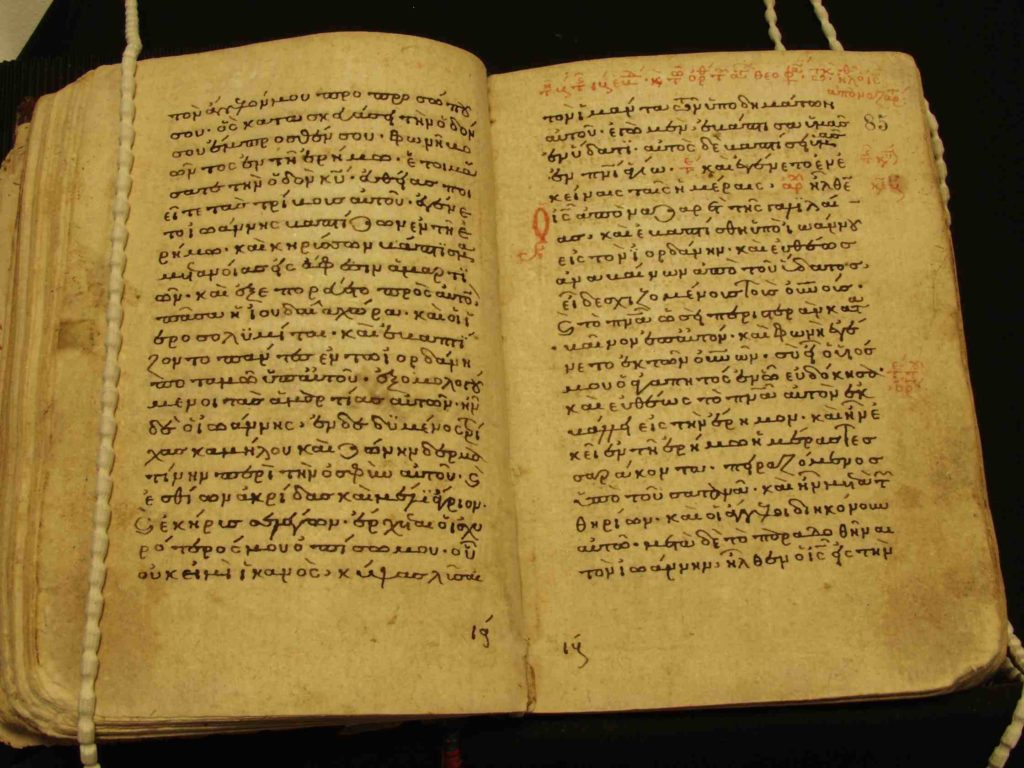
Greek manuscript of the New Testament. Is using multiple Bible translations better than knowing Biblical Greek?
Does a person need to know Biblical Greek to understand the New Testament, or is using multiple Bible translations, just as good, or better?
“Get wisdom. Though it cost all you have, get understanding”—Proverbs 4:7 NIV
THE ISSUE
“By studying Biblical Greek, you can gain a deeper understanding of the original text and the cultural context in which it was written”—Quora, February 6, 2023
Some Bible teachers and preachers are big on the idea that knowing Biblical Hebrew and Greek (Koine’) is important, even vital, in getting the best understanding of the Bible. While this may have a lot to do with their ego, we must grant that some are very sincere in holding and promoting this belief. It is certainly fine for anyone who has the inclination, the time, the resources, and the opportunity, to do so, that is, to learn Biblical Hebrew and Greek.read more
Appearance of Jesus’ Robe at Trial – Various Translations Help
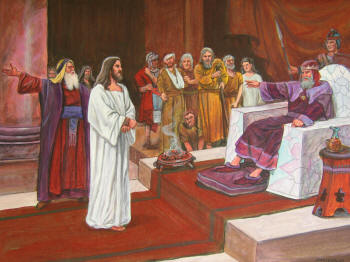
What exactly was the appearance of the robe put on Jesus during his “trial” before king Herod, an administrator of the Roman Empire, as recorded at Luke 23:11?
“Then Herod and his soldiers began mocking and ridiculing Jesus.Finally, they put a royal robe on him and sent him back to Pilate”—Luke 23:11 NLT
Pilate could not find anything wrong with Jesus, and hoped to evade responsibility for what would happen to Jesus by shifting him over to Herod, who happened to be in town for the major festival of Passover. But to Herod Jesus is only a curiosity (Luke 23:8,9), and a joke (Luke 23:11). His curiosity, however, goes unrewarded, because Jesus
Textual Criticism collates and compares the many ancient extant Bible manuscripts for the various Biblical texts to determine the original reading for each scripture?
Is Textual Criticism something that is critical of the Bible’s text, something that shows the Biblical text is unreliable? Or, is Textual Criticism something positive, even favorable, toward authenticating the Bible’s text as being genuine, reliable, and trustworthy?
It is popularly believed today that the Bible has been copied and re-copied so many times over the centuries that is text is unreliable, and no one can be sure of what was in the originals. Is there any truth to this?
“All people are like grass, and all their glory is like that of the field; the grass withers and the flowers fall, but the word of the Lord endures forever” (1 Peter 1:24-25 NIV). In this text, the thought is conveyed that “the Word of the Lord endures forever”, which implies that the scriptures would be faithfully preserved over time. If we believe that, “in the beginning God created the heavens and earth” (Genesis 1:1), and also empowered men to write the 66 books of the Bible over a period of about 1,500 years, then he would surely have the power to accurately preserve his word forever. But what are the facts in more detail?
PROBLEM? – DO WE HAVE THE ORIGINALS? – ARE THEY NECESSARY?
Not surprisingly, there are copyists’ errors (called textual or scribal errors) in ancient Biblical manuscripts. The original copies of the books were lost long ago.
It is true, we don’t have the originals, and sometimes we hear this objection as to the validity of the Biblical text. Why don’t we have the originals? They were written on perishable materials, and handmade copies were meticulously and accurately made and distributed.
If we had the originals and no copies, suppose one or more of the originals was lost, destroyed, stolen, or deviously, but cleverly altered? Then what?
If we had the originals written by Moses, David, Matthew, Mark, Luke, and John, etc., they may likely would have become idols, or objects of worship, the way “the bronze serpent . . . Nehushtan” was (2 Kings 18:4 LSB).
The New Testament books were written in various places and quickly copied and distributed all over the Roman Empire, long before there was any controlling body with the power to gather up these copies and have them deliberately altered. The very rapid copying and distribution also made it impossible for any authority to gather up and alter all the copies to make them say the same thing. By the time such powerful authority in or over Christianity emerged in the 4th century, extremely valuable manuscripts that are extant today, were long since buried in the sands of Egypt or tucked away in obscure places in Palestine and the Roman Empire.
So not having the originals solves these potential problems, rendering having the originals unnecessary, but it does mean that we have textual variants among the thousands of ancient Biblical manuscripts.
WHAT ABOUT THE MANUY THOUSANDS OF TEXTUAL VARIANTS
Any book copied by hand thousands of times over a period of a thousand plus years is likely to contain errors. The term textual variant derives from this fact. Thus, our sources for the Biblical materials are limited to handwritten copies (of copies) of the originals. We do also have access to copies of ancient translations of the Bible into other languages, as well as citations of the Bible by early rabbis and church fathers. Thus Hebrew and Greek manuscripts of the Bible, together with early translations and citations of Scripture, witness to the correct reading of a particular text.
How did scribal errors arise? Poor memory, impaired judgment, mishearing and errors of sight or misunderstanding often caused the best-intentioned scribes to omit, substitute or repeat letters or entire words. Sometimes scribes made matters worse when they deliberately altered the text in an attempt to rectify something they perceived as a problem (deliberate alterations are probably very rare, however). In time, the result was a series of accidental corruptions or intended “improvements” that departed from the original text.
Is this a problem? No. Why not?
In fact, scribal errors are actually one of the many proofs that the Bible is not a work of fiction, nor is it the a result of collusion among conspirators to make it seem to be the word of God , when it actually is of human origin. Once variants appeared among the many copies of the Bible, they didn’t just go away. They were copied and recopied many times. But it also means that we still have the original readings of the New Testament texts.
How can we sure of this? How do we know what the original reading was?
WHAT IS TEXTUAL CRITICISM?
Textual criticism is the attempt to restore the Biblical authors’ original words by comparing and contrasting the various copies and translations of the Bible. Here “criticism” does not mean “finding fault with”, but “evaluating” the existing copies of the text. Significantly, while textual errors do exist among the ancient Biblical witnesses, they do not destroy the Bible’s credibility or message. Just as an alert reader can understand a book or newspaper article that has typographical errors in it, so too God’s Word is able to speak for itself in spite of the minor corruptions that have arisen through scribal transmission. The vast majority of the Biblical text is certain, and where variations do occur among existing copies, the original wording can usually be determined with a good degree of certainty by a thorough acquaintance with the available manuscripts. Most modern translations use footnotes to let readers know where the text is difficult or where scribal errors may exist.
HOW DOES TEXTUAL CRITICISM WORK?
A simple modern day hypothetical example can help to understand the nature of Textual Criticism. Suppose a school teacher taught 200 students each day, and required all of them one day to copy an essay of about 300 words using pen and paper. When they were collected, collated, and comparatively analyzed, there likely would be a few variations. Suppose 198 wrote a word identically and 2 of the copies of this word were different. A grader who analyzed this without even having the original would know that the 198 had the word correct, while 2 were mistaken.
How does Textual Criticism work regarding the Bible? The Old Testament (OT) has about 1700 ancient manuscripts of the original Hebrew-Aramaic Scripture text, and the New Testament (NT) has about 5,800 ancient manuscripts in the original Koine’ Greek text. Both the OT and the NT have thousands of ancient manuscripts in other languages. The vast majority of these ancient manuscripts are fragmentary, or partial, with only a few being complete or fairly complete.
All extant manuscripts are compared by experts in this field, revealing variants. These expert scholars then decide on the composition of Hebrew-Aramaic and Greek Master Texts, and also alternates, and explanatory footnotes.
The presence of scribal errors is not a reason to consider the Bible untrustworthy, because refined Hebrew-Aramaic, and Koine’ Greek Master Texts use a compilation and collation of thousands of ancient manuscripts to derive a Biblical text that faithfully represents the originals.
The two most prominent New Testament Refined Master Texts, the Nestle-Aland (N-A) 28th edition, and the United Bible Societies (UBS( 5th edition, have had independent teams of scholars working on them for many years now. By the time of about the N-A 26th edition and the UBS 3rd edition, the two texts were identical except for footnotes. No other work from the ancient world has a text with such a high degree of integrity.
New Testament Greek scholars consider the current Master Text to be 99.5% pure. The other 0.5% questionable text is of inconsequential matters, primarily spelling and syntax differences.
HOW BIBLE TRANSLATORS USE THE RESULTS OF TEXTUAL CRITICISM
Bible Translators make use of these Master Texts in translating the scriptures into modern languages, such as English, Spanish, French, Japanese, Chinese, etc.
An example of a textual problem is found in the last sentence of Isaiah 51:19. The New American Standard Bible translates the question “How shall I comfort you?” while the NIV words it “Who can console you?” (emphasis added for both translations). These different renderings reflect a difference of opinion over which manuscripts preserve the best reading. The NIV follows a reading that is found in a Hebrew manuscript from the Dead Sea Scrolls. This translation is also supported by the Greek (Septuagint), Latin (Vulgate) and Syriac (Peshitta) translations of the Old Testament. On the other hand, the standard edition of the Hebrew Old Testament (the Masoretic Text) reads “How can I comfort you?”and was followed by the NASB translators.
The above example ofIsaiah 51:19 also makes the point that virtually all scribal questions involve minor points in the text. We have good reason to be confident that the translations now available faithfully, albeit never perfectly, reflect what the prophets and other Biblical authors originally wrote. The presence of scribal errors is not a reason to consider the Bible untrustworthy, because refined Hebrew-Aramaic, and Koine’ Greek Master Texts use a compilation and collation of thousands of ancient manuscripts to derive a Biblical text that faithfully represents the originals.
CONCLUSION
“Until heaven and earth pass away, not the smallest letter or one stroke of a letter will pass from the law until all things are accomplished” (Matthew 5:18 HCSB). read more