Browsed by
Category: Doctrines

Is Worshipping Jesus Like Worshipping Nehushtan?

Is Worshipping Jesus Like Worshipping Nehushtan?

The Bible refers to a fiery colored bonze snake on a pole used for a good, Godly purpose that eventually was worshipped, and given the name Nehushtan. This bronze snake on a pole is mentioned by Jesus as a comparison to the salvation from God that comes through him.  


WHY THE FIERY SNAKE ON A POLE?

On the years long trek from Egypt through the almost barren desert of Sinai to the promised land, many of the Israelites began to complain about God and Moses of the difficult conditions of the journey. Their lack of appreciation resulted in Yahweh sending vey aggressive poisonous snakes into their very large entourage to eliminate the ungrateful complainers.   The sick and dying victims realized their sin, repented, and begged their leader Moses to intercede with God on their behalf.  read more

Did Early Christians Pray to Jesus In The First Century?

Did Early Christians Pray to Jesus In The First Century?

Is the Bible reliable?
Did early Christians pray to Jesus?

Even though Jesus taught, “This is how you are to pray: Our Father in heaven . . . ” (Matthew 6:9 NAB), many people pray to Jesus. However, Jesus himself prayed to his “Father” (Matthew 11:25; Mark 14:36; John 17:1).

 Some assert that early Christians prayed to Jesus in the first century, and even assert there are scriptures that support their claim. In this article, we’ll examine such assertions by using the word “ASSERTION”, and the word “BIBLE” to examine what the scriptures actually say. read more

Is God Omnipresent, Or Present Everywhere?

Is God Omnipresent, Or Present Everywhere?

Is the Bible reliable?
Is God omnipresent, or present everywhere?

Many preachers, Bible scholars and common people believe that God is omnipresent, that is, present everywhere. According to this view, he’s in every place at all times. What does the Bible tell us?

EXAMINING CLAIMS OF OMNIPRESENCE

“Even if they dig their way into Sheol, my hand will take them from there. Even if they go up to heaven, I will bring them down from there. Even if they hide on top of Mount Carmel, I will look for them and take them from there. Even if they hide from me at the bottom of the sea, I will command a sea snake to bite them” (Amos 9:2-3 GWT). These verse are often used to assert God’s being omnipresent. However, Amos is using figures of speech to illustrate the futility of thinking that anyone can escape from Almighty God’s judgment. read more

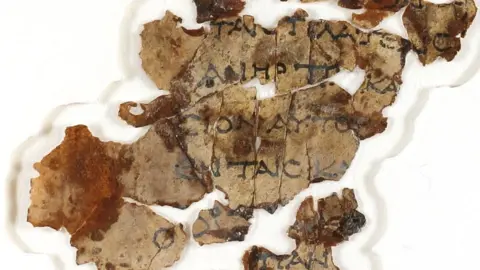
Greek Minor Prophets Scroll Has God’s Name In Hebrew

Greek Minor Prophets Scroll Has God’s Name In Hebrew

Israel Antiquities Authority Fragments of parchment found in the Cave of Horror

The Greek Minor Prophets Scroll is pictured above.

The early Christians in the 1st century used both Hebrew and Greek (called the Septuagint, abbreviated LXX) manuscript scrolls of the Old Testament (OT). The early Christians used the Greek Septuagint Version (LXX) for much of their reading the Hebrew Scriptures, commonly known as the Old Testament (OT)., as reflected in many New Testament (NT) quotes from the OT. Most extant copies of the LXX have the Greek “kyrios” (“Lord”) rather than “Yahweh” (“YHWH” in Hebrew). Why? read more

The Unforgiving Slave Parable Teaches Forgiveness Is Vital

The Unforgiving Slave Parable Teaches Forgiveness Is Vital

This depiction by Jan van Hemessen (c. 1556) shows the moment when the king scolds the servant.

The unforgiving slave parable tells of a slave forgiven a huge debt so great that he could have never paid it off, but who wouldn’t forgive a fellow slave’s relatively small debt. A certain segment of Christianity claims Christians are “Once Saved, Always Saved”, and the parable doesn’t teach us much beyond the parable itself. Is “Eternal Security”, or “Once Saved, Always Saved” Biblical? According to the parable of the unforgiving slave, “Eternal Security”, or “Once saved, always saved” is unscriptural. This may be surprising to some Christians, but it is true. read more

What Does Judges Tell Us About God and the Trinity?

What Does Judges Tell Us About God and the Trinity?

Is the Bible reliable?
What does Judges tell us about God and the Trinity?

It is claimed that Almighty God is a Trinity of three persons, the Father, the Son, and the holy Spirit, in one God. What does the book of Judges tell us about Almighty God and the Trinity? Is the Trinity in the historical book of Judges? Surprisingly, there is a wealth of information in the Old Testament book of Judges that can help us to answer these questions.

THE BAALS

“The sons of Israel did what was evil in the eyes of Yahweh and served [worshipped, marginal reading] the Baals” (Judges 2:11 LSB). Notice that they served/worshipped “the Baals“. We can’t help but note the similarities between “the Baals” and the Trinity. “The title ‘Baal,’ meaning ‘lord’ or ‘master’, belonged to a large number of Canaanite, Phoenician, and Syrian deities, including especially the storm god Hadad Baal, widely revered as lord of the earth” (NAB note). Each locality often had its own version of “Baal”, such as “Baal-berith” and “Baal-zebub(Judges 8:33; 9:4; 2 Kings 1:2,3,6). Similarly, Trinitarians have their “God the Son” and “God the Holy Spirit”, in addition to the Biblical “God the Father”, all the while claiming they’re only one God. Trinitarians have largely eliminated God’s name “Yahweh” from their biased Bible translations, in lieu of the substitute generic titles “LORD” and “GOD”. What is especially interesting about Judges 2:11 is that most translations render the Hebrew as, ” . . . did what is evil in the eyes of the LORD and served the Baals”. In other words, they ‘did what is evil in the eyes of the LORD, and served the Lord [Baal]’, which does make good sense. In their speech and writings, LORD & GOD are the terms usually used to describe Yahweh, and sometimes they even call Yahweh Jesus or Christ, all of which bears similarity to ancient pagan Baal worship. The sad thing is, they’ve sacrificed truth on the altar of their “false doctrine” (1 Timothy 1:3 ISV). read more

Is the Trinity in the Book of Exodus?

Is the Trinity in the Book of Exodus?

Papyrus Oxyrhynchus 1075, a 3rd or 4th century CE manuscript showing part of Exodus 40" href="https://en.wikipedia.org/wiki/Exodus_40">Exodus 40

Exodus is the Bible book that gives the history of the choosing of the ancient Israelites as God’s chosen people, or nation, and their entering into a special covenant with God to bind that relationship. The Trinity doctrine is often said to be the main doctrine of Christianity. If that is true, we should certainly find the doctrine in this very important Bible book. In this article, we’ll explore the question, “Is the Trinity in the book of Exodus”?

IS JESUS CHRIST THE “I AM’ OF EXODUS 3:14? read more

John 1:1

John 1:1

There is some controversy as to how should John 1:1 be translated. Trinitarians often use the verse to support their contention that Jesus is the eternal Almighty God.

The traditional rendering in English is:

In the beginning was the Word, and the Word was with God, and the Word was God.

There are many other variations of rendering John 1:1 which are more accurate according to the Greek text, both in translation or paraphrase, John 1:1c also exist:

  • 1808: “and the Word was a god” – Thomas Belsham The New Testament, in an Improved Version, Upon the Basis of Archbishop Newcome‘s New Translation: With a Corrected Text, London.
  • 1822: “and the Word was a god” – The New Testament in Greek and English (A. Kneeland, 1822.)
  • 1829: “and the Word was a god” – The Monotessaron; or, The Gospel History According to the Four Evangelists (J. S. Thompson, 1829)
  • 1863: “and the Word was a god” – A Literal Translation of the New Testament (Herman Heinfetter [Pseudonym of Frederick Parker], 1863)
  • 1864: “and a god was the Word” – The Emphatic Diaglott by Benjamin Wilson, New York and London (left hand column interlinear reading)
  • 1879: “and the Word was a god” – Das Evangelium nach Johannes (J. Becker, 1979)
  • 1885: “and the Word was a god” – Concise Commentary on The Holy Bible (R. Young, 1885)
  • 1911: “and [a] God was the word” – The Coptic Version of the New Testament in the Southern Dialect, by George William Horner.[17]
  • 1924: “the Logos was divine” – The Bible: James Moffatt Translation, by James Moffatt.
  • 1935: “and the Word was divine” – The Bible: An American Translation, by John M. P. Smith and Edgar J. Goodspeed, Chicago.[19]
  • 1955: “so the Word was divine” – The Authentic New Testament, by Hugh J. Schonfield, Aberdeen.
  • 1958: “and the Word was a god” – The New Testament of Our Lord and Saviour Jesus Anointed (J. L. Tomanec, 1958)
  • 1970, 1989: “and what God was, the Word was” – The New English Bible and The Revised English Bible.
  • 1975 “and a god (or, of a divine kind) was the Word” – Das Evangelium nach Johnnes, by Siegfried Schulz, Göttingen, Germany
  • 1975: “and the Word was a god” – Das Evangelium nach Johannes (S. Schulz, 1975);
  • 1978: “and godlike sort was the Logos” – Das Evangelium nach Johannes, by Johannes Schneider, Berlin
  • 1985: “So the Word was divine” – The Original New Testament, by Hugh J. Schonfield.
  • 1998: “and what God was the Word also was” – This translation follows Professor Francis J. Moloney, The Gospel of John, ed. Daniel J. Harrington.
  • 2017: “and the Logos was god” – The New Testament: A Translation, by David Bentley Hart.

GREEK ANALYSIS

Jn 1:1 should rigorously be translated ‘the word was with the God [= the Father], and the word was a divine being'” (Dictionary of the Bible, 1965, by scholar John L McKenzie, S J). read more

Trinity Doctrine Jokes

Trinity Doctrine Jokes

 Since the Trinity doctrine is a joke, and is simply unbiblical nonsense, why don’t we look at some Trinity doctrine jokes.
image

“The Trinity: Try to Understand It, and You’ll Lose Your Mind. Try to Deny It and You’ll LOSE YOUR SOUL!” (anonymous quote, often attributed to Augustine).

We  keep looking for the Trinity God in the scriptures, but we just can’t seem to find him, reminiscent of Elijah making fun of Baal not showing up for the fire contest as to who is the true God:

“‘He’s a god, so maybe he’s busy. ‘Maybe he’s relieving himself. ‘Maybe he’s busy someplace. Maybe he’s taking a nap and somebody needs to wake him up'”—1 Kings 18:27 ISV read more

Children of God, Brothers and Sisters of Christ

Children of God, Brothers and Sisters of Christ

Picture

Trinitarians often refer to Jesus Christ as “God the Son”. According to the scriptures, he is “the Son of God,” but not “God the Son”. Christians are “children of God”, and “brothers and sisters”  of Christ (Matthew 25:40; Hebrews 2:11; Matthew 12:50; Mark 3:35; Luke 8:21), but never “children of Christ” in the scriptures. According to the scriptures, Christians are “born of God” ( John 1:13; 1 John 3:9; 4:7; 5:1,4,18), but never “born of Christ”. Christ has “brothers and sisters” (Matthew 25:40; Hebrews 2:11; Matthew 12:50; Mark 3:35; Luke 8:21), but no children. God has “children”, but no brothers (Romans 8:14,15; Galatians 3:26; Revelation 21:6,7). read more

WP2Social Auto Publish Powered By : XYZScripts.com