Many Christians pray to Jesus, or even to a Trinity. Who did Jesus direct us to pray to? Who did the apostles pray to? Who should we pray to?
Who should we pray to?
WHO DID JESUS PRAY TO?
Matthew 11:25 – “Jesus said, ‘I praise you Father, Lord of heaven and earth . . . Yes, Father, for this is what you were pleased to do'” (NIV). Jesus, our perfect “example”, prayed exclusively to the Father (1 Peter 2:21-22).
John 17:1 – “Jesus . . . looked toward heaven and prayed: ‘Father . . . Glorify your Son, that your Son may glorify you'” (NIV). – Jesus prays to his Father, not to himself, and asks his Father to glorify his name, so that Jesus could glorify his Father.read more
Many preachers, Bible scholars and common people believe that God is omnipresent, that is, present everywhere. According to this view, he’s in every place at all times. What does the Bible tell us?
EXAMINING CLAIMS OF OMNIPRESENCE
“Even if they dig their way into Sheol, my hand will take them from there. Even if they go up to heaven, I will bring them down from there. Even if they hide on top of Mount Carmel, I will look for them and take them from there. Even if they hide from me at the bottom of the sea, I will command a sea snake to bite them” (Amos 9:2-3 GWT). These verses are often used to assert God’s being omnipresent. However, Amos is using figures of speech to illustrate the futility of thinking that anyone can escape from Almighty God’s judgment.read more
What Does Judges Tell Us About God and the Trinity?
What does Judges tell us about God and the Trinity?
It is claimed that Almighty God is a Trinity of three persons, the Father, the Son, and the holy Spirit, in one God. What does the book of Judges tell us about Almighty God and the Trinity? Is the Trinity in the historical book of Judges? Surprisingly, there is a wealth of information in the Old Testament book of Judges that can help us to answer these questions.
THE BAALS
“The sons of Israel did what was evil in the eyes of Yahweh and served [worshipped, marginal reading] the Baals” (Judges 2:11 LSB). Notice that they served/worshipped “the Baals“. We can’t help but note the similarities between “the Baals” and the Trinity.read more
The relatively short five chapter Old Testament Bible book isn’t used very much these days. In fact, many Christians are unaware that the book even exists, and even many of those who are aware, would struggle to find its place in the Bible. This is ironic, because an older song often sung in Christian Church services, weddings and funerals, “Great Is Thy Faithfulness”, is based on Lamentations 3:22-23. Yahweh, the Most High God, is mentioned a number of times, Jesus Christ is possibly referred once, and the holy Spirit isn’t mentioned at all in this relatively short book. We’ll examine its contents thoroughly to see whether we find evidence for, or against, the Trinity doctrine. Is the Trinity doctrine in Lamentations?read more
“I make known the end from the beginning, from ancient times, what is still to come. I say, “My purpose will stand, and I will do all that I please.”’” (Isaiah 46:10New International Version) There is no question that the one who has “perfect knowledge” ( Job 36:4 NIV), Almighty God “knows everything” (1 John 3:20 NIV), so everything CAN be “foreknown” (1 Peter 1:20 LSB) by him. There have been numerous cases that are Biblically documented where he has demonstrated his unique ability to foreknow the future about many things, including individuals. The Bible is clear that “with God all things are possible” (Matthew 19:26). However, just because he CAN know everything in advance, does that mean he does know everything in advance? While we will deal with this subject in general, this article will focus on the question, “does Almighty God foreknow each person’s eternal destiny?”
RELEVANT FACTS WE KNOW ABOUT GOD
Ecclesiastes 3:11 – “He has made everything beautiful in its time. He has also set eternity in the human heart; yet no one can fathom what God has done from beginning to end” (NIV). “This phrase suggests that humans have an innate sense of the eternal, a longing for something beyond the temporal world. This concept is unique to humanity, as it reflects . . . the image of God in which humans were created (Genesis 1:27). The awareness of eternity points to a spiritual dimension that transcends earthly existence, indicating a divine purpose and destiny. This longing for eternity can be seen in various cultures and religions throughout history, where people seek meaning beyond the material world. It also connects to the New Testament, where believers are encouraged to set their minds on things above (Colossians 3:2)” (Bible Hub Study Bible). We know that, “God is love” (1 John 4:8). Would such a loving Almighty God put such a concept of, and desire for, “eternity” without any way to achieve it? – Hardly!
We know that “God . . . cannot lie” (Titus 1:2), and the “hope” that he offers “will not lead to disappointment” (Romans 5:5 NLT).
The scriptures refer to “foreknowledge of God the Father” (1 Peter 1:2 NIV), and “God’s settled purpose and foreknowledge” (Acts 2:23Weymouth New Testament) of certain important events.There is no question that God has chosen to foreknow, and even to “purpose”, or “foreordain” (1 Peter 1:20 NKJV) certain events in advance. But, does God foreknow everything that will ever happen in advance, including each person’s eternal destiny?
GOD CAN RESTRAIN HIS POWERS
Isaiah 42:14 – “For a long time I have held my peace; I have kept still and restrained myself” (English Standard Version). “The Lord God Almighty” (Revelation 4:11) has unlimited powers. “The Almighty is beyond our reach and exalted in power” (Job 37:23New International Version). The Bible is also clear that he also has perfect self-control, “perfect patience” (1 Timothy 1:16 NASB), over those powers. That is, he controls his use of his powers to suit his purpose. Instead of using all of them indiscriminately, he exercises discriminate use of his powers. The thought of Almighty God using self control, or restraint, might, on the surface, seem strange. But, if we think through that a little bit, it is completely reasonable to think of him as doing so. Otherwise, wouldn’t he be out of control, even uncontrolled? For example, he has the power to destroy every human, and he has the power to give every human eternal life. But he will do neither. He will selectively give some eternal life, and some eternal death (Matthew 7:13,14).
BIBLICAL EXAMPLES OF GOD NOT USING HIS FOREKNOWLEDGE
Psalms is one of the longest books in the Bible, and is quoted more often than any other Old Testament book by New Testament writers. Based on what many scholars and experts assert, we would expect to find the Trinity doctrine in such a long and prominent Bible book. Is the Trinity in Psalms?
SCHOLARS ADMIT TRINITY DOCTRINE NOT EXPLAINABLE OR UNDERSTANDABLE
Does it strike you as odd that even the most scholarly proponents of the doctrine admit it is neither understandable nor explainable?
“The most difficult thing about the Christian concept of the Trinity is that there is no way to completely understand it or explain it. God is infinitely greater than we are; therefore, we should not expect to be able to fully understand Him. But we do trust the Bible, which teaches that the Father is God, Jesus is God, and the Holy Spirit is God. At the same time, the Bible also teaches there is only one God. So, the one God exists in three Persons. It’s possible to understand some facts about the Trinity and some of the relationships the different Persons of the Trinity have to one another. But, ultimately, how a single Being can exist in three distinct Persons is incomprehensible to us. Our inability to understand, however, does not mean the doctrine of the Trinity is untrue or unbiblical. The word Trinity is not found in Scripture. It is a useful term in discussions of the triune God, as we speak of three coexistent, co-eternal divine Persons who are One. Although the word itself is not found in the Bible, the concept represented by the word Trinity certainly is.”-–GotQuestions.orgread more
Joshua 1:1 as recorded in the Aleppo Codex" width="220" height="108" data-file-width="728" data-file-height="356" />
Trinitarians claim that the doctrine of the Trinity is found throughout the Bible. The Old Testament book of Job, with its 42 chapters, is one of the longest Bible books, so if what is asserted to be the main doctrine of Christianity is true, one would expect to find at least some evidence of it in Job. Is the Trinity in the book of Job?
SCRIPTURAL ANALYSIS
Job 1:6; 2:1 – “Now it was the day that the sons of God came to stand before Yahweh and Satan also came among them.” “Again it was the day that the sons of God came to stand before Yahweh, and Satan also came among them to stand himself before Yahweh” (LSB). “In the Old Testament, “sons of God” often refers to angelic beings. This phrase suggests a gathering of divine beings in the heavenly court. The term is used similarly in Genesis 6:2 and Job 38:7, indicating beings created by God who serve Him . . . The use of “LORD” in all capitals signifies the divine name YHWH, emphasizing God’s sovereignty and authority. This setting underscores God’s supreme rule over all creation, including the spiritual realm” (Bible Hub Study Bible). Jesus, at Matthew 22:41-46 quotes and applies Psalm 110:1 in a way that makes it obvious he is not Yahweh. At these two heavenly meetings, Yahweh, the angels and Satan were in attendance. But where are Jesus and the holy Spirit, since they are supposedly equal members of the Trinitarian “Godhead”? Are they AWOL? Jesus is real, and has existed since his “origin . . . from of old, from ancient days” (Micah 5:2 NRSV). Even though Jesus was alive back then, and may have been at that heavenly meeting, it was Yahweh God who handled matters with Satan. As we will see later in this article, the holy Spirit is not a person, so it couldn’t attend the meeting. These views into the heavenly realm give evidence against the Trinity.read more
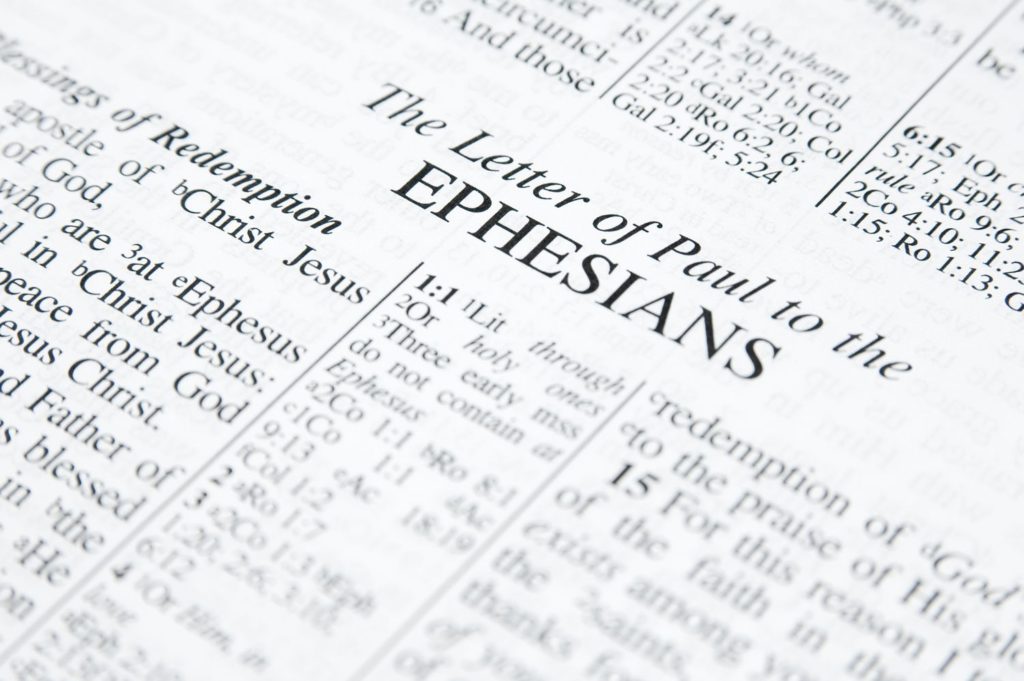
The Book of Ephesians provides some clues as to Nontinitarianism.
Most Christians believe in the doctrine of the Trinity. But what is Nontrinitarianism?
TRINITY DEFINED
“The trinity of God is defined by the church as the belief that in God are three persons who subsist in one nature”—Dictionary of the Bible, page 800, by John L McKenzie, S. J.
Something “defined by the church” influences many people in the world. But, more importantly, is “the trinity of God” found in the scriptures?
IS THE TRINITY BIBLICAL?
“The brief as so defined by the church was reached only in the 4th and 5th centuries AD and hence is not explicitly and formally a biblical belief”—Dictionary of the Bible, page 800, by John L McKenzie, S. J.read more



 Joshua 1:1 as recorded in the Aleppo Codex" width="220" height="108" data-file-width="728" data-file-height="356" />