Browsed by
Category: Proof

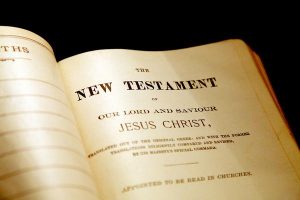
Evidence of Early New Testament Canon by Circa 100 CE

Evidence of Early New Testament Canon by Circa 100 CE

Although it is popular to do so, we should not measure the existence of the New Testament (NT) canon (authoritative, or inspired, books) just by the existence of lists, which came into being somewhat later than the NT canon’s coming into existence. When we examine the way the NT books were viewed and used in the very early days of Christianity, we can determine the de facto existence of a functioning canon by about 100 CE.
NT canon
Did it take until the fifth century to finalize the NT canon?

The views expressed here are admittedly a little different than the traditional, or orthodox, view of how the New Testament canon, in particular, and the Bible as a whole, came into acceptance. The views presented here actually stand in stark contrast to modern-day populist scholars, like the agnostic Bart Ehrman. read more
Titles of the Gospels – Are They Genuine?

Titles of the Gospels – Are They Genuine?

The Titles of the Gospels

History says Matthew, Mark, Luke and John wrote the books with those titles. People seem to have a highly variable standard in their assessment of what ancient writings are genuine, especially the Bible. What do we mean? Here is an example:

Titles of the Gospels
Did Matthew, Mark, Luke and John really write the Gospels, or were these names attributed later?

Most people accept Alexander the Great as a real historical figure. Yet, the two earliest biographies of Alexander the Great were written by Arrian and Plutarch more than 400 years after the Great One’s death 323 BCE. Legends about him developed centuries after these two writers. Yet, Alexander’s true, accurate history is viewed as being preserved for hundreds of years prior to these legends. read more

Notes on the Origin of the New Testament Canon

Notes on the Origin of the New Testament Canon

The New Testament canon was established early, by Holy Spirit

New Testament Canon
The New Testament canon was established early, by Holy Spirit

The New Testament canon was established in the first century by Holy Spirit. Let’s examine some notes on the scriptures which confirm this fact:

2 Peter 1:16-21 – Peter affirms Old Testament prophets wrote God’s word. He puts himself and other apostles in the same category.

2 Peter 3:15-16 – Paul’s letters were on the same level as all the “rest of the scriptures.” That is, inspired of God. Early Greek manuscripts show Paul writing 14 letters.

2 Timothy 3:16-17 – The rest of the scriptures (the Old Testament) are inspired of God. We can broaden this now, and apply the principle to all 66 canonical books as shown below: read more

Extraordinary Claims – Extraordinary Proof – Jesus’ Resurrection

Extraordinary Claims – Extraordinary Proof – Jesus’ Resurrection

extraordinary claim
It is an extraordinary claim that Jesus rose from the dead

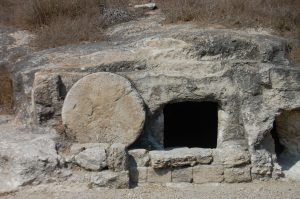
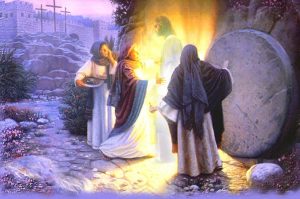
“He is not here, but He has been resurrected” (Luke 24:6 HCSB). Is there extraordinary proof of Jesus’ resurrection? The claim that Jesus rose from the dead is extraordinary. Extraordinary claims require extraordinary proof. What is the strongest proof that Jesus was resurrected? Let’s start at the point of beginning, and work, or build from there.

This beginning point is that the universe, the earth, etc. very strongly witness to God’s existence as Creator. Psalm 19:1 says: “the heavens declare the glory of God.” (NIV) read more

Different Resurrection Appearances – ‘Proofs,’ or Contradictions?

Different Resurrection Appearances – ‘Proofs,’ or Contradictions?

Different resurrection appearances
Some have claimed the different accounts of resurrection appearances are “proof” of contradictions

Some have claimed the different accounts of Jesus’ resurrection appearances in the four Gospels and 1 Corinthians are “proofs” these Bible books are riddled with errors and contradictions. If true, these would, in turn,” prove” the Bible not to be inspired of God, or infallible, as many Christians believe that it is.

The Bible itself says that these different resurrection appearances confirm the Bible’s inspiration by God.

“To whom He also presented Himself alive after His suffering, by many infallible proofs, being seen by them during forty days and speaking of the things pertaining to the kingdom of God.” (Acts 1:3 NKJV, emphasis added) read more

Why Many Do Not Believe

Why Many Do Not Believe

Many do not believe in God
Why do many people not believe in God?

Why do many people not believe in God or his word the Bible? Why are so many people lacking faith? A person with genuine Bible-based faith is referred to as “one who sees Him who is invisible.” (Heb 11:27 CSB)

In one special case, Elisha’s servant was given the ability to see otherwise invisible angelic forces, arrayed against the Syrian army: “Elisha prayed: ‘Yahweh,’ he said, ‘open his eyes and make him see.’ Yahweh opened the servant’s eyes, and he saw the mountain covered in fiery horses and chariots surrounding Elisha” (2 Kings 6:17 NJB). Although miraculous things like this don’t happen today, these events are recorded in the most reliable record in existence, God’s Word, the Bible. God, Jesus, and angels are just as real today, and we can see evidence of this with “the eyes of [our] understanding” (Ephesians 1:18 NKJV) “by faith” (2 Corinthians 5:7).  read more

Eyewitnesses of Jesus’ Death, Burial, and Resurrection

Eyewitnesses of Jesus’ Death, Burial, and Resurrection

Witnesses of Jesus
Were there any eyewitnesses to Jesus’ death, burial, and resurrection?

Critics of the Bible claim there are no eyewitnesses of Jesus’ death, burial and resurrection. This article takes an objective look at the facts.

“[The Gospels] were written down thirty-five to sixty-five years after Jesus’ death . . . not by people who were eyewitnesses, but by people living later”—Jesus, Apocalyptic Prophet of the New Millenneum, 2005, pages 44-45, by Bart Ehrman

“There is not a sentence concerning Jesus in the entire New Testament  by anyone who had ever met the unwilling King of the Jews”—Jesus and Yahweh, 2005, page 19, by H. Bloom read more

The Spiritual Use of “Israel” in the Bible

The Spiritual Use of “Israel” in the Bible

Spiritual descendants
Spiritual, not fleshly, descendants of Abraham are the real Israel that counts with God

Who was God talking about when he made the promise to Abraham about his seed? Was the promise only referring to his physical offspring? Or, is there such a thing as “Spiritual Israel?”

“Well then, has God failed to fulfill his promise to Israel? No, for not all who are born into the nation of Israel are truly members of God’s people! Being descendants of Abraham doesn’t make them truly Abraham’s children. For the Scriptures say, ‘Isaac is the son through whom your descendants will be counted,’ though Abraham had other children, too. This means that Abraham’s physical descendants are not necessarily children of God. Only the children of the promise are considered to be Abraham’s children.” (Romans 9:6-8 NLT) read more

Is the Temple Cleansing in John Accurate?

Is the Temple Cleansing in John Accurate?

Jesus' Temple Cleansing
Does the temple cleansing in John contradict the Synoptic Gospels?

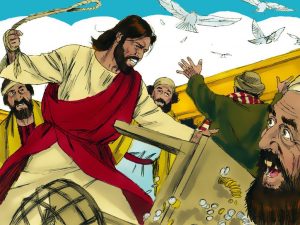
Critics claim that the temple cleansing in the Gospel of John is either the same temple cleansing reported by the three Synoptics, Matthew, Mark and Luke, or is out of place,  therefore constituting a “contradiction” in the Gospels. Below are listed a number of reasons why the temple cleansing in John is accurate and was performed by Jesus around the time of the first Passover after his baptism, which was probably about six months earlier. John clearly states in John 20:31 and John 21:25 that he was highly selective in his reporting on the events of Jesus’ life. The other three Gospel writers had already reported on the second temple cleansing by the time John wrote his gospel. Upon close examination, it seems fairly obvious that John was very familiar with these other three Gospels, and quite possibly had copies of them in his possession as he wrote the fourth Gospel. John filled in many gaps that the Synoptics did not report on. In fact, 92% of his gospel is unique. John reports the following details about the first temple cleansing, that are omitted from the second temple cleansing  recorded in Matthew, Mark, and Luke:  read more

Gospel of Mark – Peter’s Eyewitness Gospel

Gospel of Mark – Peter’s Eyewitness Gospel

The Gospel According to Mark
Is Mark’s Gospel an early memoir of the Apostle Peter?

The early church is unanimous that the Gospel according to Mark was written by John Mark. (Acts 12:12; Acts 12:25; Acts 13:5; Acts 13:13; Acts 15:37; Colossians 4:10; 2 Timothy 4:11; Philemon 24)

Papias – c. 140 quotes an earlier source saying:

  1. Mark was a close associate of Peter, from whom he received his information. (1 Peter 5:13) Peter regards Mark with such warmth and affection that he calls him his son.
  2. This information didn’t come to Mark as a finished, sequential account of the life of Jesus, but as the preaching of Peter – preaching directed to the needs of Christian communities. Mark accurately preserved this material and arranged and shaped it.

The title “According to Mark” appears in all the ancient canonical lists and many ancient manuscripts, and is thought to have been added very early in the history of the text.

Early church fathers all affirm Mark wrote the Gospel:

  • Papias (140)
  • Justin Martyr (150)
  • Iranaeus (185)
  • Origen
  • Tertullian
  • Clement of Alexandria (195)
  • Eusebius (326) – quotes Papias saying “elder” (John) attributed to Mark

Second and third century books falsely claimed apostles as authors rather than secondary figures such as Mark. read more

WP2Social Auto Publish Powered By : XYZScripts.com