Browsed by
Category: Proof

EVIDENCE of GEMARIAH and JERAHMEEL DISCOVERED

EVIDENCE of GEMARIAH and JERAHMEEL DISCOVERED

Is the Bible reliable?
Can the Bible be trusted? The discoveries of the existence of Gemariah and Jerahmeel prove it can.

Critics often claim the Bible is not an accurate historical document. However, discoveries of the existence of Gemariah and Jerahmeel prove otherwise.

A clay seal impression of “Gemariah son of Shaphan the secretary”, one of “the officials” (Jeremiah 36:10-12 NIV) of King Jehoiakim was discovered in excavations of Jerusalem of 587-586 BCE destruction level. The inscription reads: “Belonging to Gemariah (son of) Shaphan”.

Researchers possess both a clay seal and a seal impression of “Jerahmeel, a son of the king” Jehoiakim (Jeremiah 36:26 NIV), which were both acquired on the antiquities market. The clay seal and the seal impression both read: “Belonging to Jerahmeel the king’s son”. read more

Who Wrote Hebrews? Did Paul?

Who Wrote Hebrews? Did Paul?

Is the Bible reliable?
Who wrote Hebrews?

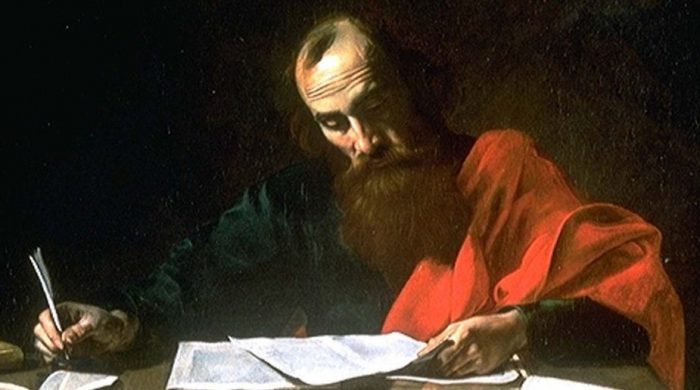
Who wrote Hebrews? In thirteen New Testament letters, or epistles, Paul introduces himself as the writer. However, the writer of Hebrews is anonymous. Hebrews was accepted as an epistle of Paul by early writers, and throughout most of Christian history, the apostle Paul was viewed as the writer of Hebrews. However, in the last couple of hundred years, this view has been dismissed by many of the “experts.” What are the facts? Who wrote Hebrews?

Regardless of who who wrote the Letter to the Hebrews, the important thing to remember is that this writing, like the Old Testament before it, is what “the holy Spirit says” (Hebrews 3:7 NAB). The fact that the writer does not identify himself by name in the letter does not prove that Paul isn’t the writer. Many Old Testament Bible books don’t name the writer, and neither do the Gospels and Acts in the New Testament.

Differing Views of Writership

Most “scholars” and “experts” these days, especially since the 1800’s, do not think that the Christian apostle Paul wrote Hebrews. This view stands in contrast to the early Christians, who almost unanimously held the view that Paul wrote Hebrews, even though the writer isn’t named in the book itself.

“As early as the end of the second century the church of Alexandria in Egypt accepted Hebrews as a letter of Paul, and that became the commonly held view in the East. Pauline authorship was contested in the West in the fourth century, but then accepted. In the sixteenth century, doubts about that position were again raised, and the modern consensus is that the letter was not written by Paul. There is, however, no widespread agreement on any of the other suggested authors, e. g., Barnabus, Apollos, or Priscilla and Aquila. The document itself has no statement about its author”—Introduction to The Letter To The Hebrews, New American Bible (NAB) read more

Daniel Accurately Predicted Antiochus IV Epiphanes

Daniel Accurately Predicted Antiochus IV Epiphanes

Critics claim the writer of the Book of Daniel was a fraud who really lived in the 160’s BCE, rather than Daniel himself, who wrote the book in the 530’s BCE. Could it possibly be true that Daniel accurately predicted Antiochus IV Epiphanes 350 years in advanc

“And now I shall tell you the truth about these things”—Daniel 11:1 NJB

“The vision of the evenings and the mornings which has been revealed is true”—Daniel 8:26 NJB

Other articles on this site have provided documented evidence that the Book of Daniel was written in the 500’s BCE, and 350 years in advance, accurately predicted details of the exploits of Syrian King Antiochus IV Epiphanes, who was the Biblical “king of the =&0=& for about 12 years. The Greek philosopher Porphyry (233-304 CE) wrote a work in fifteen volumes he called Against the Christians, in which he attempted to prove that Jesus Christ was only an outstanding philosopher, but not who he said he was. In fact, Porphyry railed against Jesus’ reference to “the prophet Daniel” (Matthew 24:15 NIV) as being the writer of the book bearing his name. His reasoning was based, at least, in part, on the fact that Daniel 8:9-14,23-25; 11:21-39 so accurately predicted Antiochus IV Epiphanes, that he could not accept it as prophecy written in advance. The “predictions” were just too accurate for him to accept. He claimed that a fraud pretending to write prophecy in advance had to have written Daniel, because the events described could not have been so accurately predicted.

ANTIOCHUS FORETOLD IN DANIEL 11

This article will discuss exactly what some of the scriptures in Daniel 11 foretold about Antiochus IV Epiphanes, and how they were fulfilled.

“The next to come to power will be a despicable man who is not in line for royal succession. He will slip in when least expected and take over the kingdom by =&1=&

This verse accurately foretold the coming to power of Antiochus IV Epiphanes in 175 BCE. He’s also the “small horn” of 8:9-14, 23-25, and is historically described in detail in 1 Maccabees 1:7-6:16; 2 Maccabees 1:1-10:5; 4 Maccabees 4:15-18:5. Why was Antiochus foretold to be despicable? He was not a legitimate successor of his brother Selucus IV, since Selucus IV had a son. He was called despicable because he would usurp the kingship through his use of “flattery and intrigue”, thus currying the favor of Rome, and for his notorious acts as king. His brother, Seleucus IV had a son, Demetrius, who was very young , and held in Rome as a hostage at the time. Antiochus therefore seized the throne for himself with the help of King Eumenes II of Pergamon., proclaiming himself co-regent with another son of Seleucus, an infant named Antiochus (whom he murdered a few years later). The prediction called him a “despised,” or “despicable,” person because of his hatred of the Jewish people, his attempt to destroy Jerusalem, his desecration of the Temple and his megalomania displayed in calling himself Epiphanes (‘Manifest One; Illustrious One’). People of that time also called him Epimanes (‘Madman’).

“Before him great armies will be swept away, including a covenant prince”—Daniel 11:22 NLT

Daniel accurately these details of the actions of Antiochus IV Epiphanes. The “great armies” refer to the way all opposition against Antiochus IV will be broken. Despite Ptolemy VI Philometor (181 BCE–146 BCE) attacking with a flood of forces, Antiochus IV would be able to defeat them, and also depose the covenant prince, the Jewish high priest Onias III, in 175 BCE and replace him with his brother Jason (2 Maccabees 4:7-10). In 171 BCE, Onias was murdered by Menelaus, through manipulation of one Antiochus IV’s nobles, Andronicus (2 Maccabees 4: 32-43). Menelaus then became high priest (171–162 BCE), until his execution (2 Maccabees 13:3-8). Menelaus supported Antiochus IV’s program of hellenization.

“With deceitful promises, he will make various alliances. He will become strong despite having only a handful of followers (quoted from NLT). During a time of peace, he will come into the richest parts of the province and do what his fathers and predecessors never did (quoted from HCSB)”—Daniel 11:23,24

Antiochus IV would increase in power by sharing the wealth of his conquests, lavishing plunder, loot, and wealth on his supporters. He introduced Greek religion into Judea, helped by lawless followers who supported his policies (1 Maccabees 1:11-15). Antiochus IV seized the riches of the Temple, took large tributes from Jerusalem, and stationed troops there (1 Maccabees 1:29-40).

“Then he will stir up his courage and raise a great army against the king of the south. the king of the south will go to battles with =&2=&

These verses refer back to the first campaign of  Antiochus against Ptolemy VI Philometer of Egypt (vs 22), predicting that not only would the power of Antiochus defeat Ptolemy VI, but also that plots “against him” would cause his army to be swept away. Antiochus IV attacked Egypt twice between 170 and 168 BCE (1 Maccabees 1:16-19). The guardians of Ptolemy VI Philometer demanded the return of Coele-Syria in 170 BCE, but Antiochus launched a preemptive strike against Egypt, capturing all but Alexandria. In this first campaign of Antiochus IV against Ptolemy Philometer of Egypt (son of Antiochus’ sister Cleopatra, and Ptolemy V), Ptolemy was mislead by his advisers, and was defeated, and captured by Antiochus, at Pelusium, on the border with Egypt.  Antiochus, pretended friendship, but plundered Egypt. On the way back, Antiochus IV Epiphanes savagely mistreated the Jews (verse 28), as Daniel predicted.

“The two kings, with their hearts bent on evil, will sit at the same table and lie to each other, but because an end will still come at the appointed time. The king of the North will return to his own country with great wealth, but his heart will be set against the holy covenant. He will take action against it and then return to his own country”—Daniel 11:27,28 NIV

After the defeat of Ptolemy VI, Ptolemy VII took control of Egypt. Then, “the two (other) kings”, Antiochus IV and Ptolemy VI, who was living in Antiochus’ custody, would meet, ‘speaking lies at the same table’, to plot Ptolemy VI’s restoration to the throne. To avoid alarming Rome, Antiochus allowed Ptolemy VI to continue ruling as a puppet king.  After initial limited success, they would eventually fail. Then “the king of the North”, Antiochus IV, having plundered Egypt, would return to his land, but ‘with his heart set against the holy covenant’. On the way home to Syrian Antioch from Egypt, in response to intrigues in Jerusalem against his supporters, he would turn his hatred toward and attack Israel. This would result in killing 80,000 Jewish men, women, and children, and plundering Jerusalem and the holy temple’ (170-169 BCE), and enslaving many others (1 Maccabees 1:20-42; 2 Maccabees 5:1-23). His arrogance was unbounded (1 Maccabees 1:24,25).

We can learn even from the bad example of these ‘two treacherous kings’ (vs 27). Treachery and deceit are a power broker’s way to position himself over someone else. When two power brokers try to gain the upper hand, it is a mutually weakening and self-destructive process. It is also futile because God ultimately holds all power in his hands.

“At the appointed time he will invade the South again, but this time the outcome will be different from what it was before. Ships of the western coastlands will oppose him, and he will lose heart. Then he will turn back and vent his fury against the holy covenant. He will return and and show favor to the those who forsake the holy covenant”—Daniel 11:29,30 NIV

Upon Antiochus’ withdrawal, the city of Alexandria chose a new king, one of Ptolemy’s brothers, named Ptolemy VIII Euergetes. The Ptolemy brothers agree to rule Egypt jointly instead of fighting a civil war. In 168 BCE, Antiochus IV again invaded “the South”, Egypt. However, this second campaign against Egypt would end in ignominy. “Ships of the western coastlands” (“ships of Kittim”, Numbers 24:24), would come from the west, past Cyprus. They were the Romans fleet vessels under the command of Roman consul Gaius Popilius Laenas, who would arrive at Alexandria before Antiochus reached it. He would inform Antiochus of the Roman senate’s order to withdraw, forcing Antiochus to give his answer right then —whether he would continue to fight. The general drew a circle in the sand, forced Antiochus to stand inside it, before he was allowed to exit the circle, he had to decide whether return home or prepare for war with Rome, which would put Antiochus in a state of war with the Roman republic. The other decision would force Antiochus to retreat from Egypt, withdrawing in shameful humiliation— which is what he did, since he feared the Roman fleet, “ships of the western coastlands”, “ships of Kittim” (compare Numbers 24:24). These “ships” had sailed from the west past Kittim (Cyprus). On the way home, he vented his anger and humiliation on the Jews the people of “the holy covenant”, determined to exterminate the Jewish religion, attacking Jerusalem in 168 BCE.

“His armed forces will rise up to desecrate the temple fortress and will abolish the daily sacrifice. Then they will set up the abomination that causes =&3=&

Antiochus would once again attack Israel, while returning to Syria. He captured and plundered Jerusalem in 167 BCE, desecrated the Temple, and stopped the Jews’ “daily sacrifice” at the altar (“take over the Temple, put a stop to the daily sacrifices”–NLT), and made all Mosaic Law practices illegal . He rewarded (“flatter and win over”–NLT) those who would come over to him, “those who have violated the holy covenant”. The Temple was desecrated when he sacrificed pigs on an altar erected in honor of the pagan Greek god Zeus Olympius. (1 Maccabees 1:54,59; 2 Maccabees 6:2). According to Jewish Law, pigs were unclean and were not to be touched or eaten. (Leviticus 11:7,8; Daniel 8:9-14, 23-26), and was considered to be one of the worst insults against the Jews. This prefigured a similar abomination that Jesus predicted would be erected in the future (Matthew 24:15; Luke 21:20).

Antiochus harassed and killed whoever refused to ‘ violate the covenant’ (1 Maccabees 1:43-61). “The people who know their God”, who would resist the Hellenizers and would be ready to die for their faith, were foretold to “firmly resist him”, as expressed in the Maccabean revolt (1 Maccabees 1:62-64).

=&4=&
Anonymous Folklore, or Eyewitness Accounts of Jesus?

Anonymous Folklore, or Eyewitness Accounts of Jesus?

A popular myth is spread that the gospels, and the New Testament historical accounts, are simply anonymous folklore, embellished oral traditions and legends about a man named Jesus, who was likely a real, historical figure. As other articles on this site have shown, the entire New Testament was written within the lifetime of the Apostle John, who apparently lived on about 60-70 years after Jesus’ death. This is certainly believable since there are still alive today a number of people who were living back during WWII, which ended in 1945.

Peter, one of Jesus’ most intimate of his 12 apostles, besides writing 2 general letters to Christians, apparently shared with his younger associate in Christ, Mark, details that enabled Mark to accurately record his gospel (1 Peter 5:13). Mark did not simply write any so-called anonymous folklore about Jesus. In Peter’s 2nd general letter to Christians,  notice what he had to say:

“We have not depended on made-up stories in making known to you the mighty coming of our Lord Jesus Christ. With our own eyes we saw his greatness”—2 Peter 1:16 GNB

Although many were predictably beginning to “turn away from the truth, and turn aside to myths” (2 Timothy 4:4 NIV), because “false teachers . . . will exploit you with fabricated words” (2 Peter 2:1-3), this was not the case with true Christians who stuck with God’s reliably revealed word, the Bible.

Luke, written by Luke, the meticulous researcher, was written to, and dedicated to, Theophilus, who was probably one of Luke’s patrons. 

=&0=&things accomplished=&1=&down=&2=&from=&3=&beginning were eyewitnesses and servants of the word” (Luke 1:1,2 NLT)

With this in mind, since I myself have carefully investigated everything from the beginning, I too decided to write an orderly account for you, most excellent Theophilus.” (Luke 1:3 NIV) read more

Importance of Eyewitnesses of Jesus’ Death & Resurrection

Importance of Eyewitnesses of Jesus’ Death & Resurrection

Critics of the Bible often say there are no eyewitness accounts recorded in the Bible of Jesus’ death and resurrection. This article examines the facts of the issue of whether there are eyewitnesses of Jesus’ death and resurrection.

Many have undertaken to draw up an account of the things that have been fulfilled among us, just as they were handed down to us by those who from the first were eyewitnesses and servants of the word. With this in mind, since I myself have carefully investigated everything from the beginning, I too decided to write an orderly account for you, most excellent Theophilus.” (Luke 1:1-3 NIV)

New Testament writers, especially in the Gospels and Acts, were very careful to record that they were relaying the testimony of eyewitnesses, many of whom were still alive when the most of the Testament was written. Their accounts were not fabrications or hallucinations or legends. They were real!

Let’s look at some of the testimony about eyewitnesses of the resurrected Jesus.:

“Then he appeared to more than =&0=&

For we did not follow cleverly devised stories when we told you about the coming of our Lord Jesus Christ in power, but we were eyewitnesses of his majesty.” (2 Peter 1:16 NIV)

God exalted him at his own right hand as leader and savior to grant Israel to repentance and forgiveness of sins. We are witnesses of these things, as is the holy Spirit, that God has given to those who obey him.” (Acts 5:31,32 NAB)

The importance of being actual eyewitnesses of Christ cannot be overstated. Notice the following proof texts concerning witnesses of his death and after his resurrection.

His death:

Many women who had followed Jesus from Galilee and ministered to Him were there, looking on from a distance. Among them were Mary Magdalene, Mary the mother of James and Joseph, and the mother of Zebedee’s sons.” (Matthew 27:55,56 HCSB)

Mary Magdalene and the other Mary were seated there, facing the tomb.” (Matthew 27:61 HCSB)

There were also women looking on from a distance. Among them were Mary Magdalene, Mary the mother of James the younger and of Joses, and Salome.” (Mark 15:40 HCSB)

Now Mary Magdalene and Mary the mother of Joses were watching where He was placed.” (Mark 15:47 HCSB)

All the crowds that had gathered for this spectacle, when they saw what had taken place, went home, striking their chests. But all who knew Him, including the women who had followed Him from Galilee, stood at a distance, watching these things.” (Luke 23:48,49 HCSB)

“One of the soldiers pierced Jesus’ =&1=&

The certification of his death:

“Pilate was =&2=&

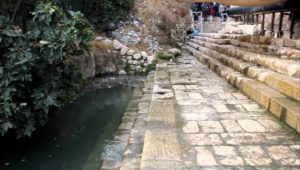
POOL OF SILOAM DISCOVERED IN 2004 CONFIRMS JOHN 9:7

POOL OF SILOAM DISCOVERED IN 2004 CONFIRMS JOHN 9:7

“‘Go,’ he told him, ‘wash in the Pool of Siloam’ (this word means ‘Sent’). So the man went and washed, and came home seeing'” (John 9:7 NIV). The actual location of the Biblical Pool of Siloam has been discovered, thus confirming the Bible’s authenticity.

BIBLICAL BACKGROUND

“The Pool of Siloam” is just just one of many locations that were once doubted to exist until archaeology confirmed its existence. Until 2004, the pool and church built by Byzantine empress Eudocia to commemorate the site was thought by some Bible believers to have likely been the Pool of Siloam. Also, many “experts” doubted the existence of the Pool of Siloam, period. Many of these “experts” also doubted the authenticity of the entire gospel of John, thinking that it was written by someone other than the apostle John, sometime after the apostle John had died, and was a book of facts, mixed with legend and fiction.

Pool of Siloam steps
In 2004, the stepped remains of the ancient Siloam Pool, long thought to be located elsewhere, were uncovered near the City of David. According to the Gospel of John, it was at this sacred Christian site that Jesus healed the blind man.

Archaeological discoveries are forcing more and more skeptics to rethink their positions. The actual, genuine, Pool of Siloam that was in use in Jesus day was unexpectedly discovered in 2004. During construction work to repair a large water pipe south of Jerusalem’s Temple Mount, at the southern end of ridge known as the City of David, archaeologists began to uncover what we now know is the Pool of Siloam. Numismatic evidence—coins from the late Hasmonean period (circa 90 BCE) and from the Jewish revolt (circa 63 CE)—prove that this pool was in use in Jesus’ day. This and other evidence has convinced archaeologists beyond any doubt that this was indeed the Pool of Siloam in John 9:7.

“Hezekiah stopped the upper outlet for water from Gihon and redirected it underground westward to the City of David”—2 Chronicles 32:30 NAB read more

Sea Levels Much Lower Before Flood of Bible

Sea Levels Much Lower Before Flood of Bible

Click to Enlarge

The Bible tells us of a global flood, due to a tremendous amount of extra water being dumped onto the earth, to the point of covering all of earth’s highest mountains (Genesis chapters 6-8). This additional water caused sea levels to sharply rise globally, and means that sea levels were lower prior to this global flood.

“As it was in the days of Noah, so it will be at the coming of the Son of Man. In [those] days before the flood, the were eating and drinking, marrying and giving in marriage, up to the day that Noah entered the ark. They did not know until the flood came and carried them all away. So it will be [also] at the coming of the Son of Man”—Matthew 24:37-39 NAB

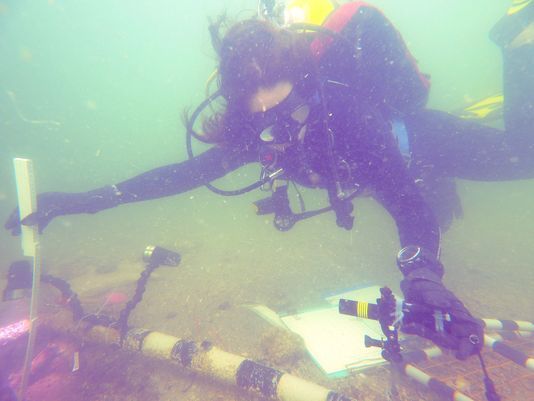
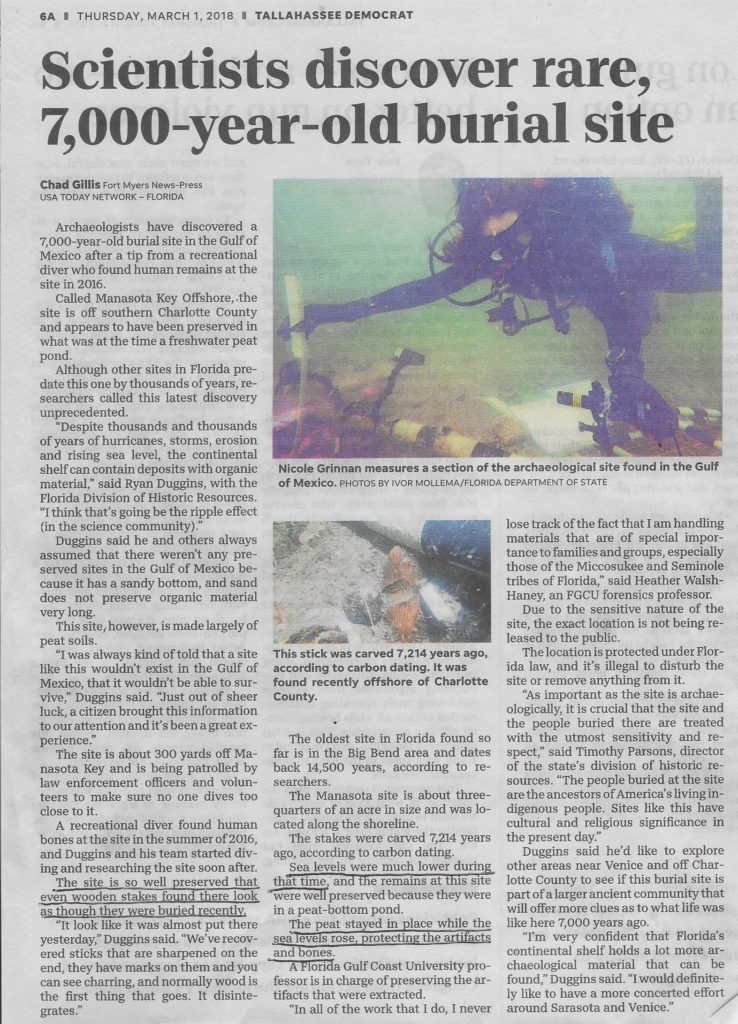
Archaeologists have discovered a 7,000-year-old burial site in the Gulf of Mexico after a tip from a recreational diver who found human remains at the site in 2016. More details can be read in this article.

The ancient burial site discovered off the southwest Florida coast lends credence to what we know from the Bible about the flood in Genesis 6-8. The article states that “sea levels were much lower during that time”, and then goes on to say that “sea levels rose”. How does this harmonize with the Biblical account of the global flood?

“All the springs of the great deep burst through, and the sluices of heaven opened. And heavy rain fell on earth for forty days and forty nights” (Genesis 7:11 NJB) read more

Clay Seals of Isaiah and Hezekiah Found

Clay Seals of Isaiah and Hezekiah Found


Critics of the Bible claim that it is largely a work of fiction. However, recent archaeological discoveries are proving the Bible true and its critics wrong. Two examples od this are the discoveries of the clay seals of the prophet Isaiah, and of King Hezekiah.

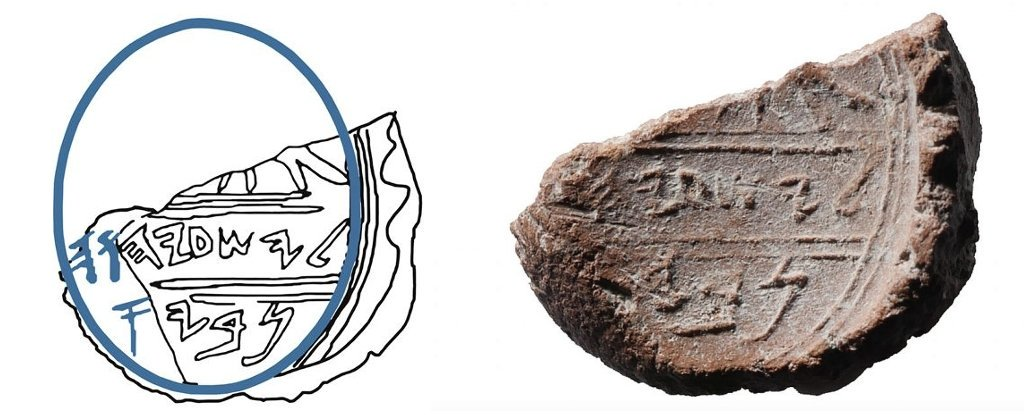
For the first time, archaeological evidence (a seal impression) of Isaiah has been discovered, it seems. See the article by Michelle Starr published on February 23, 2018. The book of Isaiah is quoted more often than any other prophetic Old Testament book, and is second only to Psalms in overall New Testament quotes. Below is the article about the discovery of the clay seal of the prophet Isaiah:

The Biblical figure Isaiah who prophesied the coming of the Messiah may have been an actual real person.

Researchers have found an ancient clay seal from around the time he was reportedly alive, marked with his name.

Called a bulla, the seal was retrieved from a 2,700-year-old midden in the Ophel, dating it to around 8th century BCE, and it’s inscribed with the Jewish prophet’s name.

It was found just 3 metres from where the bulla of King Hezekiah of Judah, to which Isaiah was an adviser, was found in 2015.

“We appear to have discovered a seal impression, which may have belonged to the prophet Isaiah, in a scientific, archaeological excavation,” said lead author Eilat Mazar of the Hebrew University in Jerusalem.

“If it is the case that this bulla is indeed that of the prophet Isaiah, then it should not come as a surprise to discover this bulla next to one bearing King Hezekiah’s name given the symbiotic relationship of the prophet Isaiah and King Hezekiah described in the Bible.”

The bulla, sadly broken, is about a centimetre (0.4 inches) in diameter, stamped with the name Yesha’yah[u] (Isaiah) in Hebrew letters. Following it were the letters NVY, which are the first three letters of the Hebrew word for prophet, which is spelled nun-beit-yod-aleph.

Whether or not the aleph was present is impossible to determine, since the bulla is broken after the yod. But if it had been, the seal would have read, in its entirety, “Isaiah the Prophet.”

“The absence of this final letter … requires that we leave open the possibility that it could just be the name Navi,” Mazar said. “The name of Isaiah, however, is clear.”

The seal could have belonged to some other Isaiah hanging around at the time, since the name was a common one, and bullae commonly reference the signatory’s father. Isaiah’s father was not Navi, but Amoz.

However, if the bulla does refer to Isaiah the Prophet, it would constitute the first evidence for his existence outside of religious texts, including the Bible, where his exploits are described in the Book of Isaiah.

The authorship of the Book is unclear, but he seemed to be very close to King Hezekiah, who ruled between around 727 and 698 BCE. It was Isaiah, according to the Bible, who advised Hezekiah to resist the warring Assyrians, preventing the invasion of Jerusalem by way of divine intervention.

Although the bulla can’t constitute definitive proof that Isaiah existed, it’s still an extraordinary find, Mazar said. Its proximity to the bulla of Hezekiah and the fact that only persons of status used bullae at least opens the very plausible possibility that the seal belonged to the Biblical Isaiah.

Also, fascinatingly, on the reverse side is the imprint of weave, indicating that the seal had been used to close a cloth package – and it’s marked by the fingerprint, likely from the person who sealed the package. Perhaps this was Isaiah himself.

“The discovery of the royal structures and finds from the time of King Hezekiah at the Ophel is a rare opportunity to reveal vividly this specific time in the history of Jerusalem,” Mazar wrote in her paper.

“The finds lead us to an almost personal ‘encounter’ with some of the key players who took part in the life of the Ophel’s Royal Quarter, including King Hezekiah and, perhaps, also the prophet Isaiah.”

The paper has been published in the journal Biblical Archaeology Review. read more

WP2Social Auto Publish Powered By : XYZScripts.com