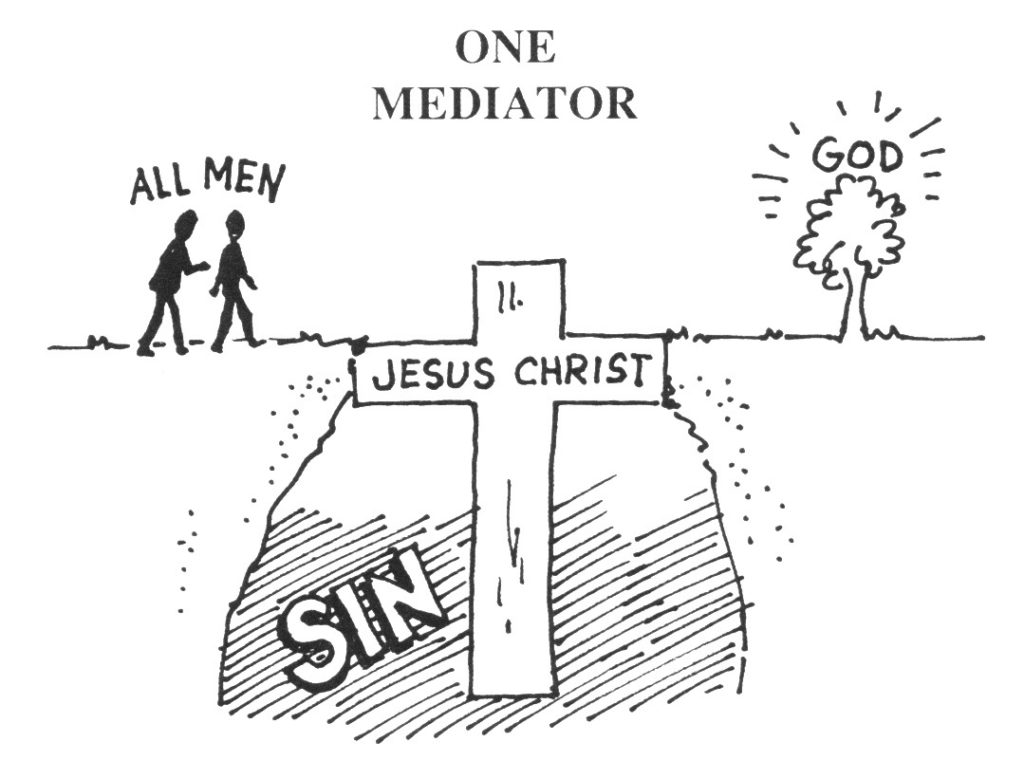
The Bible says God cannot die. Yet Trinitarians assert that Jesus must be God himself in order to die for the sins of mankind stands in stark contradiction to all scriptural evidence. It was Jesus, not God, who died for sins.
It was Jesus – not God – who died for the sins of mankind
“LORD [Yahweh], are you not from everlasting?My God, my Holy One, you will never die” (Habakkuk 1:12 NIV)
From this scripture, we can see that it is impossible that Jesus could be the God who would die for the sins of mankind, since the prophecy of Habakkuk was written over 600 years prior to Jesus and clearly states that God will never die.read more
Are the Doctrines of Purgatory and Hellfire in the Bible?
“Those who contend with you shall be as nothing and will perish . . . Those who war with you will be as nothing and non-existent”—Isaiah 41:11,12 LSB; NASB
The Bible teaches that death is non-existence. Purgatory is a Catholic doctrine which teaches there is an intermediate state after physical death in which some of those ultimately destined for heaven must first undergo purification, so as to achieve the holiness necessary to enter the joy of heaven, holding that certain offenses can be forgiven in this age, but certain others in the age to come. But what does the Bible teach? Let’s compare some Catholic claims about the doctrine of Purgatory to the Scriptures.read more
Jehovah’s Witnesses (JW’s) have historically been best known for their public and door-to-door witnessing, distributing literature such as The Watchtower and Awake! magazines. But how could Jehovah’s Witnesses be reasoned with about Biblical beliefs? How can a Christian witness to Jehovah’s witnesses?
First, you will not be able to prove JW’s wrong on such things as:
Trinity
Hell
Immortal Soul
Birthdays
Christmas
Political Involvement
War/Fighting for Country
JW’s are taught that these are some primary reasons they’re the only true Christians. JW’s are very well trained on these subjects and armed with scriptures. The scriptures actually do support their positions on the above issues, except for birthdays. How can a Christian witness to Jehovah’s Witnesses?read more
Must Christians Completely Obey? What Does the Bible Say?
The Old Testament was full of commandments to which the Israelites were obligated to be obedient. But what about the New Testament? Must Christians completely obey? Let’s find out what the Scriptures have to say.
SCRPTURES ABOUT OBEDIENCE
“Anyone who loves me will obey my teaching.” (John 14:23)
“Give yourselves completely to God… use your whole body as an instrument to do what is right for the glory of God.” (Romans 6:13 NLT)
“We will be ready to punish every act of disobedience, once your obedience is complete.” (2 Corinthians 10:6 NIV) “After you have become fully obedient.” (NLT)read more
Are God, Jesus and the holy Spirit a Trinity In Titus?
Are God, Jesus and the holy Spirit part of a Trinity? Is Jesus God? Let’s take a look at the Bible book of Titus to find some clues to answer these questions.
What does the Book of Titus say about God, Jesus, and the holy Spirit?
“Paul, a servant of God and an apostle of Jesus Christ.” (Titus 1:1NIV) “God” is named as being someone other than “Jesus Christ”. If Jesus was God, as Trinitarians claim, why are God and Jesus are referred to separately? It’s because they are separate and distinct individuals, and not merged into a mysterious Trinity! Why does Paul not say that he is a servant of the holy Spirit, or the Trinity? Because, even though the holy Spirit is real, it’s not a person, and the idea any sort of Trinity is not found in the Bible.read more
Ultimate Authority – Is it the Father, Jesus, holy Spirit, or Trinity?
Who is the ultimate authority? Most Churches believe, preach and teach the following:
“In this Trinity . . . None is greater, or less, than another. But the whole three Persons are . . . coequal”—Athanasian Creed
The Trinity is implied to be the ultimate authority in the famous creed quoted above. Not all Christians are in agreement about the roles of God the Father, Jesus, the holy Spirit and the Trinity. Some say God is the ultimate authority, some say Jesus is the ultimate authority, and some say the Trinity is the ultimate authority, and a few even say the holy Spirit is the ultimate authority . Some say they are equal. And some say Jesus is Almighty God. Red-letter Bibles put words the editors think were spoken by Jesus in red, which implies that Jesus’ words are more important than God’s words. But what does the Bible say? Let’s examine some scriptures to find the answer.read more
Are God, Jesus, and the Holy Spirit a Trinity in 2 Thessalonians?
In the Bible book of 2 Thessalonians, the Apostle Paul speaks of God, Jesus Christ, and the holy Spirit. If Paul and/or the early Christians believed Jesus is God or part of a Trinity, we should be able to find evidence of this in the New Testament letters. But is this the case in 2 Thessalonians? Is the Trinity in 2 Thessalonians? Let’s examine some of the pertinent verses to find out.
Paul speaks of both God, Jesus, and the holy Spirit in 2 Thessalonians. But does he believe God is a Trinity?
“To the church of the Thessalonians in God our Father and the Lord Jesus Christ. Grace and peace to you from God the Father and the Lord Jesus Christ. He will punish those who do not know God and do not obey the gospel of our Lord Jesus.” (2 Thessalonians 1:1,2,8 ). In the opening greetings in these first few verses of the letter, God is clearly distinguished from Jesus Christ, as an entirely separate being and there is no mention of the holy Spirit. “God” is referred to as “our Father”, not “the Lord Jesus Christ”. Notice that Jesus is called “Lord,” not God, and there is a conspicuous absence of any greetings from the holy Spirit! If the holy Spirit is the third person of the Trinity, and if the Trinity is a true doctrine, why is the Spirit not mentioned here? Because the holy Spirit isn’t a person, and he Trinity is a “false doctrine” (1 Timothy 1:3). These three verses completely exterminate the Trinity doctrine.read more
What Sincere Beliefs Must a Person Have To Be a True Christian?
Many people in the world today call themselves “Christian,” but there are so many conflicting beliefs and doctrines taught among these people. So what beliefs must a person hold in order to be a true Christian? In order to answer this question, we need to look to God’s Word. Let’s see what the Bible has to say.
Christians view the Bible as God’s revelation to humanity
“Without faith it is impossible to please God, because anyone who comes to him must believe that he exists and that he rewards those who earnestly seek him.” (Hebrews 11:6) So the first point is that one must believe that God exists, and becomes the rewarder of those sincerely seeking him.read more
The Bible Completely Equips Us & Doesn’t Need Supplements
Many people professing to be Christians today believe the Bible is useful but incomplete and needs to be supplemented by their own teachings and writings. But is this the case? Is it possible that the Bible completely equips us?
THE BIBLE’S SCRIPTURES GIVE ALL WE NEED
The Bible completely equips Christians because it is the only divinely inspired writing.“All Scripture is God-breathed and is useful for teaching, rebuking, correcting and training in righteousness, so that the servant of God may be thoroughly equipped for every good work.” (2 Timothy 3:16-17) the Bible is complete in itself, and needs no supplementation. Nothing needs to be read into it.read more
We’re going to take a look at the relationship between God and Jesus in this short article about the Bible book of 2 John. Is there any indication that Jesus is God, or is equal to God? What about the holy Spirit? Is it mentioned in this letter? Are God and Jesus the same person, or are they two separate and distinct individuals? Is the Trinity in the letter of 2 John? Let’s find out.
“Grace, mercy and peace from God the Father and from Jesus Christ, the Father’s Son.” (2 John 1:3) Notice the conjunction “and” separates “God the Father” and “the Father’s Son”. Obviously, they are separate and distinct, with Jesus identified, not as “God the Son,” an expression that occurs nowhere in the Bible, but as “the Father’s Son.” We also notice that greetings do not come from the holy Spirit, which is very unusual if it is a person. Many other Scriptures indicate that “the Spirit of God” (Matthew 12:28) is a real force (Luke 1:17; Acts 1:8), but not a person (Luke 12:12: Matthew 10:20).read more