When was the book of Daniel written? The dating of when the book of Daniel was written is controversial. Popular, common arguments, even by Biblical “scholars” nowadays, claim that the writer of Daniel was pseudonymous, and therefore a fraud. So they date the book of Daniel as being written in the second century BCE, during the time of the rule of Antiochus IV Epiphanes (175-164 BCE).
CRITICAL SCHOLARS CLAIM THE WRITER OF DANIEL IS A FRAUD
“You may be privately wondering, ‘How are we to tell that a prophecy does not come from Yahweh?’ When a prophet speaks in the name of Yahweh and the thing does not happen and the word is not fulfilled, it has not been spoken by Yahweh. The prophet has spoken presumptuously. You have nothing to fear from him”—–Deuteronomy 18:20-22 NJB. This verse is a Biblical test of whether prophecy is genuine, or not. To portray something as prophecy, when it was actually written after the fact, is fraudulent, and violates the principle expressed above. Yet, this exactly what critics claim the book of Daniel is — a fraud!
CRITICAL SCHOLARS REASONS FOR DATING DANIEL IN THE FIRST CENTURY BCE
Critical scholars main arguments for the late dating of Daniel are as follows:
- Jesus ben Sirach (Sirach 44-50), writing the book Ecclesiasticus, or The Wisdom of Ben Sira, in approximately 180 BCE, cited numerous Old Testament heroes—but not Daniel. This means that Daniel was unknown early in the second century BCE, so the Book of Daniel could not have been written prior to that time.
- The book’s theology, and its position in the Hebrew Scriptures with the Writings rather than the Prophets, and its “historical inaccuracies” of events prior to the the 2nd century BCE, demand a late date of composition. For example, Daniel 1:1,2 says, “In the third year of the reign of Jehoiakim king of Judah, Nebuchadnezzar king of Babylon came and laid siege to Jerusalem. The Lord handed over to him Jehoiakim, king of Judah” (NAB). However, Jeremiah 25:1 says it was “the fourth year of Jehoiakim” that was “the first year of Nebuchadnezzar.” (Also see Jeremiah 46:2).
- The Persian loan words used (including some titles for officials in chapter 3) indicate a late date for the book’s composition.
- The fiery furnace account in Daniel 1:1,2 reads like a legend. The omission of Daniel’s name in Daniel 3:12 is evidence that the story of Shadrach, Meshach and Abednego was a legend that had circulated independently of other narratives in the book. The author of Daniel conflated older tales into one story to inspire faithfulness during the persecutions of Antiochus IV.
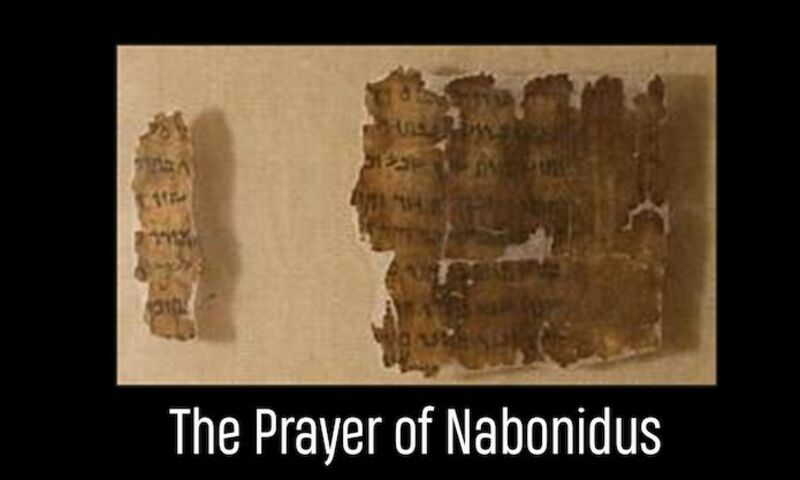
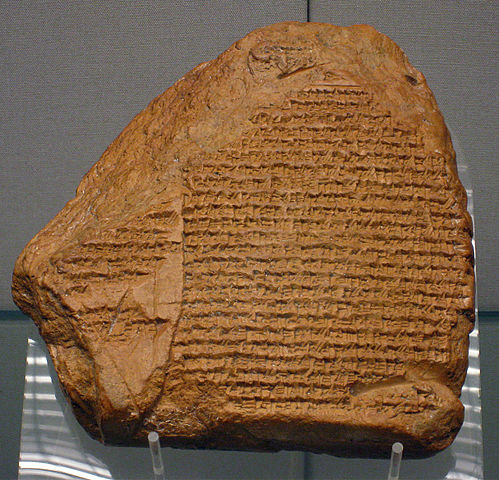
- Belshazzar is called “king” of Babylon and the “son” of Nebuchadnezzar in Daniel chapter 5; the actual king was Nabonidus, who was really his father. Until the 1850’s, for example, critics claimed that “Belshazzar” (Daniel 5:1) did not even exist, because there was no mention of him outside the Bible, or works dependent upon the Bible, and extant historical sources said that Nabonidus was the last king of Babylon.
- Darius the Mede (Daniel 5:30-6:28; 9:1) is unknown outside the Bible.
- The stories of Nebuchadnezzar’s insanity and of the fiery furnace read like pious legends—far-fetched miracle stories common in intertestamental Jewish texts.
- To avoid fulfillment of long-range predictive prophecy in Daniel, adherents of the late-date view usually claim the four kingdoms foreseen by Daniel as the Babylonians, the Medes, the Persians, and finally, the Greeks, including the Selucids and the Ptolemies.
- Long-range predictive prophecy is not possible. For example, the actions of Antiochus IV Epiphanes in Daniel 11:21-35 are so accurately described that they only masqueraded as prophecy, and had to have been written after the fact. Prominent among these critics is the Greek philosopher Porphyry of the 3rd century CE (about 233-304 CE), who produced a work called Against the Christians, in fifteen volumes, which he elucidated his detailed arguments.
- The statements, “The law of the Medes and the Persians . . . cannot be altered . . . cannot be repealed” (Daniel 6:8 NIV) isn’t supported by history outside of the Bible.
- Half of Daniel was written in Aramaic, a language Jews spoke during the intertestamental period. Daniel 3 also includes three Greek loan words—suggesting that the book was written after Greek culture had invaded the Near East.
- The Persian loan words in Daniel (including some titles for officials listed in chapter 3) indicate a late date for the book.
- There are a number of places in Daniel 1-7 where he is referred to in the third person, which is evidence he didn’t write the book himself.
- There are three additions to Daniel that were definitely written during Maccabean times. These were written 1st century BCE Greek (not in the Hebrew-Aramaic of the canonical part of Daniel), and are called, “The Song of the Three Young Men” (Daniel 3:24-90), “Susanna and the Elders” (Daniel 13), and “The Destruction of Bel and the Dragon” (Daniel 14).
- But all this above “evidence” is not as strong as it appears on the surface: Ben Sirach also omits mention of other famous Israelites, including Ezra. Also, Sirach may himself have been influenced by Daniel. In Sirach 36:10 he prayed, “Hasten the day, and remember the appointed time”—verbiage resembling Daniel 11:27 and Daniel 11:35. It may be that Ben Sirach offhandedly cited Daniel, which, of course, implies that the book already existed in his lifetime.
BIBLICAL EVIDENCE OF THE TIME OF WRITING
The Bible indicates that the book was composed in the sixth century BCE, finished by about 535 BCE, concurrent with the historical information it provides.
“In the first year of King Belshazzar of Babylon, as Daniel lay in bed he had a dream, visions in his head. Then he wrote down the dream: the account began: In the vision I saw during the night . . . “—Daniel 7:1,2 NAB
“After this first vision, I, Daniel, had another, in the third year of King Belshazzar . . .”—Daniel 8:1 NAB
“It was the third year that Darius, son of Ahasuerus, of the race of the Medes, reigned over the kingdom of the Chaldeans; in the first year of his reign, I, Daniel, perceived in the books the number of years . . .”—-Daniel 9:1,2 NAB
“In the third third year of Cyrus, king of Persia, a revelation was given to Daniel . . . In those days, I, Daniel, mourned three full weeks”—Daniel 10:1,2 NAB. “The third year of Cyrus’ reign was 536 BCE”—NLT footnote
“Now I shall tell you the truth . . . “—Daniel 11:1 NAB
“You, Daniel, keep secret the message and seal the book until the end . . . “—Daniel 12:4 NAB
These Biblical statements above all claim that the Book of Daniel was written by the ancient Hebrew prophet Daniel in the 6th century BCE. If these statements are not true, then the book is a forgery, a pseudonymous fraud.
FACTUAL EVIDENCE OF THE AUTHENTICITY OF DANIEL
The book of Daniel demonstrates familiarity with the history and culture of the seventh and sixth centuries BCE. Archaeological discoveries have confirmed the reliability of the book in many instances. Alleged historical inaccuracies have either been found to be nonexistent, or have reasonable explanations, upon close examination. Objective evidence supports the fact that the prophet Daniel himself wrote the book in the 6th century BCE, and definitively excludes the late-date, 2nd century BCE, hypothesis for the Book of Daniel on a number of counts:
Daniel claimed to write the book (Daniel 12:4), and from Daniel 7:2 onward he used the autobiographical first person. The Jewish Talmud agrees with this testimony, and Jesus Christ attributes quotes from Daniel 9:27; 11:31; 12:11, to “Daniel the prophet” (Matthew 24:15).
Ecclesiasticus or The Wisdom of Ben Sira is an apocryphal, uninspired book. The same list of Old Testament heroes in this book also omits Ezra and Mordecai (who were great heroes to postexilic Jews), Jehoshaphat, Job, and all the judges except Samuel. Daniel’s omission from a list in a non canonical book, that makes no claim to being exhaustive, doesn’t prove he was a fictitious character, or that the writer Book of Daniel is a pseudonymous fraud.
The Babylonian system of counting the years of a king’s reign did not include his accession year, but the system used in Judah did. Jehoiakim’s accession year was 608 BCE. Thus, Daniel, in Babylon, calculated according to the accession year system, wrote that Jehoiakim’s “third year” (1:1) was the year Nebuchadnezzar invaded Judah (605 BCE). But Jeremiah, in Jerusalem, calculated using the non-accession year system, and accurately stated that Jehoiakim’s “fourth year” was Nebuchadnezzar’s “first year” (25:1). It is unlikely that a shrewd forger, as critics claim the writer of Daniel was, would contradict so respected a source as Jeremiah, especially in the very first verse of the book.
Daniel did not complete the book until some time after the Persian conquest of Babylon and even served in the new administration, so the presence of older, pre-Hellenistic, Persian loan words is not surprising. In fact, it is highly significant, because they are strong evidence for a date of composition not long after the Babylonian exile in the 6th century BCE, since these are Old Persian words that ceased to used by about 300 BCE. Some of the technical terms used in Daniel 3 were already so obsolete by the 2nd century BCE that the translators of the Greek Septuagint Version (LXX) mistranslated them.
The three Greek loan words used (Daniel 3:5,7,10,15) do not prove a late date of composition. Greek musicians and musical terms were renowned, so their vocabulary came into use early, and their use here is not surprising. One of those terms (kitharis, “zither”) is documented in Homer (8th century BCE), and even though the others (psalerion, “harp”; symphonia, “double-flute”, “pipe[s]”, “bagpipe”, or “drum”), are not mentioned until after the 6th century BCE, the argument from silence does not mean they were unknown in Babylon in the 6th century BCE. Archaeology has demonstrated extensive Greek trade and influence in the Near East during this period, and Greek mercenaries even served in Nebuchadnezzar’s army. As a matter of fact, the sparse number of Greek terms in the book of Daniel is one of the more convincing arguments that Daniel wasn’t written in the 2nd century BCE, when Greek culture was at its height.
Punishment by burning (Daniel 3:6) is well attested in the ancient Near East. The Code of Hammurabi stipulated burning for various crimes. A letter from ancient Babylon was discovered that specifically mentions burning in a furnace as a punishment. Burning as a form of execution was a practice of Babylonian rulers. According to Jeremiah 29:22 Nebuchadnezzar executed two Jewish false prophets, Zedekiah and Ahab, by “fire.” Burning as a penalty for certain crimes appears twice in the Code of Hammurabi, the system of law set forth by that Babylonian king. Another early Babylonian king, Rim-Sin, is documented as having punished in this way.
The conjecture that, the omission of Daniel’s name as being among those who were required to be on the plain of Dura (3:12) to bow down to the giant image proves the account to be a legend, simply has no objective support. Daniel’s position as “ruler of the entire province of Babylon and chief prefect over all the wise men of Babylon” (Daniel 2:48 NAB) likely required his presence at the palace.
The three apocryphal additions to the book of Daniel are referred to as “pious legendary embroidery” in The New Bible Dictionary by Douglas. These additions are not historical, but are unreliable fables revolving around the great fame of Daniel. These additions do not disprove the fact that the canonical part of Daniel was written in the 6th century BCE.
In modern times evidence has come to light indicating the writer of the book had firsthand knowledge of the times he wrote about. He recorded, “King =&7=&