Browsed by
Tag: John 1:1

John 1:1

John 1:1

There is some controversy as to how should John 1:1 be translated. Trinitarians often use the verse to support their contention that Jesus is the eternal Almighty God.

The traditional rendering in English is:

In the beginning was the Word, and the Word was with God, and the Word was God.

There are many other variations of rendering John 1:1 which are more accurate according to the Greek text, both in translation or paraphrase, John 1:1c also exist:

  • 1808: “and the Word was a god” – Thomas Belsham The New Testament, in an Improved Version, Upon the Basis of Archbishop Newcome‘s New Translation: With a Corrected Text, London.
  • 1822: “and the Word was a god” – The New Testament in Greek and English (A. Kneeland, 1822.)
  • 1829: “and the Word was a god” – The Monotessaron; or, The Gospel History According to the Four Evangelists (J. S. Thompson, 1829)
  • 1863: “and the Word was a god” – A Literal Translation of the New Testament (Herman Heinfetter [Pseudonym of Frederick Parker], 1863)
  • 1864: “and a god was the Word” – The Emphatic Diaglott by Benjamin Wilson, New York and London (left hand column interlinear reading)
  • 1879: “and the Word was a god” – Das Evangelium nach Johannes (J. Becker, 1979)
  • 1885: “and the Word was a god” – Concise Commentary on The Holy Bible (R. Young, 1885)
  • 1911: “and [a] God was the word” – The Coptic Version of the New Testament in the Southern Dialect, by George William Horner.[17]
  • 1924: “the Logos was divine” – The Bible: James Moffatt Translation, by James Moffatt.
  • 1935: “and the Word was divine” – The Bible: An American Translation, by John M. P. Smith and Edgar J. Goodspeed, Chicago.[19]
  • 1955: “so the Word was divine” – The Authentic New Testament, by Hugh J. Schonfield, Aberdeen.
  • 1958: “and the Word was a god” – The New Testament of Our Lord and Saviour Jesus Anointed (J. L. Tomanec, 1958)
  • 1970, 1989: “and what God was, the Word was” – The New English Bible and The Revised English Bible.
  • 1975 “and a god (or, of a divine kind) was the Word” – Das Evangelium nach Johnnes, by Siegfried Schulz, Göttingen, Germany
  • 1975: “and the Word was a god” – Das Evangelium nach Johannes (S. Schulz, 1975);
  • 1978: “and godlike sort was the Logos” – Das Evangelium nach Johannes, by Johannes Schneider, Berlin
  • 1985: “So the Word was divine” – The Original New Testament, by Hugh J. Schonfield.
  • 1998: “and what God was the Word also was” – This translation follows Professor Francis J. Moloney, The Gospel of John, ed. Daniel J. Harrington.
  • 2017: “and the Logos was god” – The New Testament: A Translation, by David Bentley Hart.

GREEK ANALYSIS

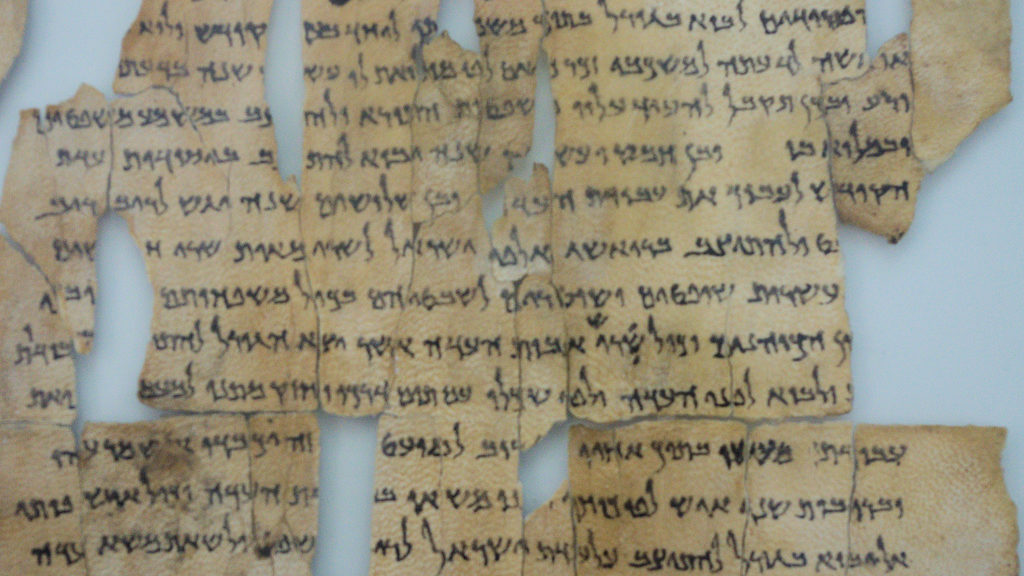
Jn 1:1 should rigorously be translated ‘the word was with the God [= the Father], and the word was a divine being'” (Dictionary of the Bible, 1965, by scholar John L McKenzie, S J). read more

The Fixed New Testament Text – a Huge Problem for Trinitarianism!

The Fixed New Testament Text – a Huge Problem for Trinitarianism!

The fixed New testament Text has been a huge problem for Trinitarianism.

“Command certain people not to teach false doctrines”—1 Timothy 1:3 NIV

Since the Trinity Doctrine is said to be the main, or primary, teaching, of Christianity, why is it so disputed down to this day?

Accurate history tells us that:

(1) Various Trinities were taught and believed in many pagan religions prior to Jesus, going all the way back to ancient Babylon, 3,000 years before Christ!

(2) The Bible’s Old Testament canon closed about 400 BCE, saying nothing about any Trinity, or Trinitarian ideas..

(3) The Bible’s New Testament canon closed about 100 CE, also lacking any mention of any Trinity, or Trinitarian ideas.

(4) The Greek New Testament Master Refined Text became even more strongly fixed than ever during the latter part of the 20th century, with the publication of the Nestle-Aland (N-A) 26th Edition (now in its 28th Edition) and the United Bible Societies’ (UBS) 3rd Edition (now in its 5th Edition). These two independently done Greek Texts are now identical. They are based upon collation and critical anaylsis of the 5,800 extant New Testament manuscripts, some of which are dated to the 2nd, 3rd and 4th centuries CE.

(5) The integrity of the New Testament (NT) Text we have today is so far greater than anything else from ancient times that there is nothing anywhere close to it in textual integrity. This is what we would expect from “the word of God” (1 Thessalonians 2:13).

(6) It can truly be said of Christianity that it is a textually based religion. It is “written down,” “with paper and ink” (John 21:25; 2 John 14 NLT). The popular myth that the text of the Bible has been changed through handwritten copying and recopying through the centuries is unsupported by the facts.

(7) It was accurately predicted that “men will come forward perverting the truth” (Acts 20:30 NAB). However, the fixed Biblical text has served as a powerful safeguard against doctrinal changes.

(8) The Trinity doctrine, as we know it today, with the three in one idea, did not even appear on the scene until late in the 4th century CE, and was greatly disputed then, and it still is.

From the Bible we learn that:

(1) Jesus based his teachings upon the scriptures. “Everything must be fulfilled that is written about me in the Law of Moses, the Prophets and the Psalms” (Luke 24:44 NIV), which is the way the entire Old Testament was referred to in those days.

(2) The early Christian Church based its decisions upon the Scriptures—Acts 15:12-18

(3) The early individual Christians based their teachings entirely on the Scriptures— “He reasoned with them from the Scriptures . . . they received the message with great eagerness and examined the Scriptures every day to see if what Paul said was true” (Acts 17:2,3,11 NIV). Also see Acts 28:23.

(4) Teaching “different doctrine” (1 Timothy 1:3 ESV), or “false doctrines” (1 Timothy 1:3 NIV), was/were not allowed.

(5) Teaching “a different Jesus”, or “a different gospel” was not allowed—2 Corinthians 11:4 NLT; Galatians 1:6 NIV; NAB

(6) Going “beyond what is written in the scriptures” was not allowed—1 Corinthians 4:6 GWT

(7) “Speculations” were not allowed—Timothy 1:4 NIV

(8) The Church was to “test” (1 John 4:1 NIV), and “weigh carefully, what is said” ( 1 Corinthians 14:29 NIV)

(9) The fixed text of the Bible, especially the New Testament, serves as a safeguard against “all kinds of strange teachings” (Hebrews 13:9 NIV)

(10) A false doctrine might take hold for a while, but the Bible’s fixed text tends to bring the true Biblical teachings back into focus. “All people are like grass, and all their glory is like the flowers in the field; the grass withers and the flowers fall, but the word of the Lord endures forever” (1 Peter 1:24,25 NIV). This is the reason for the huge controversy over Trinitarian doctrine today. A false doctrine, such as the Trinity, is developed through a ‘distortion of the scriptures’ (2 Peter 3:15,16).

(11) “The faith that was once for all handed down to the holy ones” (Jude 3 NAB) was in written form with the completion of the New Testament by the end of the 1st century. This, and other scriptures, implies that there is nothing “add to” it (Proverbs 30:5,6 NIV). In fact God has preserved his word, like nothing else has ever been preserved. “All people are like grass, and all their glory is like the flowers of the field; the grass withers and the flowers fall, but the word of the Lord endures forever” (1 Peter 1:24,25 NIV). This fixed New Testament text serves as a safeguard against any doctrinal changes. It is true that unscriptural doctrinal changes, such as the Trinity, have been made, but “because of the truth,” “those who love the truth,” (2 John 1,2reject them, and stick with what the Bible itself teaches.

This fixed text of the Bible, especially the New Testament, is why the Trinity is so disputed, and is, in fact, contradicted, by the Bible itself.

Not one aspect of the Trinity doctrine is found within the Biblical text itself.

Some c=&0=& translations=&1=& rendered in=&2=& (KJV),=&3=& in a way that seems to support the Trinity doctrine. This is because they were based on texts composed from manuscripts that had spurious changes.

For example, the words “testify in heaven: the =&4=&were added to 1 John 5:7,8These words have been used to “prove” the Trinity doctrine. However, textual criticism revealed that these words are not in any Greek manuscript prior to the 14th century, so they are obviously spurious.

The KJV translation of 1 Timothy 3:16, “God was manifested in the flesh,” was based on a corrupted text, which would seem to support the Trinity doctrine. Discoveries of older, more accurate Greek manucsripts, combined with modern textual analysis revealed that the most ancient copies read: “Without any doubt, the mystery of our religion is =&5=&

John 1:1 is a favorite go-to “proof text” of Trinitarians. The usual translation in English is: “In the beginning was the Word, and the Word was with God, and the Word was God.”  However, Koine’ Greek language doesn’t have the indefinite articles “a” and “an.” The Greek of John 1:1 reads, “the Word was with the God, and the Word was divine” (AAT). This is a big difference! Jesus was with THE God, that is, Almighty God, in heaven, prior to his coming to earth. The footnote to John 1:1 in the New American Bible (NAB) is quite informative: “Was God: lack of a definite article in Greek signifies predication rather identification.” Predication describes something about the subject. Jesus is godlike, but he’s not Almighty God. Once again, the Greek text, rather than Trinitarian spin, helps us to get the correct understanding. John 1:18correctly translated, is a big help to understanding John 1:1“No one has seen God at any time; the only begotten God who is in the bosom of the Father; He has explained Him” (NASB). Since lots of people saw Jesus, he could not be God, because, “no one has ever seen God” (1 John 4:12 NIV). Jesus is called “God”, but he is begotten, meaning he was created. He did not exist prior to his creation. His “origins are from of old, from ancient times” (Micah 5:2 NIV). Trinitarians don’t like this, so many translations render John 1:18 differently. But the Greek text trumps biased translations.

John 8:58 is usually rendered as, “before Abraham was born, I am” (NIV). Trinitarians claim this connects Jesus to being the “I am” of Exodus 3:14However, the Greek is more accurately rendered as “I existed before Abraham was born” (AAT), or the slightly less accurate, “before Abraham was even born, I have always been alive” (NLT margin).

Acts 20:28 is often translated in a way that indicates that God died for our sins: “The church of God, which He purchased with His own blood” (NASB). However, since “No one has ever seen God” (1 John 4:12), and he is “eternal” (1 Timothy 1:17 NIV), and “the blood of his Son Jesus cleanses us from all sin” (1 John 1:7 NAB), the Greek text of Acts 20:28 is better translated as: “The church of God that he obtained with the blood of his own Son” (NRSV).

The fixed New Testament text helps with Romans 9:5“Theirs the patriarchs, and from them, according to the flesh, is the Messiah. God who is over all be blessed forever” (NAB). This is often translated with Trinitarian bias, such as, “the Messiah, who is God over all” (NIV). The NAB footnote clarifies the Greek,  by explaining, “However, Paul’s point is that ‘God who is over all’ aimed to use Israel, which had been entrusted with every =&6=&The usual translation of, “the Messiah, who is God over all,” contradicts the Trinity doctrine anyway, because, “in this Trinity . . . none is greater, or less, than another. But the whole three Persons are . . . coequal” (Athanasian Creed). If Jesus was God over all, that would include being “over” the Father and the holy Spirit.

Another Trintarian favorite is Philippians 2:5,6“Christ Jesus, who being in the form of God, did not consider it robbery to be equal to God” (NKJV).  The Greek text, however, reads: “Christ Jesus, Who, though he was in the form of God, did not =&7=&

Titus 2:13 is usually rendered as “of our great God and savior =&8=&which makes it appear that Jesus Christ is Almighty God. However, since Paul offered greetings “from God the Father and Jesus Christ our savior” (NAB), it is obvious that Paul did not mean that Jesus is Almighty God. The more accurate translation is, “of the great God and of our savior Jesus Christ” (NAB; NRSV margin).

2 Peter 1:1 is likewise rendered as though Jesus Christ is Almighty God in most translations: “Through the righteousness of our God and savior Jesus Christ”. However, the Greek is more accurately translated as: “the righteousness of our God and the savior Jesus Christ” (2 Peter 1:1 NAB margin; NRSV margin; KJV; ASV; Weymouth; Aramaic Bible in Plain English).

The=&9=& renderings=&10=& modern refined Greek Texts, such as the N-A and UBS, upon which many modern=&11=&

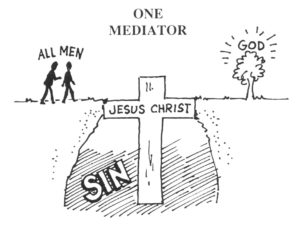
How Can Jesus Be God If He Is the Mediator?

How Can Jesus Be God If He Is the Mediator?

“There is one God and one mediator between God and mankind, the man Christ Jesus, who gave himself as a ransom for all”—1 Timothy 2:5,6 NIV

Mediator. One who represents God to humans and humans to God–and who removes all alienation between them by offering himself as a ransom for ‘all'”—NIV Study Bible footnote on 1 Timothy 2:5

The Bible says that Jesus Christ is the mediator BETWEEN God and mankind. Trinitarians claim that Jesus is God, and their “God-man” also. How do they explain this apparent contradiction?

They claim that only Jesus could be the mediator because he is the “God-man”, that is, he’s “fully god, fully man”, they claim”, thus being part and parcel of both parties he represents.

Jesus the Mediator
Jesus is the Mediator between God and mankind. Yet, Trinitarians claim Jesus is also God, and call him “God-man.”Trinitarians say: “Jesus MUST be God in order to be our mediator.”

That is the crux of their argument. Since there is nothing in the scriptures to support such an idea, Trinitarians resort to equivocation by changing the meaning of “mediator”, since Jesus being the mediator BETWEEN humans and God (1 Timothy 2:5) presents a huge problem for their Trinity doctrine. (2 Corinthians 10:3-4).

Their argument that Jesus must be God to be the mediator between God and humanity is self-defeating since the definition of mediator is “one who interposes between two parties at variance to reconcile; an intermediary agent or go-between.”

Thus, by definition, a mediator is neither of the two parties for whom he mediates. The two parties discussed here are the “one God” and “mankind”. The “one mediator” between these two parties is “Christ Jesus”. The foundation of their argument against the plain truth of 1 Timothy 2:5, therefore, rests on a bogus premise. Thus, their entire argument fails.

“Jesus answered, ‘I am the way, and the truth and the life. No one comes to the Father except through me”—John 14:6 NIV read more

Is the Son of God, Jesus Christ, Almighty God?

Is the Son of God, Jesus Christ, Almighty God?

Shown below are some scriptures that are used to prove Jesus Christ is Almighty God. Let’s carefully examine these in the light of the scriptures.

Isaiah 9:6 – “Mighty God”. Notice that the scripture doesn’t call him “Almighty God”. It calls him “Mighty God”. Jesus is powerful, but not all-powerful. Almighty God told Moses, “See, I have made you as God to Pharaoh” (Exodus 7:1 NKJV). The verse also predicts: “For to us a child is born, to us a son is given”. “Child” and “son”cannot apply to Almighty God because “God is spirit” (John 4:24), and “God is not human” (Numbers 23:19 NIV).

John 1:1“In the beginning was the Word, and the Word was with God, and the Word was God” (NAB). “Was God: lack of a definite article with ‘God’ in Greek signifies predication rather than identification” (NAB note on John 1:1). That means that “was God” is a predicate description about Jesus, but does not identify him as Almighty God. Other translations render it as:—“what God was, the Word was” – REB ; “The Word was divine” – AAT; Moffat. Jesus admitted, “I have come here from God” (John 8:42 NIV), so he couldn’t be Almighty God.

John 1:14 – Jesus “became flesh,” so Trinitarians call him “God-man.” But consider, thousands of people saw Jesus, and, “God is not human” (Numbers 23:19 NIV). In fact, Jesus said: “God is spirit” (John 4:24).

John 1:18“No one has seen God at any time” ( NASB).  Obviously, Jesus wasn’t, and couldn’t be, God Almighty, since, “No one has ever seen God” (1 John 4:12 NIV)

Romans 9:5“the Messiah, who is God over all” (NIV). However, “Paul’s point is that God when is over all aimed to use Israel, which had been entrusted with every privilege, in outreach to the entire world through the Messiah” (NAB note). Notice how this verse can be accurately translated: “theirs the patriarchs, and from them, according to the flesh, the Messiah. God who is over all be blessed forever” (NAB). “from them by natural descent came the Messiah. May God, supreme over all be blessed.” – REB – This verse is also incorrectly translated in some other translations to make it appear that Jesus, the Messiah, is God. The way many translations render this verse, “the Messiah, who is God over all,” contradicts the Trinity doctrine itself. “In this Trinity . . . None is greater, or less, than another. But the whole three Persons are . . . coequal” (Athanasian Creed). The accurate rendering of Romans 9:5, “the Messiah. God who is over all,” harmonizes with other scriptures, such as: “One God and Father of all, who is over all” (Ephesians 4:6).

Colossians 2:9 – “In him, in bodily form, lives divinity (not God) in all its fullness” – NJB; see also CSB; NAB. “And in Christ you have been brought to =&0=&If having God’s fullness made one God, then Christians would be God also, because they “have been brought to fullness.”.

Colossians 1:19 – “because God wanted all fullness to be found in him” (NJB; others). It was God’s decision and action that caused his “fullness” to be in Jesus.

Colossians 3:1“Christ is seated at the right hand of God” (NAB).  Obviously, Christ is not God, but is at “his right hand”.

2 Peter 1:1 –  ” . . . the righteousness of God and our Saviour Jesus Christ” (KJV). “Symeon Peter, a slave and apostle of Jesus Christ, to those who have received a faith of equal value to ours through the righteousness of our God and the savior Jesus Christ” (NAB margin). ” . . . through the righteousness of our God and the Savior Jesus Christ” (NRSV margin). ” . . . given through the saving justice of our God and of the Savior Jesus Christ” (NJB margin). (This verse is translated differently in many translations, making it appear that Jesus Christ is Almighty God). ” . . . of our God, and the savior, Jesus Christ” (Concordant Literal Translation). ” . . . of our God, and savior Jesus Christ” (Phillips). ” . . . of our God, and savior Jesus Christ” (Weymouth). That two different individuals are referred to is made clear by these accurate translations, as well as the very next verse:

2 Peter 1:2 – “the knowledge of God and of Jesus our Lord” – God and Jesus are different individuals, separate and distinct.

Matthew 1:23 – “they will call Immanuel, a name which means ‘God-is-with-us.'” – NJB. Twice in context, we’re told his name is Jesus (1:21,25; 2:1) – Does not mean Jesus is God. See the list of Hebrew names that incorporate God’s name (i.e. Jehu means “Yahweh is He” (2 Kings 9:2)), in the article on this website entitled, “Is Jesus Christ Almighty God?—Matthew”.

Luke 1:31,32,35 – “You shall name him Jesus. He will be great and will be called Son of the Most High . . . the child to be born will be called holy, the Son of God” (NAB) – This is who the angel said he was, not God. “Son of the Most High” means that Jesus is not “the Most High,” but is his “Son.” “The Son of God” is certainly not God Almighty. In the Bible, Jesus is never called “God the Son,” an unscriptural term that Trinitarians like to use.

Hebrews 1:3“The Son is the radiance of God’s glory and the exact representation of his being” (NIV). “Radiance” and “representation” are terms that indicate that Jesus is not God, but that he is like God. “He is the reflection of God’s glory.” NJB – Obviously, he couldn’t be God. An image in a mirror is not the same as the original, not even equal to it..

Hebrews 1:8“But of the Son he says, ‘God is your throne forever and ever'” (NRSV margin). “God is your throne.” – AAT; Moffat. (translation issue, with many translations rendering the verse: “Your throne, O God,” making it appear that Jesus is God). This verse quotes Psalm 45:6, which can be accurately rendered, “Your throne is from God” (NJB).

 Matthew 8:29; Luke 4:34,41 – Demons acknowledged Jesus was “the Son of God” or “the Holy One of God”, but never said that Jesus was God Himself.

Mark 14:61-64 – Saying he is “the Christ, the Son of the Blessed One…the Son of Man sitting at the right hand of the Mighty One,” obviously means he is a different person than his Father, since the Son is different from the Father, and sitting at the right hand of God sets him apart from God also.

Daniel 7:13,14 NASB- Referencing Jesus as the “Son of Man” who “approached the Ancient of Days” and “was given authority…so that all people would obey him” also means he is not the Ancient of Days, not  “God”, who is “from eternity” (Psalm 90:2 NJB), not “Yahweh”, who “never dies” (Habakkuk 1:12 NJB), but he is the Son.

John 8:58 – “Before Abraham was born, I am,” is not even good English, it’s in the wrong tense of the verb, because it is wrongly translated. Nevertheless, Trinitarians often use this verse to “prove” Jesus is God by connecting this “I am” to the “I Am” of Exodus 3:14A better translation of John 8:58 is: “before Abraham was even born, I have always been alive” (NLT margin). This shows that the issue was Jesus’ age, not his identity. It should more accurately rendered: “I existed before Abraham was born” – AAT; Moffat.; CBW.

John 17:5 – “Father, glorify me in your presence with the glory I had with you before the world began.” – NIV ftn. – Obviously an inferior [Jesus] speaking to a superior [God].

Revelation 1:17-18 – “I am the First and the Last. I am the Living One; I was dead.” This Jesus could not be God since Habakkuk 1:12 says God “will never die.”

John 10:11 – “I am the good shepherd,” does not make Jesus God, since the context says:

John 10:15 – “The Father knows me”

John 10:17 – “my Father loves me”

John 10:18 – “This command I received from my Father.”

John 10:36 – “I am the Son of God”. Jesus was accused of ‘making himself God’ (John 10:33), and his refutation of that here in verse 36 is clear proof that Jesus did not claim to be God.

Obviously there are two people here in these scriptures. Jesus was with the Father (John 1:2), who is superior, prior to coming to earth, and who cannot die (Habakkuk 1:12), whereas Jesus died (1 Corinthians 15:3), and “was dead” (Revelation 1:18) for a time. So there is a distinct difference between them.

Matthew 25:31-33 – Yes, the Son of Man, not the Ancient of Days, will do the judging. Why?

John 5:27 – Because the Father has given the Son of Man, Jesus,  authority to do the judging.

John 8:12 read more

WP2Social Auto Publish Powered By : XYZScripts.com