Browsed by
Tag: humans

Scientists Have Finally Discovered the First Humans Used Tools

Scientists Have Finally Discovered the First Humans Used Tools

 
Pure iron chips with an iron cube
Scientists have recently come to the realization that the first humans used tools. If they had believed the Bible, they would have already known this, which gives Bible believers quite an advantage over non-believers.   “The law of Yahweh is perfect, restoring the soul, The testimony of Yahweh is sure, making wise the simple” (Psalm 19:7 LSB). ” . . . making the inexperienced wise” (Psalm 19:7 CSB)   Secular history of events prior to the global flood of Genesis 6-8, 4,500-5,500 years ago, is non-existent, so the only reliable history of that time is recorded in the Bible, which is one way that ‘Yahweh God makes the inexperienced wise’.   The BBC reports on the recent discovery that the earliest humans used tools.

Stone tool discovery suggests very first humans were inventors
BBC, November 4, 2025

The very first humans millions of years ago may have been inventors, according to a discovery in northwest Kenya.
Researchers have found that the primitive humans who lived 2.75 million years ago at an archaeological site called Namorotukunan used stone tools continuously for 300,000 years.
Evidence previously suggested that early human tool use was sporadic: randomly developed and quickly forgotten.
The Namorotukunan find is the first to show that the technology was passed down through thousands of generations.
According to Prof David Braun, of George Washington University, in Washington DC, who led the research, this find, published in the journal Nature Communications, provides incredibly strong evidence for a radical shake-up in our understanding of human evolution.
“We thought that tool use could have been a flash in the pan and then disappeared. When we see 300,000 years of the same thing, that’s just not possible,” he said.
“This is a long continuity of behaviour. That tool use in (humans and human ancestors) is probably much earlier and more continuous than we thought it was.”
The stone tools were so sharp that the researchers could cut their fingers on some of them
Archaeologists spent ten years at Namorotukunan uncovering 1,300 sharp flakes, hammerstones, and stone cores, each made by carefully striking rocks gathered from riverbeds. These are made using a technology known as Oldowan and is the first widespread stone tool-making method.
The same kinds of tools appear in three distinct layers. The deeper the layer the further back the snapshot in time. Many of the stones were specially chosen for their quality, suggesting that the makers were skilled and knew exactly what they were looking for, according to the senior geoscientist on the research team, Dr Dan Palcu Rolier of the University of São Paulo in Brazil.
“What we see here in the site is an incredible level of sophistication,” he told BBC News.
“These guys were extremely astute geologists. They knew how to find the best raw materials and these stone tools are exceptional. Basically, we can cut our fingers with some of them.”
Geological evidence suggests that tool use probably helped these people survive dramatic changes in climate.
The landscape shifted from lush wetlands to dry, fire-swept grasslands and semideserts,” said Rahab N. Kinyanjui, senior scientist at the National Museums of Kenya.
These sharp environmental changes would normally force animal populations to adapt through evolution or move away. But the toolmakers in the region managed to thrive by using technology rather than biological adaptation, according to Dr Palcu Rolier.
“Technology enabled these early inhabitants of East Turkana to survive in a rapidly changing landscape – not by adapting themselves, but adapting their ways of finding food.”
The evidence of stone tools at different layers shows that for a long and continuous period, these primitive people flew in the face of biological evolution, finding a way of controlling the world around them, rather than letting the world control them.
And this happened at the very beginning of the emergence of humanity, according to Dr Palcu Rolier.
“Tool use meant that they did not have to evolve by modifying their bodies to adapt to these changes. Instead, they developed the technology they needed to get access to the food: tools for ripping open animal carcasses and digging up plants.”
The Namorotukunan site, located in Kenya’s Turkana Basin, lies close to the ancient course of a long dried up major river which once attracted settlements of early humans and their ancestors
There is evidence for this at the site: of animal bones being broken, being cut with these stone tools, which means that through these changes, they were consistently able to use meat as a way of sustenance.
“The technology gives these early inhabitants an advantage, says Dr Palcu Rolier.
“They are able to access different types of foods as environments change, their source of sustenance is changing, but because they have this technology, they can bypass these challenges and access new food.”
At around 2.75 million years ago, the region was populated by some of the very first humans, who had relatively small brains. These early humans are thought to have lived alongside their evolutionary ancestors: a pre-human group, called australopithecines, who had larger teeth and a mix of chimpanzee and human traits.
The tool users at Namorotukunan were most likely one of these groups or possibly both.
And the finding challenges the notion held by many experts in human evolution that continuous tool use emerged much later, between 2.4 and 2.2 million years ago, when humans had evolved relatively larger brains, according to Prof Braun.
“The argument is that we’re looking at a pretty substantial brain size increase. And so, often the assertion has been that tool use allowed them to feed this large brain.
“But what we’re seeing at Namorotukunan is that these really early tools are used before that brain size increase.”
“We have probably vastly underestimated these early humans and human ancestors. We can actually trace the roots of our ability to adapt to change by using technology much earlier than we thought, all the way to 2.75 million years ago, and probably much earlier.” read more
How Can Jesus Be God If He Is the Mediator?

How Can Jesus Be God If He Is the Mediator?

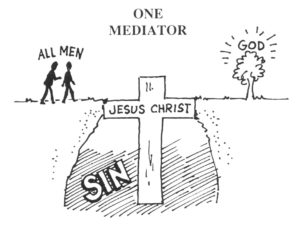
“There is one God and one mediator between God and mankind, the man Christ Jesus, who gave himself as a ransom for all”—1 Timothy 2:5,6 NIV

Mediator. One who represents God to humans and humans to God–and who removes all alienation between them by offering himself as a ransom for ‘all'”—NIV Study Bible footnote on 1 Timothy 2:5

The Bible says that Jesus Christ is the mediator BETWEEN God and mankind. Trinitarians claim that Jesus is God, and their “God-man” also. How do they explain this apparent contradiction?

They claim that only Jesus could be the mediator because he is the “God-man”, that is, he’s “fully god, fully man”, they claim”, thus being part and parcel of both parties he represents.

Jesus the Mediator
Jesus is the Mediator between God and mankind. Yet, Trinitarians claim Jesus is also God, and call him “God-man.”Trinitarians say: “Jesus MUST be God in order to be our mediator.”

That is the crux of their argument. Since there is nothing in the scriptures to support such an idea, Trinitarians resort to equivocation by changing the meaning of “mediator”, since Jesus being the mediator BETWEEN humans and God (1 Timothy 2:5) presents a huge problem for their Trinity doctrine. (2 Corinthians 10:3-4).

Their argument that Jesus must be God to be the mediator between God and humanity is self-defeating since the definition of mediator is “one who interposes between two parties at variance to reconcile; an intermediary agent or go-between.”

Thus, by definition, a mediator is neither of the two parties for whom he mediates. The two parties discussed here are the “one God” and “mankind”. The “one mediator” between these two parties is “Christ Jesus”. The foundation of their argument against the plain truth of 1 Timothy 2:5, therefore, rests on a bogus premise. Thus, their entire argument fails.

“Jesus answered, ‘I am the way, and the truth and the life. No one comes to the Father except through me”—John 14:6 NIV read more

Are People Predestined, or Do They Have Free Will?

Are People Predestined, or Do They Have Free Will?

Free Will
Do humans really have free will?

Are humans predestined, or do they have free will?

‘Predestination’ is a word often used to signify God’s foreordaining of all events of world history — past, present, and 

future. This usage is quite appropriate. In Scripture and historic Protestant theology, ‘predestination’ refers specifically  to God’s decision, made in eternity before the world existed, regarding the final destinies of individual persons . . . it is usual in Protestant theology to define predestination as including both God’s decision to save some from sin (election) and the corresponding decision  not to save others (reprobation)”—The Reformation Study Bible, page 1345 read more

Where is our Last Common Ancestor (LCA)?

Where is our Last Common Ancestor (LCA)?

Last Common Ancestor (LCA)
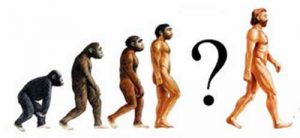
Darwinists persistently assert that there is a “missing link” between humans and apes

“He catches the wise in their own =&0=&

“We still have not found the missing link between us and apes” is the title of an article published by BBC News on May 18, 2017. The article is about the search for a “missing link.” Since there are no living creatures that fill in the gaps or “missing links” between humans and apes, Darwinists persistently assert that there was a “last common ancestor” (LCA). “Most people know it by a non-scientific name: ‘the missing link.'”

“Scientists have been on the trail of the LCA for decades, and they still have not found it.” It has a lot in common with Big Foot – you know it has to be out there somewhere. The only problem is you never can find it. Scientists have had a lot of trouble trying to even agree on much of anything about this LCA. But the article assures us that the “fossilized remains of the LCA might come to light any time.”

Really?

“They might even be discovered this very year.” Don’t hold your breath, though. Why? “Because there is so little agreement on what the LCA should look like, researchers will interpret the fossils differently, the article admits. Never fear, though, for the safety of the evolution theory of Darwinism! Just as any and all critics and criticism of the ancient goddess Artemis was and were drowned out with “shouting: ‘Great is Artemis of the Ephesians!'” (Acts 19:28 NIV) So it is today with the goddess of Darwinism.

Never mind that all living things were both created and reproduce “according to their kinds.” (Genesis 1:11-12; Genesis 1:21-25 CSB) Never mind that no “missing links” exist in the world today. Never mind that scientists cannot agree on any LCA or “missing link” for humans and animals. These truths are generally “suppressed.” (Romans 1:18 CSB) Darwinists “have exchanged the truth of God for a lie.” (Romans 1:25 NIV; CSB) This LCA has been asserted now for the past 150 years. The only problem is they can’t find it, because it doesn’t exist. “Instead, their thinking became nonsense” (Romans 1:21 CSB), “although claiming to be wise.” (Romans 1:22 CSB) And no wonder: “they have rejected the word of the LORD, so what wisdom do they really have?” (Jeremiah 8:9 CSB)

WP2Social Auto Publish Powered By : XYZScripts.com