“Do not believe every spirit, but test the spirits to see whether they are from God, because many false prophets have gone out into the world. ” (1 John 4:1 NIV) Is the Trinity in James?
Is the Trinity in James? James’ short general letter to early Christians doesn’t have a plethora of references to God, Jesus, and the holy Spirit, but what it does have is more than enough to figure out whether the Trinity doctrine is in the book of James. First of all, notice who James is a servant of:
“James, a servant of God and of the Lord Jesus Christ” (James 1:1 NIV). We immediately notice that “God” is identified as being someone other than “the Lord Jesus Christ”. James identifies himself as serving two distinct personages, namely Almighty God and Jesus Christ. These two are not mysteriously merged together, as Trinitarians assert. Their distinctive separateness is maintained. Notable by absence are references to the Trinity and the holy Spirit. If these are real, why isn’t James serving them?—Perhaps because the Trinity is fictional. He’s not serving the holy Spirit because it is not a person, even though it is real. “The holy Spirit” is called “it” at John 1:32 (ESV); 14:17 (NAB, REB), Acts 2:33; 8:16; 11:15 NAB, and Romans 8:16,26,27 (NAB; REB). Persons are not called “it”. The holy Spirit is God’s “power” (Acts 1:8), not a person.read more
Is the Trinity doctrine in the book of Colossians? Let’s examine all the verses in this Bible book where God and Jesus are mentioned in relation to each other. Also. let’s look for any references to the holy Spirit, which is said to be the third person of the Trinity. Then, let’s see whether what Bible says agrees with Trinitarianism, or proves it to be false. Notice all the references in this letter to the superior position of Almighty God toward his Son, Jesus Christ, and the subordinate position of Jesus Christ in relation to his heavenly Father.read more
2 Peter—Is Jesus Christ Almighty God, or Part of a Trinity?
Trinitarian bias has influenced translators to render the first verse of the letter of 2 Peter in a way that makes it appear as though Jesus is Almighty God. For example,
“by the righteousness of our God and Savior Jesus Christ” (2 Peter 1:1ESV). read more
Can God the Father of the Bible be the only Almighty?
“The Father is Almighty, the Son is Almighty, and the
Holy Spirit Almighty. And yet they are not three Almighties, but one Almighty. So the Father is God, the Son is God, and the Holy Spirit is God. And yet there are not three Gods, but one God”—The Athanasian Creedread more
Are God, Jesus and the holy Spirit a Trinity In Titus?
Are God, Jesus and the holy Spirit part of a Trinity? Is Jesus God? Let’s take a look at the Bible book of Titus to find some clues to answer these questions.
What does the Book of Titus say about God, Jesus, and the holy Spirit?
“Paul, a servant of God and an apostle of Jesus Christ.” (Titus 1:1NIV) “God” is named as being someone other than “Jesus Christ”. If Jesus was God, as Trinitarians claim, why are God and Jesus are referred to separately? It’s because they are separate and distinct individuals, and not merged into a mysterious Trinity! Why does Paul not say that he is a servant of the holy Spirit, or the Trinity? Because, even though the holy Spirit is real, it’s not a person, and the idea any sort of Trinity is not found in the Bible.
“Grace and peace from God the Father and from Christ Jesus our Savior.” (Titus 1:4 NIV) “God” is identified as someone other than Jesus, and is named as “the Father,” not the Son, or the holy Spirit, or the Trinity. Jesus is separate and distinct from God. “Grace and peace” are not said to come from the Trinity, because it is fictional, nor are they said to come from the holy Spirit, because it is not a person.
Many translations render Titus 2:13 as though Jesus and Almighty God are the same being, essence, or substance, due to Trinitarian bias, like this: “the appearing of the glory of our great God and Savior, Jesus Christ” (Titus 2:13 ESV). More accurately, however, the verse is translated as in the following fourteen Bible translations:
“As we await the blessed hope, the appearance of the glory of the great God and of our Savior Jesus Christ” (Titus 2:13 NAB).
“looking for the blessed hope and the appearing of the glory of glory our =&0=&
“Looking for that blessed hope, and the glorious appearing of the great God and our Saviour Jesus Christ” (Titus 2:13 KJV).
“the appearing of the glory, of the great God and of our savior, the Anointed One, Jesus” (Titus 2:13Hart)
“While we wait for the blessed hope and the manifestation of the glory of our great God and our Savior, Jesus Christ” (Titus 2:13 NRSV margin).
“looking for the blessed hope and appearing of the glory of the great God and our Saviour Jesus Christ” (Titus 2:13 ASV).
“Looking for the blessed hope and coming of the glory of the great God and our Savior Jesus Christ” (Titus 2:13 Douay)
In the Bible book of 2 Thessalonians, the Apostle Paul speaks of God, Jesus Christ, and the holy Spirit. If Paul and/or the early Christians believed Jesus is God or part of a Trinity, we should be able to find evidence of this in the New Testament letters. But is this the case in 2 Thessalonians? Is the Trinity in 2 Thessalonians? Let’s examine some of the pertinent verses to find out.
Paul speaks of both God, Jesus, and the holy Spirit in 2 Thessalonians. But does he believe God is a Trinity?
=&0=&
The Bible Completely Equips Us & Doesn’t Need Supplements
Many people professing to be Christians today believe the Bible is useful but incomplete and needs to be supplemented by their own teachings and writings. But is this the case? Is it possible that the Bible completely equips us?
THE BIBLE’S SCRIPTURES GIVE ALL WE NEED
The Bible completely equips Christians because it is the only divinely inspired writing.“All Scripture is God-breathed and is useful for teaching, rebuking, correcting and training in righteousness, so that the servant of God may be thoroughly equipped for every good work.” (2 Timothy 3:16-17) the Bible is complete in itself, and needs no supplementation. Nothing needs to be read into it.
BIBLICAL SUPPLEMENTATION NOT NEEDED
“Every word of God is flawless; he is a shield to those who take refuge in him. Do not add to his words, or he will rebuke you and prove you a liar.” (Proverbs 30:5-6) The Bible is perfect because it is God’s Word and does not need to be supplemented.
“Do not believe every spirit, but test the spirits to see whether they are from God, because many false prophets have gone out into the world. ” (1 Jn 4:1)
“I warn everyone who hears the words of the prophecy of this scroll: If anyone adds anything to them, God will add to that person the plagues described in this scroll. And if anyone takes words away from this scroll of prophecy, God will take away from that person any share in the tree of life and in the Holy City, which are described in this scroll.” (Revelation 22:18-19) Adding to or subtracting anything from the Bible is condemned by God. Commentaries in harmony with what the Bible actually says are fine, but nothing written by humans is equal to the scriptures.
“Sanctify them by the truth; your word is truth.” (John 17:17) The Bible is God’s Word.
THE INSPIRED WRITERS
“Remember what the apostles of our Lord Jesus Christ foretold.” (Jude 17) The word of the apostles was authoritative. The New Testament was written by four apostles directly chosen by Jesus, namely, Matthew, John, Peter and Paul. Four other close associates of the apostles also wrote the New Testament.
1 Corinthians 15:7 – “Then he appeared to James, then to all the apostles.” Jesus appeared to James.
In the Bible, particularly the New Testament letters, greetings are given from God and Jesus in 20 of the 21 New Testament canonical letters. We know that God the Father and Jesus Christ are both persons, so we should expect to see their greetings, and we do in these 20 letters. (Third John does not have such a greeting or praises.) But what about the Holy Spirit and the Trinity? If the holy Spirit is a person, or if the Trinity is a real entity, we should expect to see some type of greetings from the holy Spirit, and/or the Trinity, and/or praises to the holy Spirit, as well. But is this the case? Let’s examine both the greetings and the praises in the New Testament letters to find out.
Where are greetings or praises from or to the holy Spirit and the Trinity in the Bible letters?
GREETINGS
“Grace and peace to you from God our Father and the Lord Jesus Christ.” (Romans 1:7)
“Grace and peace to you from God our Father and the Lord Jesus Christ.” (1 Corinthians 1:3)
“Grace and peace to you from God our Father and the Lord Jesus Christ.” (2 Corinthians 1:2)
“Grace and peace to you from God our Father and the Lord Jesus Christ.” (Galatians 1:3)
“Grace and peace to you from God our Father and the Lord Jesus Christ.” (Ephesians 1:2)read more
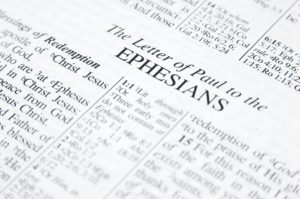
Is The Trinity In Ephesians? Is Jesus Christ Almighty God?
This article is one of a series about what is stated concerning Jesus in the various books of the New Testament, the book of Ephesians. Almighty God and the holy Spirit are also discussed to see if there is any evidence of a Trinity doctrine in this Biblical letter, which is all about doctrine. A key component of the Trinity doctrine is that the holy Spirit is a person. In this article, we’ll see whether the Trinity is in Ephesians.
The Book of Ephesians provides some clues as to whether or not Jesus Christ is Almighty God
Ephesians 1:1,2 – “…an apostle of Christ Jesus by the will of God . . . from God our Father and the Lord Jesus Christ” God are Jesus are separate individuals as we can see from this scriptural text. “To God’s holy people in Ephesus… in the Lord Jesus Christ.” Notice how many times in this letter God and Jesus are both mentioned, but as separate and distinct persons, with God being superior, the “greater” (John 14:28), and Jesus as inferior. Paul is “an apostle of Jesus Christ by the will of God”! Why is it not God’s will that Paul also be an apostle of the holy Spirit, or the Trinity? Why is the letter not also from the holy Spirit or the Trinity? It’s because the holy Spirit is not a person, and the Trinity isn’t in Ephesians, nor does it exist!
Ephesians 1:3 – “…to the God and Father of our Lord Jesus Christ.” This verse clearly indicates that Jesus has a God over him. This God of Jesus is his Father. Someone who has God over him cannot be God. The fact that Jesus is called “Lord” obviously doesn’t make him God. This is further confirmed by other scriptures, such as, “the God and Father of our Lord Jesus Christ” (2 Corinthians 1:3), “God, your God” (Hebrews 1:9), “his God and Father” (Revelation 1:6).
Ephesians 1:5-7 – “God decided in advance to adopt us into his own family by bringing us to himself through Jesus Christ . . .we praise God for the glorious grace he has poured out on us who belong to his dear Son. He is so rich in kindness and grace that he purchased our freedom with the blood of his Son and forgave our sins” ” (NLT). God, as superior, is obviously calling the shots, operating through his Son Jesus Christ. Almighty God the Father, who is the one in control, gave Jesus as redeemer of sinful humans. God, the purchaser, “purchased our freedom with the blood of his Son”. This means that “Christ died” (1 Corinthians 15:3), whereas “God . . . will not die” (Habakkuk 1:12 NIV). As the famous scripture says, “God so loved the world that He gave His only begotten Son” (John 3:16 LSB). “God” is clearly shown to be someone other than “his Son”.
Ephesians 1:9,12 – “He [God] made known to us the mystery of his will according to his good pleasure, which he purposed in Christ.”(NIV). “God’s purpose was that we Jews who were the first to trust in Christ would bring praise and glory to God” (NLT). God is the one who decided in advance what was going to happen, in Christ. God “purposed in Christ”, meaning he is the one in control, not Christ. God is shown to be someone other than Christ. These verses emphasizes the fact that Almighty God is the one who is in total control. We don’t find the Trinity in Ephesians.
Ephesians 1:13,14 – “You . . . were sealed with the promised holy Spirit, which is the first installment of our inheritance toward redemption as God’s possession, to the praise of his glory” (NAB). Most translations translate the Greek word “ho” as “who”, after the word “Spirit”, to convey the idea that it is a person, due to Trinitarian bias. However, here, believers are “sealed” with the holy Spirit, which is referred to, not as a person, but as an “installment”. An “installment” cannot be a person, in contrast to the Trinity doctrine, which declares the holy Spirit to be a person. The NAB accurately renders the Greek “ho” as “which”, instead of “who”. Without the holy Spirit being a person, the Trinity doctrine collapses.
Ephesians 1:15,17 – “Your faith in the Lord Jesus and your love for all God’s people . . . that the God of our Lord Jesus Christ, the glorious Father” (NIV). Once again, God is shown to be someone other than Jesus. Who is the God of Jesus? – His Father! Someone who has God over them cannot be God. Therefore Jesus cannot be God. Without Jesus being God, the Trinity doctrine collapses, and the Trinity is absent from Ephesians.
=&0=&– “He raised Christ from the dead and seated him at his right hand in the heavenly realms . . . God placed all things under his [Jesus’] feet and appointed him [Jesus] to be head” (NIV). God, the superior one, resurrected Jesus, who “was dead” (Revelation 1:18). “Christ died” (1 Corinthians 15:3), but “God” cannot “die” (Habakkuk 1:12 NIV). “God” then placed “Christ . . . at his right hand”. Since God put all things under Jesus and appointed Jesus head of the church, God is obviously more powerful, that is, “greater than” Jesus (John 14:28). God is obviously someone other than Christ. These verses eliminate the eternity and equality claims of the Trinity dogma.
Ephesians 2:4-7 – “God… made us alive with Christ.” “God raised us up with Christ.” “That… he might show… his grace… expressed… in Christ Jesus.” God is the one in charge and uses Christ to accomplish his purposes. God is presented by the scriptures as being supreme, and in total control of Jesus Christ, and is more powerful, that is, “greater than” Jesus (John 14:28). God is shown to be someone other than Christ. These verses eliminate both the eternity and equality claims of the Trinity dogma. We don’t find the Trinity in Ephesians.
Ephesians 2:18 – “It is through him we both have access in one Spirit to the Father” (ESV). “Access” to God the Father is gained, not only “through” Jesus Christ (John 14:6), and but also “in” the holy Spirit. “In one Spirit” indicates the holy Spirit is not a person. God operates “through” Jesus Christ to give his worshippers access to himself by means of the holy Spirit. This scripture presents God as superior to Christ (John 14:28), and the holy Spirit as being inanimate. This verse eliminates both the eternity and equality claims of the Trinity dogma.
Ephesians 2:20,22 – “built . . . with Christ himself as the chief cornerstone . . . in him you too are being built together to become a dwelling in which God lives by his Spirit” (NIV). In this metaphor, Christ is part of the building that God lives in. Who is greater? Part of the building, or the One who owns and lives there? – Obviously, the owner, who is also the resident, God the Father, is greater than the building, or any part of it, namely his Son, Jesus Christ. Also, the holy Spirit is referred to as ‘God’s Spirit’, indicating that it is not a person. This is powerful evidence that God the Father is much “greater than” Jesus Christ (John 14:6). Without equality between the Father and the Son, and without the holy Spirit being a person, the Trinity doctrine collapses under the weight of the scriptures.
Ephesians 3:8-9,11 – “Proclaiming . . . the good news of the unfathomable riches of Christ. . . of bringing to light how this hidden purpose was to be put into effect. It lay concealed for long ages with God the Creator of the universe . . . This accords with his age-long purpose which he accomplished in Christ Jesus our Lord” (REB). “God the Creator” owns and controls “the unfathomable riches of Christ.” Paul says that God revealed ‘this age-long hidden purpose’ by using Christ, again indicating that God “the Father is greater than” his Son, Jesus Christ (John 14:28).”God the Creator” is obviously the one who is in control, not “Christ Jesus”.
Ephesians 3:11-12 – “Christ Jesus our Lord, in whom we have freedom of access to God, with the confidence born of trust in him” (REB). “God” is presented as someone other than “Christ Jesus”. Approach, or access, to “God” is through “Christ Jesus” (John 14:9). “The phrase underscores the exclusivity of Christ as the mediator between God and humanity (1 Timothy 2:5)” (Bible Hub Study Bible). “The mediator between God and humanity” obviously cannot be God. God is clearly “greater than” Jesus (John 14:28). Without the Son of God, Christ Jesus being God, and without equality between them, the pillars of the Trinity are removed.
Ephesians 3:14-15 – “For this reason I kneel in prayer to the Father, from whom every family in heaven and on earth takes its name”(REB). Paul ‘kneels’ in reverent submission and prayer to the heavenly Father, as superior, even over Jesus. In Ephesians, “God” is identified as “the Father of our Lord Jesus Christ” (Ephesians 1:3). Although Trinitarians often pray to Jesus, there is no Biblical direction to do so, nor are there any Biblical examples of anyone doing so . Jesus himself directed his disciples, including us, to pray to “our Father in heaven” (Matthew 6:9), not to the Son, or the holy Spirit, or Trinity. “Every family: in the Greek there is wordplay on the word for the Father (patria, pater). The phrase could also mean ‘God’s whole family’ (cf. 2:21). ‘Every family’s name’ comes from the God Father, not the Son, not the holy Spirit, or the Trinity
Ephesians 3:16-17– “I pray that out of his glorious riches he may strengthen you with powers through his Spirit in your inner being, so that Christ may dwell in your hearts through faith” (NIV). As Paul continues his prayer, he prays that God the Father may strengthen the Ephesian Christians through his Spirit, that Christ may be in their hearts through faith. The holy Spirit is thus identified as God’s Spirit, which indicates it is not a person. “The holy Spirit” (Luke 12:12 NAB) is “the Spirit of your Father” (Matthew 10:20), so it can’t be a person. Without the holy Spirit being a person, the Trinity doctrine collapses.
Ephesians 3:19 – “That you may be filled with all the fullness of God” (ESV). Trinitarians assert that since ‘Christ has all the fullness of God’ (Colossians 2:9), that he’s God. But, in their eagerness to support their dogma, Ephesians 3:19 goes right over their heads. Ephesians 3:19 tells us that Christians can also be “filled with all the fullness of God”. So, if we follow the same Trinitarian reasoning that they use for Colossians 2:9, Ephesians 3:19 makes Christians God as well, which is obviously absurd! Thus, by referencing and reasoning on all the scriptures, we can see that Christ cannot be God.
Ephesians 3:20-21 – “Now to him who is able to do immeasurably more than all we ask or imagine, according to his power that is at work within us, to him be glory in the church and in Christ Jesus.” (NIV) God, the one ‘who can do infinitely more than all we ask or imagine’, is the one is in control with all power, and who gives Jesus power. Revelation 21:22 shows us that “the Lamb”, Jesus Christ, is not “the Lord God Almighty”. Once again, we see more evidence here in Ephesians 3:20-21, in fact the entire Bible, that there is no equality between God the Father and Jesus. Without equality, the Trinity doctrine collapses.
Ephesians 4:5-6 – “one Lord, one faith, one baptism, one God and Father of all.”(ESV) Jesus is the “one Lord” here, and Yahweh, his Father, is the “one God.” The Greek word “one” here is “heis”, meaning the numeral “one”, which eliminates the possibility that either God or Jesus could be more than one person. They are each only one person. Together they make up “two” persons (John 8:17,18), but not one “substance”, “being”, or “essence”. A key takeaway from this verse is that the “one God” does not include the “one Lord”, who is Jesus Christ. Without Jesus being God, the Trinity doctrine collapses, and we can’t find the Trinity in Ephesians.
Ephesians 4:13 – “And of the full knowledge of the Son of God . . . to the measure of stature which belongs to the fullness of Christ.” (LSB) Notice that here, as elsewhere in the Bible, “Christ” is referred to as “the Son of God”, and not “God the Son,” a Trinitarian term which is never used in the Bible. Trinitarians teach and preach “a different Jesus” (2 Corinthians 11:4 NLT), who has been “fully God from eternity”. But the Bible says “Jesus of Nazareth, was a man accredited by God” (Acts 2:22 NIV), God’s “only begotten Son” (John 3:16 LSB). Being “accredited by God” means Jesus can’t be God, and being God’s “only begotten Son” means his life had an “origin” (Micah 5:2 NRSV), whereas Almighty God the Father has existed “from eternity” (Psalm 90:2 NAB). So the Trinity isn’t in Ephesians.
Ephesians 4:30 – “And do not grieve the h=&13=&The language here, “the holy Spirit of God, WITH which you were sealed”, strongly suggests the holy Spirit is not a person. This is not the type of language, or description, of a person. “The holy Spirit” (Luke 12:12 NAB), is “the Spirit of God” (Matthew 3:14), which is also “the Spirit of your Father” (Matthew 10:20), and not a person, as Trinitarians assert. This is very similar to the statement, “Yahweh . . . was grieved in His heart” (Genesis 6:6 LSB). The holy Spirit is not God, but represents Yahweh God, the Father. Without the holy Spirit being a person, the 3-in-1 Trinity doctrine collapses.
Ephesians 4:31; 5:2 – “Just as in Christ God forgave you . . . Just as Christ loved us and gave himself up for us as a fragrant offering and sacrifice to God.” (NIV) Almighty God forgives those who are “in Christ.” God forgives us through Christ. “God” is mentioned as being someone other than Christ, since ‘Christ offered his sacrifice to God’. The inferior offers the sacrifice to the greater, that is, Christ offered himself as a sacrifice to God. “Christ died for our sins” (1 Corinthians 15:3), but “Yahweh . . . God . . . never dies” (Habakkuk 1:12 NJB).Therefore, Jesus cannot be Almighty God, and the Trinity isn’t in Ephesians.
Ephesians 5:5,20 – “In the kingdom of Christ and of God . . . Always giving thanks to God the Father for everything, in the name of our Lord Jesus Christ.” (NIV) “Of Christ and of God”, means that here we have both shown to be two entirely separate and distinct individuals, who are not of the same “being”, “substance”, or “essence”. The titles “Christ” and “Father” clearly distinguish their distinct personages and roles. Notice that thanks are given in prayer to “God the Father”, as the Almighty God that he is, “through” (John 14:6) “the name of our Lord Jesus Christ”, the Son of God, but inferior to God the Father, who is “greater” (John 14:28).
Ephesians 6:6,23 – “As slaves of Christ, doing the will of God from your heart. Peace . . . and love with faith from God the Father and the Lord Jesus Christ.” (NIV) “Christ” and “God” are clearly distinguished, as separate individuals. Notice that Christians are “doing the will of God”, not ‘the will of Christ’, which emphasizes the superiority of God over Christ (John 14:28). Paul imparts love from God “and” Jesus as separate individuals working together, but not from the holy Spirit. Why? Because the holy Spirit is not a person. Without equality between God and Christ, and the holy Spirit being a person, the Trinity doctrine collapses.
CONCLUSION
So as we can see from Paul’s Letter to the Ephesians, there is a definite distinction drawn between Jesus and God. We even find reference in the Book of Ephesians to “the God of” Jesus. This means that God is superior to Jesus, so Jesus could not be Almighty God. Additionally, the holy Spirit is shown not to be a person, which, in itself, eliminates the Trinity doctrine.
The Trinity is not found in Ephesians.
For more information related to this subject, please see the following article on this website:
“Is the Trinity in Philippians? Is Jesus Christ Almighty God?” –
https://bibleauthenticity.com/trinity-jesus-christ-god-philippians/read more
The New Testament canon was established early, by Holy Spirit
The New Testament canon was established early, by Holy Spirit
The New Testament canon was established in the first century by holy Spirit. Let’s examine some scriptures which confirm this fact:
2 Peter 1:16-21 – Peter affirms Old Testament prophets wrote God’s word. He puts himself and other apostles in the same category.
2 Peter 3:15-16 – Paul’s letters were on the same level as all the “rest of the scriptures.” That is, inspired of God. Early Greek manuscripts show Paul writing 14 letters.
2 Timothy 3:16-17 – The rest of the scriptures (the Old Testament) are inspired of God. We can broaden this now, and apply the principle to all 66 canonical books as shown below:
Acts 1:1-3 – “In my former book, Theophilus…” (NIV) So he implies Acts is the second volume.
Jude 17 – “But you, my dear friends, must remember what the apostles of our Lord Jesus Christ said.” Jude was apparently referring to Acts 20:29; 1 Timothy 4:1-2; 2 Timothy 3:1-5; 2 Peter 2:1-3; 2 John 7. Apostolic authority carried great weight. The apostles’ writings apparently were considered scripture.
Galatians 1:17-20 – Paul put his own apostleship in the same category as the original twelve apostles. Jesus’ brother James was considered an apostle by this time, and likely their brother Jude was also.
So books by Matthew, John, Paul, Peter, James (Jesus’ brother) and Jude were considered scripture. Mark wrote for Peter. Luke wrote for Paul and interviewed many eyewitnesses.
Increase in the knowledge of God
The Old Testament predicted an increase in the knowledge of God when Christ comes with the new covenant:
“They will neither harm nor destroy on all my holy mountain, for the earth will be filled with the knowledge of the Lord as the waters cover the sea.” (Isaiah 11:9)
“I will give them a heart to know me, that I am the Lord. They will be my people, and I will be their God, for they will return to me with all their heart.” (Jeremiah 24:7)
“‘This is the covenant I will make with the people of Israel after that time,’ declares the Lord. ‘I will put my law in their minds and write it on their hearts. I will be their God, and they will be my people. No longer will they teach their neighbor, or say to one another, ‘Know the Lord,’ because they will all know me, from the least of them to the greatest,’ declares the Lord. ‘For I will forgive their wickedness and will remember their sins no more.'” (Jeremiah 31:33-34)
“For the earth will be filled with the knowledge of the glory of the Lord as the waters cover the sea.” (Habakkuk 2:14)