Since the Trinity doctrine is a joke, and is simply unbiblical nonsense, why don’t we look at some Trinity doctrine jokes.
“The Trinity: Try to Understand It, and You’ll Lose Your Mind. Try to Deny It and You’ll LOSE YOUR SOUL!” (anonymous quote, often attributed to Augustine).
We keep looking for the Trinity God in the scriptures, but we just can’t seem to find him, reminiscent of Elijah making fun of Baal not showing up for the fire contest as to who is the true God:
“‘He’s a god, so maybe he’s busy. ‘Maybe he’s relieving himself. ‘Maybe he’s busy someplace. Maybe he’s taking a nap and somebody needs to wake him up'”—1 Kings 18:27 ISVread more
“The doctrine of the Trinity is embedded in the Scriptures from Genesis to Revelation” (The Master’s Seminary Blog). With such a bold statement as this, we would surely expect the Trinity to be in Genesis, the first book of the Bible. Is the Trinity in Genesis?
“In the beginning God created the heavens and the earth” (Genesis 1:1). “Let us make mankind in our own image” (Genesis 1:26 NIV). The Hebrew word “Elohim” is translated “God,” which is the plural of “El,” so it is asserted that “Elohim” stands for the Trinity. In other words, it is claimed that “the Trinity created the heavens and the earth,” and “the Trinity spoke to itself (“us”) about creating humans.” Since, however, the Hebrew “Elohim” is also used for excellence or majesty, and, in the Bible, often is used for the Almighty God, Yahweh. Even the singular pagan god Dagon is described as “Dagon our god [Elohim]” (1 Samuel 5:7). So the use of “Elohim” does not guarantee that the “God” referred to is plural. The Biblical Almighty God is a singular God, according to the Bible. Notice: “Yahweh is our God. Yahweh in one!” (Deuteronomy 6:4 LSB). The Hebrew word for “one” used here is “echad”, the numeral “one”. Jesus quoted this by saying, “YAHWEH OUR GOD IS ONE YAHWEH” (Mark 12:29 LSB margin). The Greek word for “one” used here is “heis”, the numeral “one”. “God is only one” (Galatians 3:20 NASB). “There is no God but one . . . for us there is but one God” (1 Corinthians 8:4,6). Even if “Elohim” had been used in its plural sense in Genesis 1:1,26, there is nothing to indicate a threesome. Thus, Trinitarians simply imagine the Triune God right into the text Genesis 1:1,26. and never stop to really think it through. There isn’t even one single aspect of the Trinity dogma in this context, i.e., nothing about three being God, or Almighty, or eternal, or equal, or of three being of one “substance”, “essence”, or “being”, etc. There’s simply nothing in the text to even hint at three of anything.read more
The following article, entitled “Most Americans Don’t Believe In The Trinity”, was published on March 30, 2025 in The Christian Post:
“An overwhelming majority of Christians reject the basic Christian teaching of the Trinity, prompting new concerns that Americans are living without the influence of “the truths and life principles of God.”
The Cultural Research Center at Arizona Christian University released the latest installment of its American Worldview Inventory series which documents Americans’ views on the Trinity. The research is based on responses collected from 2,100 adults in January.
Overall, just 40% of respondents believe that God exists and affects people’s lives. That figure rises to 53% among self-identified Christians, 60% among theologically-identified born-again Christians, and 100% among Integrated Disciples. The latter term refers to those who have a biblical worldview. While a majority of those surveyed (59%) believe in the existence of Jesus Christ, a significantly smaller share of adults (29%) believe in the Holy Spirit.
Slightly more than 1 in 10 respondents (11%) believe in the Trinity, that the God of the Bible is “three distinct but inseparable and equal persons in one infinite Being.” The persons in the Trinity are God the Father, Jesus Christ and the Holy Spirit.
Belief in the Trinity, characterized by the Cultural Research Center as a “fundamental tenet of Christianity,” increases to 16% among self-identified Christians, 24% among theologically-identified born-again Christians and 62% among Integrated Disciples.
“These results are further evidence of the limited or lack of trust Americans have in the Bible, the limitations we place on the authority and influence of God, and our refusal to cooperate with God by living in harmony with His ways and purposes,” said CRC Director of Research George Barna in response to the survey results. “Even the statistics for the groups that are most in-tune with biblical teachings, such as belief in the nature and impact of the Trinity, are shockingly low for a nation in which most people claim to be Christian.”read more
“Do not believe every spirit, but test the spirits to see whether they are from God, because many false prophets have gone out into the world. ” (1 John 4:1 NIV) Is the Trinity in James?
Is the Trinity in James? James’ short general letter to early Christians doesn’t have a plethora of references to God, Jesus, and the holy Spirit, but what it does have is more than enough to figure out whether the Trinity doctrine is in the book of James. First of all, notice who James is a servant of:
“James, a servant of God and of the Lord Jesus Christ” (James 1:1 NIV). We immediately notice that “God” is identified as being someone other than “the Lord Jesus Christ”. James identifies himself as serving two distinct personages, namely Almighty God and Jesus Christ. These two are not mysteriously merged together, as Trinitarians assert. Their distinctive separateness is maintained. Notable by absence are references to the Trinity and the holy Spirit. If these are real, why isn’t James serving them?—Perhaps because the Trinity is fictional. He’s not serving the holy Spirit because it is not a person, even though it is real. “The holy Spirit” is called “it” at John 1:32 (ESV); 14:17 (NAB, REB), Acts 2:33; 8:16; 11:15 NAB, and Romans 8:16,26,27 (NAB; REB). Persons are not called “it”. The holy Spirit is God’s “power” (Acts 1:8), not a person.read more
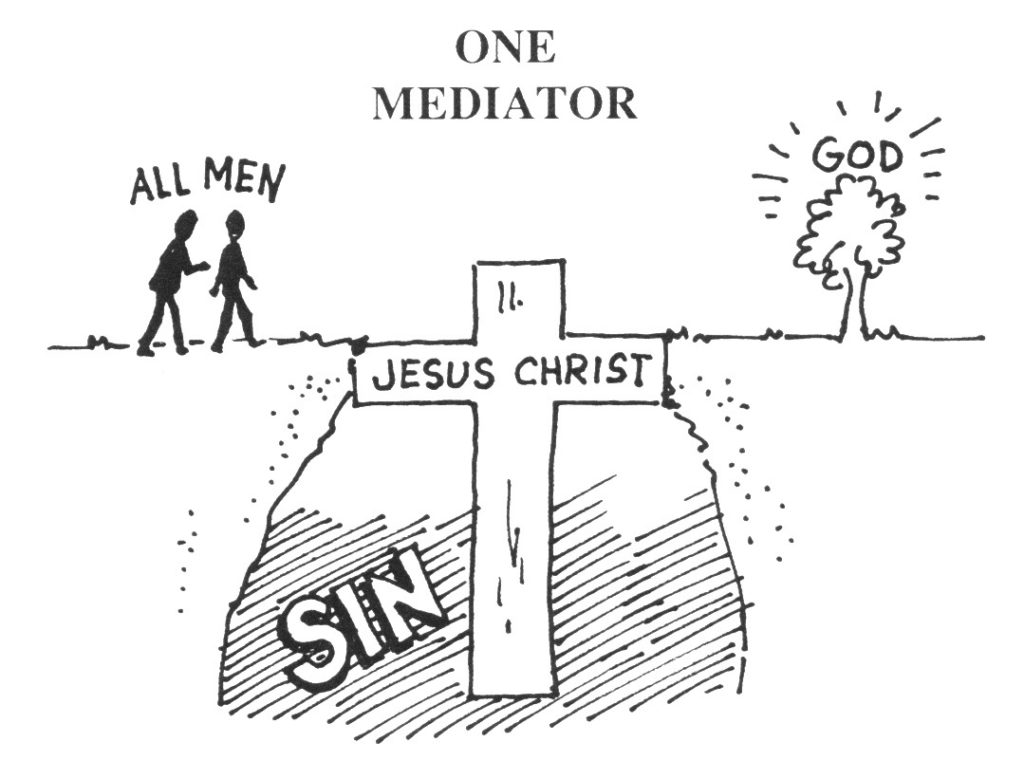
Jesus is the Mediator between God and man. Yet Trinitarians claim Jesus is God.
The Bible says there is only ‘one mediator between humans and God.’ Who, or what, is that?
“This, then is how you should pray: ‘Our Father in heaven . . . ‘”—Matthew 6:9 NIV.
“No one comes to the Father except through me”—John 14:6
“There is one God and one mediator between God and mankind, the man Christ Jesus”—1 Timothy 2:5 NIV
While they all give ‘lip service’ (Mark 7:6-13) to the principles that the scriptures above express, Christian denominations have differing views on the exactly how the mediatorial relationship between them and God operates. So, yes, they all “say” that Jesus is the mediator, but in actual practice things are not exactly the way the Bible says they should be. For example, Catholics teach that Christians must go through their priesthood and their hierarchy, including their Pope, to have a relationship with God. Others teach that one can only have a relationship with God through their particular denomination, organization, or church. Some have even thought, or taught that a relationship with God was only possible through one particular pastor. Trinitarians often simply ignore this vital relationship. Let’s make clear what the scriptures say about this:
“The true worshippers will worship the Father”—John 4:23
“I am the gate; whoever enters through me will be saved”—John 10:8 NIV.
The Father of Jesus, Almighty God, is the only one who should be worshipped, according to the scriptures. But we must go through his Son, Jesus Christ, to have this relationship. Why?
“Christ came as high priest of the good things that are now already here”—Hebrews 9:11 NIVread more
Are the Doctrines of Purgatory and Hellfire in the Bible?
“Those who contend with you shall be as nothing and will perish . . . Those who war with you will be as nothing and non-existent”—Isaiah 41:11,12 LSB; NASB
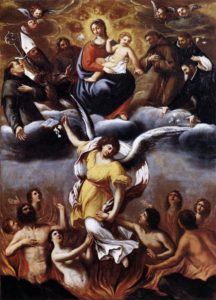
The Bible teaches that death is non-existence. Purgatory is a Catholic doctrine which teaches there is an intermediate state after physical death in which some of those ultimately destined for heaven must first undergo purification, so as to achieve the holiness necessary to enter the joy of heaven, holding that certain offenses can be forgiven in this age, but certain others in the age to come. But what does the Bible teach? Let’s compare some Catholic claims about the doctrine of Purgatory to the Scriptures.
Is the doctrine of Purgatory a true Biblical teaching?
Catholics claim:
Those that build their foundations on wood, grass or straw will be burned when we are purified to go to purgatory. Yet they will saved though only as men are saved by passing through fire. All people who go to purgatory will be saved though suffering (fire).
THE BIBLE SAYS:
Paul was using word pictures, such as metaphors, in the account at 1 Corinthians 3:10-17. He uses simile in verse 15 saying “the person will be saved, but ONLY AS THROUGH FIRE.” (Catholic New American Bible [NAB])
The fire is figurative for spiritual cleansing and difficulty prior to death, not after! Even the Catholic New American Bible (NAB) footnote on this verse admits: “THE TEXT OF V 15 HAS SOMETIMES BEEN USED TO SUPPORT THE NOTION OF PURGATORY, THOUGH IT DOES NOT ENVISAGE THIS.”
Catholics claim:
1 John 5:16 gives us the idea that there are sins “unto death” and sins that “are not unto death.” Sins that are unto death are those sins committed that kill the soul. Those sins that are not unto death are those sins that injure the soul but do not kill it. These are the sins that are forgiven in purgatory. We see purgatory all over the Old Testament sometimes called the bosom of Abraham or Sheol.
THE BIBLE SAYS
When you actually look at the scriptures, such as 1 John 5:16, you’ll see that it says: “IF ANYONE SEES HIS BROTHER SINNING, if the sin is not deadly, he should pray to God.” (NAB) This is obviously talking about a brother that is sinning who is still alive, not someone who is dead in “purgatory.”
Are God, Jesus and the holy Spirit part of a Trinity? Is Jesus God? Let’s take a look at the Bible book of Titus to find some clues to answer these questions.
What does the Book of Titus say about God, Jesus, and the holy Spirit?
“Paul, a servant of God and an apostle of Jesus Christ.” (Titus 1:1NIV) “God” is named as being someone other than “Jesus Christ”. If Jesus was God, as Trinitarians claim, why are God and Jesus are referred to separately? It’s because they are separate and distinct individuals, and not merged into a mysterious Trinity! Why does Paul not say that he is a servant of the holy Spirit, or the Trinity? Because, even though the holy Spirit is real, it’s not a person, and the idea any sort of Trinity is not found in the Bible.
“Grace and peace from God the Father and from Christ Jesus our Savior.” (Titus 1:4 NIV) “God” is identified as someone other than Jesus, and is named as “the Father,” not the Son, or the holy Spirit, or the Trinity. Jesus is separate and distinct from God. “Grace and peace” are not said to come from the Trinity, because it is fictional, nor are they said to come from the holy Spirit, because it is not a person.
Many translations render Titus 2:13 as though Jesus and Almighty God are the same being, essence, or substance, due to Trinitarian bias, like this: “the appearing of the glory of our great God and Savior, Jesus Christ” (Titus 2:13 ESV). More accurately, however, the verse is translated as in the following fourteen Bible translations:
“Looking for that blessed hope, and the glorious appearing of the great God and our Saviour Jesus Christ” (Titus 2:13 KJV).
“the appearing of the glory, of the great God and of our savior, the Anointed One, Jesus” (Titus 2:13Hart)
“As we await the blessed hope, the appearance of the glory of the great God and of our Savior Jesus Christ” (Titus 2:13 NAB).
“While we wait for the blessed hope and the manifestation of the glory of our great God and our Savior, Jesus Christ” (Titus 2:13 NRSV margin).
“looking for the blessed hope and the appearing of the glory of glory our =&0=&
“looking for the blessed hope and appearing of the glory of the great God and our Saviour Jesus Christ” (Titus 2:13 ASV).
“Looking for the blessed hope and coming of the glory of the great God and our Savior Jesus Christ” (Titus 2:13 Douay)
The Bible is the court of final arbitration, so if something is true it has to be in agreement with the Bible. Otherwise, it is false. So if Trinitarians want to provide evidence for the Trinity doctrine, their argument should be in agreement with the Bible. Likewise, if we believe the Trinity is false, our belief should be in agreement with the scriptures.
Does Bible teach the Trinity?
“All Scripture is God-breathed and is useful for teaching, rebuking, correcting and training in righteousness, so that the servant of God may be thoroughly equipped for every good work.” (2 Tim 3:16-17)
The Bible says that God is one, not three:
“The Lord our God, the Lord is one.” (Mark 12:29 HCSB)
This is the same God referred to in Galatians 1:1 (NASB): “Through Jesus Christ and God the Father who raised him from the dead.”
God and Jesus are separate and distinct. When someone says “One Divine Being who exists in three persons,” they are using a very different definition of God from what the Bible uses.
“There is a way that appears to be right, but in the end it leads to death.” (Pr 16:25)
Trinitarian “evidence” is not found in the Bible. How could someone say such a thing?
“They will believe what is false.” (2 Thess 2:11 HCSB)
We respect them as persons and know they sincerely believe what they think is true. However, sincerity of belief does not equate to truth.
“No lie comes from the truth.” (1 Jn 2:21 HCSB; NIV) The Trinity is a lie, which is viewed by God as a very serious problem. We mean no disrespect to them when we point out the falsehood of the Trinity.
Trinitarians use several scriptures to “prove” that Jesus has always existed. Let’s consider some examples:
“In the beginning was the Word, and the Word was with God, and the Word was God. He was with God in the beginning. Through him all things were made; without him nothing was made that has been made.” (Jn 1:1-3)
This says that Jesus was “with God” at the “beginning” of the universe. It does not say that Jesus has always existed.
“‘Very truly I tell you,’ Jesus answered, ‘before Abraham was born, I am!'” (Jn 8:58)
Jesus says he existed before Abraham was born, but he does not say he always existed.
“And now, Father, glorify me in your presence with the glory I had with you before the world began.” (Jn 17:5)
Jesus says he was with his Father “before the world began,” but he does not say he always existed.
“The Son is the radiance of God’s glory and the exact representation of his being, sustaining all things by his powerful word. After he had provided purification for sins, he sat down at the right hand of the Majesty in heaven.” (Heb 1:3)read more
Can a Believer in the Trinity Have a Relationship with God?
The vast majority of Christian churches and preachers teach that the Trinity doctrine is true, and is a vitally important Biblical message. On this basis, therefore many sincere Christians believe in the Trinity doctrine. Can a believer in the Trinity have a relationship with God?
As part of our series about what is stated in the Bible concerning whether God, Jesus and the holy Spirit are a Trinity in the various books of the New Testament, this article examines the book of Galatians.
Galatians was possibly the earliest book of the New Testament that was written, and focuses on correct Christian doctrine. Was the Trinity part of Christian doctrine discussed in Galatians? Is any aspect of the Trinity doctrine mentioned in the book?
Galatians 1:1 – “Through Jesus Christ and God the Father who raised him from the dead” (NAB). – God is shown to be the Father. Jesus is not referred to as God. God and Jesus are revealed to be two separate and distinct individuals – the superior, God, resurrects the lesser one, Jesus, from the dead. “Yahweh . . . God . . . never dies” (Habakkuk 1:12 NJB). Jesus “was dead” (Revelation 1:18). Therefore, Jesus cannot be Almighty God.
Galatians 1:3– “Grace to you and peace from God our Father and the Lord Jesus Christ” (NAB). – Two separate and distinct individuals, namely “God our Father” and “Jesus Christ,” are mentioned, but there is no mention of the holy Spirit. Why not? There is no question the holy Spirit is real. Trinitarians claim it is a person. If the holy Spirit is the third part of a Trinity “Godhead,” as Trinitarians assert, it should have been mentioned here in these greetings. It’d not mentioned because it’s not a person, and therefore can’t send greetings. Why are there no greetings from the Trinity? Why is the Trinity never mentioned in the Bible? – Because it’s a ‘myth’ (1 Timothy 4:7).
Galatians 1:4 – “…who gave himself for our sins… according to the will of our God and Father.”(NIV)– Jesus’ willing sacrificial death was according to his Father’s “will,” which shows Jesus to be the subordinate to his “Father” who “is greater” (John 1:14).
Galatians 1:6 – “You are so quickly deserting the one who called you to live in the grace of Christ” (NIV). – God and Christ are presented as two different people, with God, the superior, doing the calling. God is clearly shown to be someone other than Jesus Christ.
Galatians 1:15-16 – “God… set me apart… was pleased to reveal his Son to me, so that I might proclaim him to the Gentiles.” (NAB) – “God” reveals “his Son” Jesus Christ to Paul, and uses Paul to “proclaim him to the Gentiles”. God, not Christ is shown to be the one who is in control. “His Son” is here clearly shown to be someone other than “God”.
Galatians 2:20-21 – “I live by faith in the Son of God, who loved me and gave himself for me. I do not set aside the grace of God, for it if righteousness could be gained through the law, Christ died for nothing” (NIV). Once again, we see from the scriptures that “God” is someone other than “Christ” and that “Christ died”, which means Christ can’t be God because “God . . . will never die” (Habakkuk 1:12 NJB). Over and over in the scriptures the important point that “Christ died” is emphasized. Trinitarians have invented “a different Jesus” (2 Corinthians 11:4 NLT), a so-called “God-man”, who, they claim, died “in his human nature, but not in his God nature”. However, the scriptures plainly state that “Christ died for our sins” (1 Corinthians 15:3). If any part of Christ had remained alive, he could not have died for our sins, which would mean “Christ died for nothing”.
Galatians 3:2,5,14 – “Did you receive the Spirit by the works of the law . . . does God give you his Spirit . . . by the works of the law” (NIV). “Through Christ Jesus, God has blessed . . . so that we who are believers might receive the promised =&0=&Here we see that God the Father, the Almighty God, operates through Christ Jesus so that believers can ‘receive the holy Spirit through faith’. The holy Spirit is referred to as “the Spirit”, “his Spirit”, and “the promised Holy Spirit”. These descriptions are not descriptive of a person, but of an entity, and provides evidence that the holy Spirit is not a person, contrary to Trinitarian dogma.
Galatians 3:16-18 –“To your seed, who is Christ… God granted it to Abraham through the promise.” (NIV) – God gave Abraham the promise that through his seed (Christ), all nations will be blessed. God is shown to be someone other than “your seed, who is Christ,” and superior to “Christ”, thus eliminating the equality aspect of the Trinity doctrine.
Galatians 3:20 – “Now a mediator is not for one person only, whereas God is only one” (NASB). “Now the mediator or go-between [in a transaction] is not [needed] for just one