Browsed by
Tag: bible

Abortion – What Is God’s View?

Abortion – What Is God’s View?

The “world” has its viewpoint of things, including abortion, which is often not in harmony with God’s viewpoint (John 15:19,20; James 4:4; 1 John 5:19). Why is that?

“In the last days the times will be full of danger. Men will become utterly self-centred . . . They will be utterly lacking in . . . normal human affections. They will be remorseless . . . uncontrolled . . . reckless . . . loving what gives them pleasure instead of loving God” (2 Timothy 3:1-5 PHILLIPS) – Lack of natural affection was foretold, and is very evident in the world in general, which generally views abortion innocently and simply as a matter of “women’s health care”. We often hear phrases like, “a woman has the right to chose what she does with her own body”. Is that all there is to it? Is it really that simple, just a private matter? Or, does God even care? How does God view deliberate abortion? read more
How Did the Bible Come To Us?

How Did the Bible Come To Us?

Manuscript-Transmission

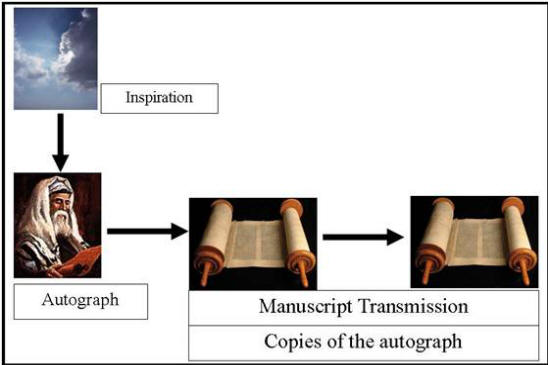
How did the Bible come to us? Was it passed down through legends and folklore? Has it been copied and recopied so much that the original message is lost?

“All scripture is inspired by God and is useful for teaching, for refutation, for correction, and for training in righteousness, so that the one who belongs to God may be competent, equipped for every good work”—2 Timothy 3:16,17 NAB

God wants us to feel confident that the Scriptures are as valid and trustworthy today as they were when they were first written (2 Peter 1:21). He also gives some information on the process he used to get His Word written down in a permanent form. read more

What Is The Apocrypha, or Deuterocanonical Books?

What Is The Apocrypha, or Deuterocanonical Books?

Which books should be in the Bible? Why are some of the books called canonical, and others are called Apocrypha, or Deuterocanonical?

“Everything must be fulfilled that is written about me in the Law of Moses, the Prophets and the Psalms”—Luke 24:44 NIV

Jesus referred to the Hebrew scripture Bible canon, by referring to the three sections that the Jews divided it into. These sections comprise the 39 book Old Testament, from Genesis through Malachi.

As the early church developed, Gentile believers needed to be taught “sound doctrine” (Titus 2:1). Although Jesus, Paul and the apostles exclusively used the Old Testament (referred to in Luke 24:44) as their canonical Bible, Gentiles also en­countered many other Jewish religious texts among the Greek scrolls of the Scriptures. Over time some Gentile believers began to embrace these books as authoritative, and debate over their place in the churches has raged ever since. read more

What is Textual Criticism? Has the Bible Been Changed?

What is Textual Criticism? Has the Bible Been Changed?

NT canon
Textual Criticism collates and compares the many ancient extant Bible manuscripts for the various Biblical texts to determine the original reading for each scripture?

Is Textual Criticism something that is critical of the Bible’s text, something that shows the Biblical text is unreliable? Or, is Textual Criticism something positive, or, favorable, toward authenticating the Bible’s text as being genuine, reliable, and trustworthy?

It is popularly believed today that the Bible has been copied and re-copied so many times over the centuries that is text is unreliable, and no one can be sure of what was in the originals. Is there any truth to this? read more

The Historical Accuracy of Luke-Acts

The Historical Accuracy of Luke-Acts

Luke the Evangelist, painted by James Tissot (c. 1886–94)
“The historical accuracy of the Luke-Acts two-volume work is frequently challenged. Scholars dispute such issues as the dating of the reign of Quirinius (Luke 1:5; 2:2) and references to Palestinian geography (Luke 4:44; 17:11), and raise additional historical questions regarding the numerous speeches in Acts (e.g., Acts 2:14-36), and the harmonious portrayal of the early church (Acts 4:32-35). The most critical historical objection to Acts concerns the details of Paul’s ministry. Although certain passages suggest that Luke was a traveling companion of Paul (Acts 16:10-17; 27:1–28:6), some scholars deem this tradition untenable on the basis of perceived difficulties in harmonizing the life and perspective of Paul as presented in Acts with details about his life found in his letters. 

Many of these perceived difficulties are lessened when we recall the purpose of Luke’s accounts. In composing his volumes, Luke did not intend to record a comprehen­sive history, but, rather, to provide an accurate historical account to meet the needs of people to develop faith (Luke 1:4). Luke acknowledged his use of sources (Luke 1:2), which he investigated thoroughly in order to compose an orderly account (Luke 1:3). Where it is possible to verify Luke’s use of sources, we find that the Gospel writer followed them meticulously. Further­more, Luke was precise concerning the titles of officials and municipalities in various towns (Acts 13:12; 17:6; 18:12; 19:31,35), details that reveal the writer’s commitment to accuracy.”—Based on the New International Version Archaeological Study Bible article “The Historical Value of Luke-Acts” read more

The New Testament Canon

The New Testament Canon

The process of determining which texts would comprise the Biblical canon (the standard of authoritative and normative teaching for the church) took place over several cen­turies. Beginning in the first century A.D., Christian communities recognized the authority of texts that they gathered into collec­tions for circulation and use in public worship. Second Peter already suggests a familiarity with multiple letters of Paul and goes so far as to place them on par with the Hebrew Scriptures (3:16). Evidence reveals that during public worship Christians in the earliest centuries read from the texts that would become the New Testament, just as they did from the Hebrew Scriptures. read more

WP2Social Auto Publish Powered By : XYZScripts.com