God’s people today, Christians, who are under the New Covenant, circumcision is not required.
“Neither circumcision nor uncircumcision means; what counts is the new creation”—Galatians 6:15 NIV
“Circumcision is nothing and uncircumcision is nothing. Keeping God’s commands is what counts”—1 Corinthians 7:19 NIV
Today, it is fine if a male is circumcised, and it is also fine if they’re not circumcised. What is important is a person’s relationship with God through Christ.read more
If the universe is expanding, it had a beginning. Is it only six thousand years old?
Is the universe only six thousand years old?
“In the beginning God created the heavens and the earth”—Genesis 1:1
Modern astronomical science now agrees with the Bible that the universe had a beginning. Many people, including those who believe in Young Earth Creationism (YEC), think that the entire universe, including the earth, was created in six literal 24 hour days 6,000 years ago. This idea is in conflict with astronomical science, which has proven the universe is about 13.7 billion years old. Two lines of evidence for this are the number of light years away the farthest galaxies are from us, and the second is the Cosmic Background Radiation. Astronomers and scientists are forced to accept this fact, even though they are uncomfortable with the Biblical implications.read more
“Wisdom is a shelter the same as money is a shelter, but the advantage of knowledge is this: Wisdom preserves those who have it.” (Ecclesiastes 7:12 NIV) Money certainly has some value. It is a protection, to an extent, and a gift from God also, in a way. Proper use of knowledge and wisdom is even more valuable, however. The folk saying ‘A fool and his money are soon parted’ certainly backs up this Bible proverb. How should we view money?
We need a balanced view of money. “Give me neither poverty nor riches, but give me only my daily bread. Otherwise, I may have too much and disown you and say, ‘Who is the LORD?’ Or I may become poor and steal, and so dishonor the name of my God.” (Proverbs 30:8-9) Both wealth and poverty have their potential pitfalls. A person is usually much better off to be somewhere in the middle. The problem with always desiring more?
“Whoever loves money never has enough; whoever loves wealth is never satisfied with their income, this too is meaningless.” (Ecclesiastes 5:10 NIV)read more
What scriptures in the Bible help us to get Almighty God’s viewpoint of abortion? The purpose of this article, and indeed this website, is not to get involved in any partisan politics, but to advocate for God’s Word, the Bible. As the late Billy Graham said late in life, he wished he’d stayed out of politics. Yet, the Bible is very “useful for . . . correction” (2 Timothy 3:16 NIV).
In an opinion column in the Tallahassee Democrat on March 6, 2018, Rabbi Jack Romberg says that “Jewish tradition . . . considers a fetus a life, but not equivalent to a fully formed human life”. That may be true about Jewish tradition. He should know, being a Rabbi. But, he unfortunately, goes on to make a false statement about the Bible. He claims “This is based on Exodus 21:22 through 25, which makes clear the loss of a fetus by human misconduct is not punished the same way as murder”. Since the Rabbi probably uses the TANAKH, which is a Jewish translation of the Hebrew Scriptures, or Old Testament, let’s quote these verses from there:
“When men fight, and one of them pushes a pregnant woman and a miscarriage results, but no other damage ensues, the one responsible shall be fined according as the woman’s husband may exact from him, the payment based on reckoning. But if other damage ensues, the penalty shall be life for life, eye for eye, tooth for tooth, hand for hand, foot for foot, burn for burn, wound for wound, bruise for bruise.” (Exodus 21:22-25 Tanakh).read more
We live in a world today where xenophobia (fear of strangers) has taken hold. Many people have a negative view of immigrants. But if we want to follow Bible principles, how should we view immigrants?
“Abraham is the spiritual father of those who have faith” (Romans 4:11 NLT). Did you know that “a severe famine struck the land of Canaan, forcing Abram to go down to Egypt, where he lived as a foreigner” (Genesis 12:10 NLT)? How would God view someone who would refuse to help, or even attempt to deport Abram? The Mosaic Law included this principle: “Do not oppress a foreigner; you yourselves KNOW HOW IT FEELS TO BE FOREIGNERS, because you were foreigners in Egypt” (Exodus 23:9 NLT). The entire nation of Israel lived in Egypt as foreigners for many years, and was not treated well during the final years. Instructive for us is: “Yahweh then said, ‘I have indeed seen the misery of my people in Egypt’” (Exodus 4:7 NJB). Yahweh sees all. Did you know that young Jesus and his parents lived for a while as refugees in Egypt (Matthew 2:13-15)?
The Bible has a number of principles we can apply as to our viewpoint and attitude toward immigrants. Number one, of course, are the two greatest commandments:
1.”Love the Lord your God with all your heart . . . soul . . . mind”—Matthew 22:37 NIV
a.How does this apply? “Love your enemies . . . that you may be children of your Father in heaven. He causes his sun to rise on the evil and the good, and sends rain on the righteous and the unrighteous . . . And if you greet only your own people, what are you doing more than others?”—Matthew 5:44-47 NIV. To really apply this greatest commandment, we should welcome immigrants.
b.“Accept one another, then, for the glory of God, as Christ has accepted you”—Romans 15:7 GNBread more
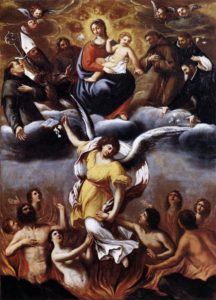
Are the Doctrines of Purgatory and Hellfire in the Bible?
“Those who contend with you shall be as nothing and will perish . . . Those who war with you will be as nothing and non-existent”—Isaiah 41:11,12 LSB; NASB
The Bible teaches that death is non-existence. Purgatory is a Catholic doctrine which teaches there is an intermediate state after physical death in which some of those ultimately destined for heaven must first undergo purification, so as to achieve the holiness necessary to enter the joy of heaven, holding that certain offenses can be forgiven in this age, but certain others in the age to come. But what does the Bible teach? Let’s compare some Catholic claims about the doctrine of Purgatory to the Scriptures.
Are Purgatory and Hellfire in the Bible?
Catholics claim:
Those that build their foundations on wood, grass or straw will be burned when we are purified to go to purgatory. Yet they will saved though only as men are saved by passing through fire. All people who go to purgatory will be saved though suffering (fire).
THE BIBLE SAYS:
Paul was using word pictures, such as metaphors, in the account at 1 Corinthians 3:10-17. He uses simile in verse 15 saying
“the person will be saved, but ONLY AS THROUGH FIRE.” (Catholic New American Bible [NAB])read more
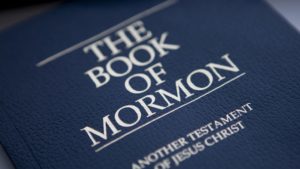
The official title: The Book of Mormon, Another Testament of Jesus Christ, speaks volumes. Does the Bible reference The Book of Mormon? Mormons, or Latter Day Saints (LDS), as they prefer to be called), proudly proclaim that it does. The main scripture they use to support this claim is:
Does the Bible reference the Book of Mormon?
=&0=&
What Sincere Beliefs Must a Person Have To Be a True Christian?
Many people in the world today call themselves “Christian,” but there are so many conflicting beliefs and doctrines taught among these people. So what beliefs must a person hold in order to be a true Christian? In order to answer this question, we need to look to God’s Word. Let’s see what the Bible has to say.
Christians view the Bible as God’s revelation to humanity
BELIEF IN GOD
“Without faith it is impossible to please God, because anyone who comes to him must believe that he exists and that he rewards those who earnestly seek him.” (Hebrews 11:6) So the first point is that one must believe that God exists, and becomes the rewarder of those sincerely seeking him.
THE BIBLE IS THE WORD OF GOD
“All Scripture is God-breathed and is useful for teaching, rebuking, correcting and training in righteousness,so that the servant of God may be thoroughly equipped for every good work.” (2 Timothy 3:16-17)read more
The Bible Completely Equips Us & Doesn’t Need Supplements
Many people professing to be Christians today believe the Bible is useful but incomplete and needs to be supplemented by their own teachings and writings. But is this the case? Is it possible that the Bible completely equips us?
THE BIBLE’S SCRIPTURES GIVE ALL WE NEED
The Bible completely equips Christians because it is the only divinely inspired writing.“All Scripture is God-breathed and is useful for teaching, rebuking, correcting and training in righteousness, so that the servant of God may be thoroughly equipped for every good work.” (2 Timothy 3:16-17) the Bible is complete in itself, and needs no supplementation. Nothing needs to be read into it.
BIBLICAL SUPPLEMENTATION NOT NEEDED
“Every word of God is flawless; he is a shield to those who take refuge in him. Do not add to his words, or he will rebuke you and prove you a liar.” (Proverbs 30:5-6) The Bible is perfect because it is God’s Word and does not need to be supplemented.
“Do not believe every spirit, but test the spirits to see whether they are from God, because many false prophets have gone out into the world. ” (1 Jn 4:1)
“I warn everyone who hears the words of the prophecy of this scroll: If anyone adds anything to them, God will add to that person the plagues described in this scroll. And if anyone takes words away from this scroll of prophecy, God will take away from that person any share in the tree of life and in the Holy City, which are described in this scroll.” (Revelation 22:18-19) Adding to or subtracting anything from the Bible is condemned by God. Commentaries in harmony with what the Bible actually says are fine, but nothing written by humans is equal to the scriptures.
“Sanctify them by the truth; your word is truth.” (John 17:17) The Bible is God’s Word.
THE INSPIRED WRITERS
“Remember what the apostles of our Lord Jesus Christ foretold.” (Jude 17) The word of the apostles was authoritative. The New Testament was written by four apostles directly chosen by Jesus, namely, Matthew, John, Peter and Paul. Four other close associates of the apostles also wrote the New Testament.
1 Corinthians 15:7 – “Then he appeared to James, then to all the apostles.” Jesus appeared to James.
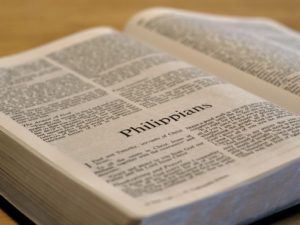
This article is part of our series about what is stated concerning God, Jesus and the holy Spirit, and whether they together comprise a Trinity, in the various books of the New Testament. We will examine the four chapter book of Philippians. Notice the distinctive relationship between God and Jesus throughout this book of Philippians, especially the superior role of God compared to Jesus. What does it say about the holy Spirit? Is the Trinity in Philippians?
Is the Trinity found in Philippians? The superior role of God compared to Jesus is evident from the Bible book of Philippians
“To all God’s holy people in Christ Jesus at Philippi.” (Philippians 1:1) Notice they are God’s, not Christ’s, holy people. God is always the one in control, and is using Christ to gather his people, which shows his superiority over Christ, and eliminates the equality aspect of the Trinity doctrine (John 14:28).
“Grace and peace to you from God our Father and the Lord Jesus Christ . . . God can testify how I long for all of you with the affection of Christ Jesus.” (Philippians 1:2,8) God and Jesus are presented as separate and distinct, not of the same “being”, “substance”, or “essence”. The holy Spirit, since it is not a person, does not give greetings. Neither does the Trinity, since it doesn’t exist.
“Filled with the fruit of righteousness that comes through Jesus Christ – to the glory and praise of God.” (Philippians 1:11) Fruitage from God flows through Jesus and brings glory and praise to God. God is presented is someone other than Jesus, and superior to Jesus (John 14:28), which doesn’t support the Trinity doctrine.
“I thank my God . . . always offering prayer . . . that He who began a good work in you will perfect it until the day of Christ Jesus . . . in the defense and confirmation of the gospel” (Philippians 1:3-6 LSB). The apostle Paul offers prayer to God, who began a good work in the Philippians, and will perfect it until the day of Christ Jesus. This phraseology gives us good evidence that God is someone other than Christ Jesus. Just as Paul was determined to defend and confirm this truth of the gospel, so are we at this website. We will always defend the truth that God the Father is the God of Jesus Christ, proving that Jesus is neither God, nor equal to God.
“the provision of the Spirit of Jesus Christ” (Philippians 1:19 LSB). Although it takes quite an imaginative stretch, some have read into Philippians 1:19 that the holy Spirit is God. Renderings such as the NAB, personify the holy Spirit: “This will result in deliverance for me through your prayers and support from the Spirit of Jesus Christ”. Trinitarians equivocate this personification, ‘twisting the scripture’ (2 Peter 3:16), claiming “the spirit” is a person, in their attempt to prop up their dogma. However, in the Bible there are many personifications used. While “spirit” is equivocated into a person, no one equivocates “water and blood” (1 John 5:8) into persons. The NIV rendering makes it even clearer that the holy Spirit can’t be God: “God’s provision of the Spirit of Jesus Christ”. However, since Jesus was “exalted at the right hand of God, he received the promise of the holy Spirit from the Father and poured it forth” (Acts 2:33 NAB). The holy Spirit is described as “it”, which is indicative that it’s not a person. The scriptures describe it as “the holy Spirit that God has given to those who obey him” (Acts 5:32 NAB), indicating that Almighty God is in ultimate control of the holy Spirit. Since God the Father distributes the holy Spirit through Jesus, the terms, “the Spirit of God”, and “the Spirit of Christ”, describe the same thing, and are interchangeable.
“Participation in the Spirit” (Philippians 2:1 ESV). Since some versions render this as, “fellowship of the Spirit”, Trinitarians have claimed this means the holy Spirit is a person. However, the rendering “participation in the Spirit” is more accurate. We can’t participate in a person. But we can “have a share in his Spirit” (1 John 4:13 NJB). All this gives evidence that the holy Spirit isn’t a person. Without the holy Spirit being a person, the Trinity doctrine collapses.
“Have this attitude in yourselves which was also in Christ Jesus, who although he existed in the form of God, did not regard equality with God a thing to be grasped.” (Philippians 2:6 LSB; NASB).
“Who, although he was in the form of God, did not regard equality with God something to be grasped. Rather he emptied himself, taking the form of a slave, coming in human likeness, and found human in appearance”—Philippians 2:6,7 NAB
If Jesus was God, it would make no sense to say that he was “in the form of God.” Thus, being,”in the form of God”, means that Jesus is not God!
“He humbled Himself by becoming obedient to death — even death on a cross. Therefore God exalted him to the highest place and gave him the name that is above every name.” (Philippians 2:8,9 NIV) God is clearly shown to be someone other than Christ. Notice the even more clarified rendering, “Therefore God exalted him even more highly and gave him the name that is above every other name” (Philippians 2:9 NRSVUE). “This clearly excludes God, since God put everything under Christ’s authority” (1 Corinthians 15:27 GWT). Christ’s name “is above every other name” except Yahweh.“Yahweh” is “the Most High over all the earth” (Psalm 83:19 LSB).
Jesus’ obedience bespeaks of his submission to his Father. Indeed, “He learned obedience from the things He suffered” (Hebrews 5:8 LSB). His death means he is not God, and not eternal, since he was not in existence while he “was dead” (Revelation 1:18). The scriptures make clear that “Yahweh . . . God . . . never dies” (Habakkuk 1:12 NJB). “God,” the superior one, “highly exalted” Jesus, “and gave him the name that is above every name.” not the other way around. Thus, three Trinitarian pillars of Jesus being God, eternal, and equal, are eliminated by these scriptures, which glides right over the heads of Trinitarians!
Trinitarians claim “Jesus has been God, equal to the Father, from eternity.” If that was true, then his getting a name above every name, would mean he’s greater than the Father, which contradicts their own dogma. What is the ‘name Jesus was given, above every name’? The scriptures foretold it, “His name will be called Wonderful Counselor, Mighty God, Eternal Father, Prince of Peace” (Isaiah 9:6 LSB).
Philippians 2:10,11a – “At the name of Jesus every knee should bow . . . and every tongue should acknowledge that Jesus Christ is Lord” (NIV). Trinitarians often stop their quote of the scripture at this point, and use this to “prove” that Jesus is God. Here is a typical example of a Trinitarian claim:
“God the Father stated, “To me every knee shall bow, every tongue shall swear” (Isaiah 45:23). The same exact description is also applied to Jesus (Philippians 2:10-11). This means that both the Father and the Son are Yahweh.”
However, when we actually look at the rest of the scripture, we find that it is, “to the glory of God the Father” (Philippians 2:11b NIV) that ‘every knee shall bend down to Jesus’. By reading the full scripture, we find that the scripture actually proves that Jesus is inferior to God the Father, contradicting the equality claim of the Trinity doctrine. Trinitarians also claim that because Jesus is called “Lord” — that makes him God. But here we see that is not the case. Let’s look at the scripture and see who is called God — “The Father” is the one who is “God”, not “the Lord Jesus Christ.”
“It is we who are in the circumcision, who worship in the Spirit of God, and boast in Christ Jesus and have no confidence in the flesh” (Philippians 3:3 NRSV). Christians serve God and worship him, not Christ Jesus (John 4:23). Notice, though, that they do it “in the Spirit of God.” “In the Spirit,” and “the Spirit of God,” are evidences that the holy Spirit is not a person. “For we are the circumcision, who worship God in the Spirit, and rejoice in Christ Jesus, and have no confidence in the flesh” (Philippians 3:3World English Bible). From this translation, we notice even more clearly that “God” is the one to be properly worshipped, not Jesus.
“But that which is through faith in Christ – the righteousness that comes from God on the basis of faith. I want to know Christ — yes, to know the power of his resurrection . . . becoming like him in his death, and so, somehow attaining to the resurrection from the dead. The prize for which God has called me heavenward in Christ Jesus” (Philippians 3:9-11,14 NIV). “God” is shown to be someone other than “Christ”. The righteousness from God comes through faith in Christ. God calls Paul heavenward through Jesus. God and Christ are separate individuals, with God the Father as superior, which eliminates the equality aspect of the Trinity doctrine. Also, the text shows that “Christ died” (1 Corinthians 15:3), and “God resurrected this Jesus” (Acts 2:32 HCSB), so Christ can’t be God, because “God . . . will never die” (Habakkuk 1:12 NIV). This eliminates the “eternal” aspect of the Trinity doctrine.
“And the peace of God, which transcends all understanding, will guard your hearts and your minds in Christ Jesus.” (Philippians 4:7NIV)“Then God’s peace, which goes far beyond anything we can imagine, will guard your hearts and minds in union with the Messiah Jesus” (Philippians 4:7 GNB). “My God will meet all your needs according to the riches of his glory in Christ Jesus.” (Philippians 4:19) God the Father is superior, and he uses Christ Jesus as his “representative” (John 5:43 Williams) agent to help humans. “My God” is obviously the Father. His gift is “Christ Jesus,” as his “representative” (John 5:43 Williams). Therefore, Jesus cannot be God!
CONCLUSION
In Philippians, we find the distinctive relationship between God and Jesus. They are not equals (John 14:28). The superior role of God compared to Jesus is evident upon examination of the verse. The holy spirit is clearly shown not to be person in Philippians, so for that reason alone, there is no Trinity in Philippians.
All scriptures quoted from New International Version (NIV) unless noted otherwise.
For more information related to this subject, please also see the following article on this website:


 What scriptures in the Bible help us to get Almighty God’s viewpoint of abortion? The purpose of this article, and indeed this website, is not to get involved in any partisan politics, but to advocate for God’s Word, the Bible. As the late Billy Graham said late in life, he wished he’d stayed out of politics. Yet, the Bible is very “useful for . . . correction” (