Browsed by
Category: Proof

Who Were the Nephilim?

Who Were the Nephilim?

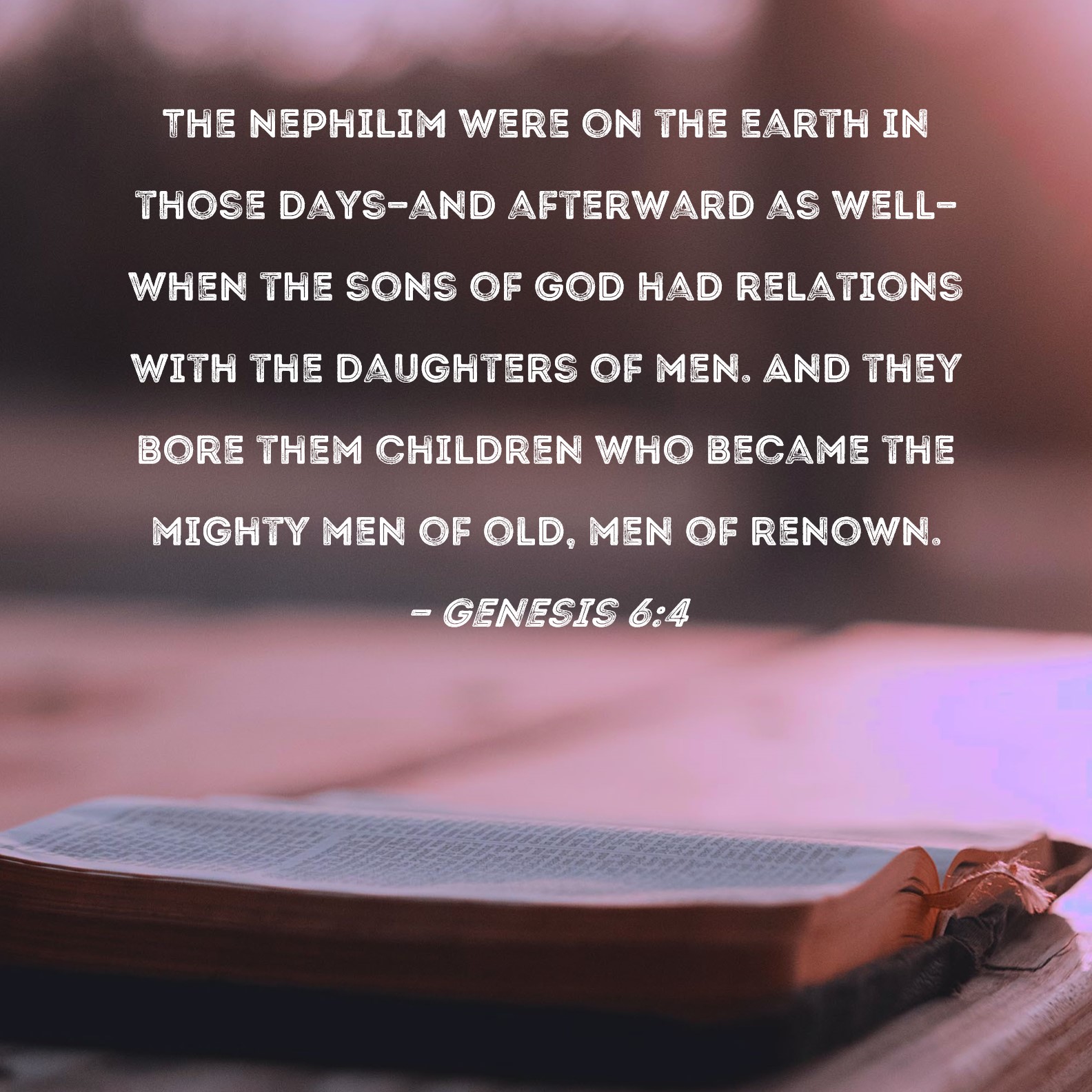
There are only two Biblical references to the “Nephilm” (Genesis 6:4 NIV);  Numbers 13:33 NIV). In Genesis 6:4they are the “giants on earth in those days” before the flood, “the mighty men . . . of renown” (Genesis 6:4 NKJV). The Israelite spies’ “bad report about the land” of Canaan used the term “Nephilm” to describe “people . . . of great size” (Numbers 13:32,33 NIV), from whom the Anakites were claimed to have descended. Upon glimpsing these imposing inhabitants of Canaan, ten of the twelve spies became demoralized and terrified. The “Nephilim” the ten spies spoke of at Numbers 13:33 may have been similar in appearance to the Rephaites, a race of strong, tall people with whom the Anakites are compared in Deuteronomy 2:20,21. read more

What is Textual Criticism? Has the Bible Been Changed?

What is Textual Criticism? Has the Bible Been Changed?

NT canon
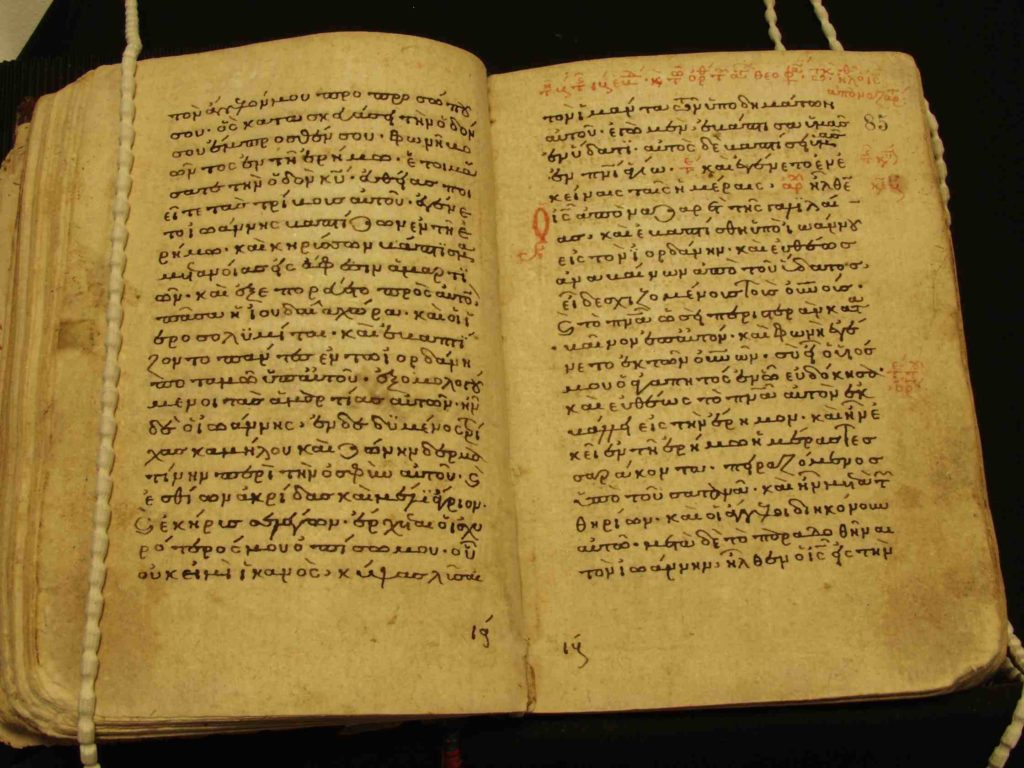
Textual Criticism collates and compares the many ancient extant Bible manuscripts for the various Biblical texts to determine the original reading for each scripture?

Is Textual Criticism something that is critical of the Bible’s text, something that shows the Biblical text is unreliable? Or, is Textual Criticism something positive, or, favorable, toward authenticating the Bible’s text as being genuine, reliable, and trustworthy?

It is popularly believed today that the Bible has been copied and re-copied so many times over the centuries that is text is unreliable, and no one can be sure of what was in the originals. Is there any truth to this? read more

Should Pseudepigrapha (Books By Fake Authors) Be In the Bible?

Should Pseudepigrapha (Books By Fake Authors) Be In the Bible?

Is the Bible reliable?
Should Pseudepigrapha books be in the Bible?

Increasingly claims are being made that many worthy books were omitted from the Bible, and thus raising doubts in people’s minds that “the Scriptures” of the Bible are “the word of God” (John 10:35 NLT). Pseudepigrapha, meaning “false title,” or books by fake authors, refers to Jewish books that falsely claimed to have been written by Moses, Enoch, Abraham or some other ancient hero of the faith, and are supposedly arbitrarily omitted from the Bible

Most pseudepigrapha, or books by fake authors, were written be­tween 250 BCE and  200 CE. The Pseudepigrapha books compared with what is genuinely “all Scripture . . . by God” (2 Timothy 3:16 LSB) solves this puzzle. A few examples are as follows: read more

The Ending of Mark

The Ending of Mark

There are several different end­ings to the Gospel of Mark found in the vari­ous Greek manuscripts. Most Greek texts and several ancient transla­tions conclude with the ending familiar to us as Mark 16:9-20. The ear­liest Greek manuscript with that ending is from the fifth century, but evidence from the church fathers suggests that it was already in existence during the second century. Many scholars feel, however, that the vocabulary and themes of the traditional ending are inconsistent with the rest of the Gospel. read more

The Rylands Papyrus 457 Dated to 125-135 CE

The Rylands Papyrus 457 Dated to 125-135 CE

The Rylands Papyrus 457 (P52) is the oldest copy yet discovered of any portion of the New Testament, having been paleographically dated back to the first half of the second century CE, about 125-135 CE  A tiny fragment of a codex (a leaf-form text, like a modern book, in contrast to a scroll) of the Gospel of John, it contains parts of John 18:31-33 on one side and John 18:37-38 on the other side. It was acquired in Egypt in 1920 and is now in the John Rylands Library in Manchester, England. read more

The Historical Accuracy of Luke-Acts

The Historical Accuracy of Luke-Acts

Luke the Evangelist, painted by James Tissot (c. 1886–94)
“The historical accuracy of the Luke-Acts two-volume work is frequently challenged. Scholars dispute such issues as the dating of the reign of Quirinius (Luke 1:5; 2:2) and references to Palestinian geography (Luke 4:44; 17:11), and raise additional historical questions regarding the numerous speeches in Acts (e.g., Acts 2:14-36), and the harmonious portrayal of the early church (Acts 4:32-35). The most critical historical objection to Acts concerns the details of Paul’s ministry. Although certain passages suggest that Luke was a traveling companion of Paul (Acts 16:10-17; 27:1–28:6), some scholars deem this tradition untenable on the basis of perceived difficulties in harmonizing the life and perspective of Paul as presented in Acts with details about his life found in his letters. 

Many of these perceived difficulties are lessened when we recall the purpose of Luke’s accounts. In composing his volumes, Luke did not intend to record a comprehen­sive history, but, rather, to provide an accurate historical account to meet the needs of people to develop faith (Luke 1:4). Luke acknowledged his use of sources (Luke 1:2), which he investigated thoroughly in order to compose an orderly account (Luke 1:3). Where it is possible to verify Luke’s use of sources, we find that the Gospel writer followed them meticulously. Further­more, Luke was precise concerning the titles of officials and municipalities in various towns (Acts 13:12; 17:6; 18:12; 19:31,35), details that reveal the writer’s commitment to accuracy.”—Based on the New International Version Archaeological Study Bible article “The Historical Value of Luke-Acts” read more

The Superior Integrity of the New Testament Text

The Superior Integrity of the New Testament Text

A folio from Papyrus 46, one of the oldest extant New Testament manuscripts

No other ancient text is substantiated by such a wealth of ancient textual witnesses as is the New Testament, about 5,800 separate manuscripts are available, variously con­taining anything from the entire New Testament corpus to a slight fragment of a single verse. There are also hundreds of copies of ancient translations (or versions) in languages other than Koine’ Greek of the New Testa­ment that reveal the form of the text known to their translators, as well as numerous New Testament quotations in the writings of the early church “fathers” that disclose the form of the particular texts known to them. read more

The New Testament Canon

The New Testament Canon

The process of determining which texts would comprise the Biblical canon (the standard of authoritative and normative teaching for the church) took place over several cen­turies. Beginning in the first century A.D., Christian communities recognized the authority of texts that they gathered into collec­tions for circulation and use in public worship. Second Peter already suggests a familiarity with multiple letters of Paul and goes so far as to place them on par with the Hebrew Scriptures (3:16). Evidence reveals that during public worship Christians in the earliest centuries read from the texts that would become the New Testament, just as they did from the Hebrew Scriptures. read more

Is the Gospel of John Historical and True?

Is the Gospel of John Historical and True?

Jesus' Temple Cleansing
Is the Gospel of John historical and true? For example, does the temple cleansing in John contradict the Synoptic Gospels?

The question of whether the gospel of John is historical and true has been raised for quite some time now. Some even consider most of the 4th gospel to be fiction.

“Since the 19th century, scholars have almost unanimously accepted that the Johannine discourses are less likely to be historical than the synoptic parables and were likely written for theological purposes”—Wikipedia

There are obvious and striking differences between the Gospel of John and the Synoptic Gospels (Matthew, Mark and Luke). These include: read more

WP2Social Auto Publish Powered By : XYZScripts.com