Browsed by
Category: New Testament Proofs

Origin of the New Testament Canon

Origin of the New Testament Canon

The New Testament canon was established early, by Holy Spirit
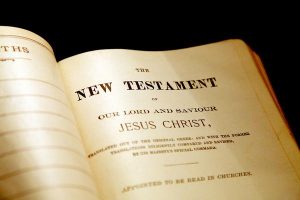
New Testament Canon
The New Testament canon was established early, by Holy Spirit

The New Testament canon was established in the first century by holy Spirit. Let’s examine some scriptures which confirm this fact:

2 Peter 1:16-21 – Peter affirms Old Testament prophets wrote God’s word. He puts himself and other apostles in the same category.

2 Peter 3:15-16 – Paul’s letters were on the same level as all the “rest of the scriptures.” That is, inspired of God. Early Greek manuscripts show Paul writing 14 letters.

2 Timothy 3:16-17 – The rest of the scriptures (the Old Testament) are inspired of God. We can broaden this now, and apply the principle to all 66 canonical books as shown below: read more
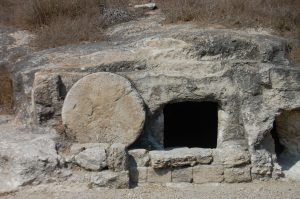
Extraordinary Claims – Extraordinary Proof – Jesus’ Resurrection

Extraordinary Claims – Extraordinary Proof – Jesus’ Resurrection

extraordinary claim
It is an extraordinary claim that Jesus rose from the dead

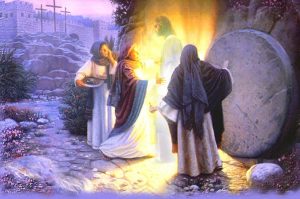
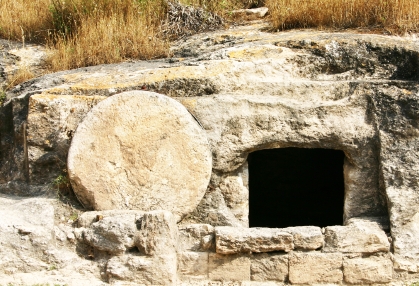
“He is not here, but He has been resurrected” (Luke 24:6 HCSB). Is there extraordinary proof of Jesus’ resurrection? The claim that Jesus rose from the dead is extraordinary. Extraordinary claims require extraordinary proof. What is the strongest proof that Jesus was resurrected? Let’s start at the point of beginning, and work, or build from there.

This beginning point is that the universe, the earth, etc. very strongly witness to God’s existence as Creator. Psalm 19:1 says: “the heavens declare the glory of God.” (NIV) read more

Different Resurrection Appearances – ‘Proofs,’ or Contradictions?

Different Resurrection Appearances – ‘Proofs,’ or Contradictions?

Different resurrection appearances
Some have claimed the different accounts of resurrection appearances are “proof” of contradictions

Some have claimed the different accounts of Jesus’ resurrection appearances in the four Gospels and 1 Corinthians are “proofs” these Bible books are riddled with errors and contradictions. If true, these would, in turn,” prove” the Bible not to be inspired of God, or infallible, as many Christians believe that it is.

The Bible itself says that these different resurrection appearances confirm the Bible’s inspiration by God.

“To whom He also presented Himself alive after His suffering, by many infallible proofs, being seen by them during forty days and speaking of the things pertaining to the kingdom of God.” (Acts 1:3 NKJV, emphasis added) read more

Eyewitnesses of Jesus’ Death, Burial, and Resurrection

Eyewitnesses of Jesus’ Death, Burial, and Resurrection

Witnesses of Jesus
Were there any eyewitnesses to Jesus’ death, burial, and resurrection?

Critics of the Bible claim there are no eyewitnesses of Jesus’ death, burial and resurrection. This article takes an objective look at the facts.

“[The Gospels] were written down thirty-five to sixty-five years after Jesus’ death . . . not by people who were eyewitnesses, but by people living later”—Jesus, Apocalyptic Prophet of the New Millenneum, 2005, pages 44-45, by Bart Ehrman

“There is not a sentence concerning Jesus in the entire New Testament  by anyone who had ever met the unwilling King of the Jews”—Jesus and Yahweh, 2005, page 19, by H. Bloom read more

Is the Temple Cleansing in John Accurate?

Is the Temple Cleansing in John Accurate?

Jesus' Temple Cleansing
Does the temple cleansing in John contradict the Synoptic Gospels?

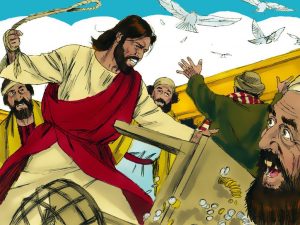
Critics claim that the temple cleansing in the Gospel of John is either the same temple cleansing reported by the three Synoptics, Matthew, Mark and Luke, or is out of place, therefore, constituting a “contradiction” in the Gospels.

Below are listed a number of reasons why the temple cleansing in John is accurate and was performed by Jesus around the time of the first Passover after his baptism, which was probably about six months earlier. John clearly states in John 20:31 and John 21:25 that he was highly selective in his reporting on the events of Jesus’ life. read more

Gospel of Mark – Peter’s Eyewitness Gospel

Gospel of Mark – Peter’s Eyewitness Gospel

The Gospel According to Mark
Is Mark’s Gospel an early memoir of the Apostle Peter?

The early church is unanimous that the Gospel according to Mark was written by John Mark. (Acts 12:12; Acts 12:25; Acts 13:5; Acts 13:13; Acts 15:37; Colossians 4:10; 2 Timothy 4:11; Philemon 24)

Papias – c. 140 quotes an earlier source saying:

  1. Mark was a close associate of Peter, from whom he received his information. (1 Peter 5:13) Peter regards Mark with such warmth and affection that he calls him his son.
  2. This information didn’t come to Mark as a finished, sequential account of the life of Jesus, but as the preaching of Peter – preaching directed to the needs of Christian communities. Mark accurately preserved this material and arranged and shaped it.

The title “According to Mark” appears in all the ancient canonical lists and many ancient manuscripts, and is thought to have been added very early in the history of the text.

Early church fathers all affirm Mark wrote the Gospel:

  • Papias (140)
  • Justin Martyr (150)
  • Iranaeus (185)
  • Origen
  • Tertullian
  • Clement of Alexandria (195)
  • Eusebius (326) – quotes Papias saying “elder” (John) attributed to Mark

Second and third century books falsely claimed apostles as authors rather than secondary figures such as Mark. read more

Matthew the Tax Collector – A Proven Eyewitness

Matthew the Tax Collector – A Proven Eyewitness

Matthew the Tax Collector
Matthew was an eyewitness to many of the events he wrote about

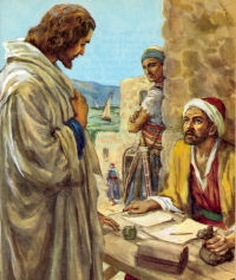
Many “Bible scholars” claim that Matthew relied on Mark’s gospel as the primary source to write his gospel. Why would Matthew the tax collector, one of Jesus’ twelve apostles, rely so much on Mark’s account? The answer?  He didn’t. He was an eyewitness of much of what he wrote, so there was no need for him rely on Mark, who was not an eyewitness, but a recorder of the apostle Peter’s memories (1 Peter 5:13). Both Matthew and Mark wrote their gospels “inspired by God” (2 Timothy 3:16). read more

Is the New Testament Based on Eyewitness Testimony?

Is the New Testament Based on Eyewitness Testimony?

Is the New Testament based on eyewitness testimony? Let’s examine the Bible to find out.

Is the NT based on eyewitness testimony?

“Many writers have undertaken to draw up an account of the events that have taken place among us, following the traditions handed down by the original eyewitnesses and servants of the gospel. So I in my turn, as one who has investigated the whole course of these events in detail have decided to write an orderly account” (Luke 1:1-2 NIV) The Bible writer Luke based his accounts on eyewitness testimony. read more

Is the Bible Reliable? — Bible Authenticity

Is the Bible Reliable? — Bible Authenticity

Is the Bible reliable?
Can the Bible be trusted?

Is the Bible reliable? Does it contain myths, or are the stories true? Did the writers simply write down stories they had heard from other people, or did they experience the things firsthand that they wrote about?

The Bible is not made up of cleverly devised fables or myths. “We did not follow cleverly devised myths when we known to you the power and coming of our Lord Jesus Christ” (2 Peter 1:16 NAB).  Many of the Bible writers were actually eyewitnesses of their written accounts.  “But we had been eyewitnesses of his majesty” (2 Peter 1:16 NAB; see also 1 Peter 5:1) Eyewitnesses also handed down their accounts to others who carefully researched these things. (Luke 1:1-3) Still others studied and pondered. (Ecclesiastes 12:9-10) But none came from human will. (2 Peter 1:21) read more

Jesus’ Resurrection – Scriptural Evidence

Jesus’ Resurrection – Scriptural Evidence

Is there any evidence for the resurrection?
Is there any evidence for the death and resurrection of Jesus?

What scriptural evidence do we have about the resurrection of Jesus? What did people living in the first century think about reports of Jesus’ death and resurrection? Are there clues in the Bible as to whether the story is true or not? Let’s examine some Bible verses to find out.

Matthew 27:57-60; Mark 15:42-46; Luke 23:54-60; John 19:38-42 Joseph of Arimathea and Nicodemus, prominent members of the Jewish ruling council, would have been well known in Jerusalem, as well as to Pilate. This could not be fiction, since this could easily be refuted, if false. read more

WP2Social Auto Publish Powered By : XYZScripts.com