Browsed by
Category: New Testament Proofs

Did an Eclipse Cause Three Hour Darkness at Jesus’ Execution?

Did an Eclipse Cause Three Hour Darkness at Jesus’ Execution?

Did a Total Eclipse cause the three hour darkness at Jesus’ execution?

There was a mysterious three hour darkness during the time when Jesus was being executed. What caused this three hour darkness?

“It was now about noon and darkness came over the land until three in the afternoon because of an eclipse of the sun”—Luke 23:44,45 NAB

The way the New American Bible (NAB) renders it,as above, one would think that the cause of the three hour midday total darkness was “an eclipse of the sun.”  If the possibility of the supernatural is excluded, an eclipse would naturally be the only possibility. Could this have been an actual eclipse? Let’s examine the gospels very carefully regarding this d event: read more

Do Gospels Contradict About the Earthquake & the Stone Moved?

Do Gospels Contradict About the Earthquake & the Stone Moved?

Is there any evidence for the resurrection?
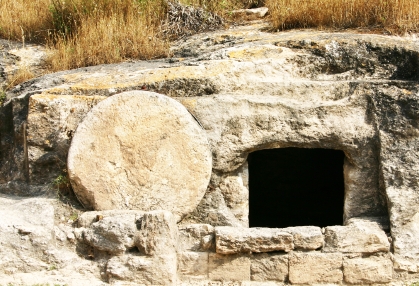
Do the gospels contradict about when the earthquake occurred and the stone was moved at the resurrection of Jesus?

Critics claim that the gospels Matthew, Mark, Luke and John contradict about the time when the earthquake occurred and the stone was moved at the time of Jesus’ resurrection.

“I am struck by a certain consistency among otherwise independent witnesses in placing Mary Magdalene both at the cross and at the tomb on the third day. If this is not a historical datum but something that a Christian storyteller made up and then passed along to others, how is it that this specific bit of information has found its way into accounts that otherwise did not make use of one another? . . . all of our early gospels–not just John and Mark (with Matthew and Luke as well) but also the Gospel of Peter, which appears to be independent of all of them–indicate that it was Mary Magdalen who discovered Jesus’ empty tomb. How did all of these independent accounts happen to name exactly the same person in this role? It seems hard to believe that this just happened by way of a fluke of storytelling. It seems much more likely that, at least with the traditions involving the empty tomb, we are dealing with something actually rooted in history”—Peter, Paul, and Mary Magdalene, p 226, by Bart Ehrman  read more

Advantages of Using Multiple Bible Translations

Advantages of Using Multiple Bible Translations

NT canon
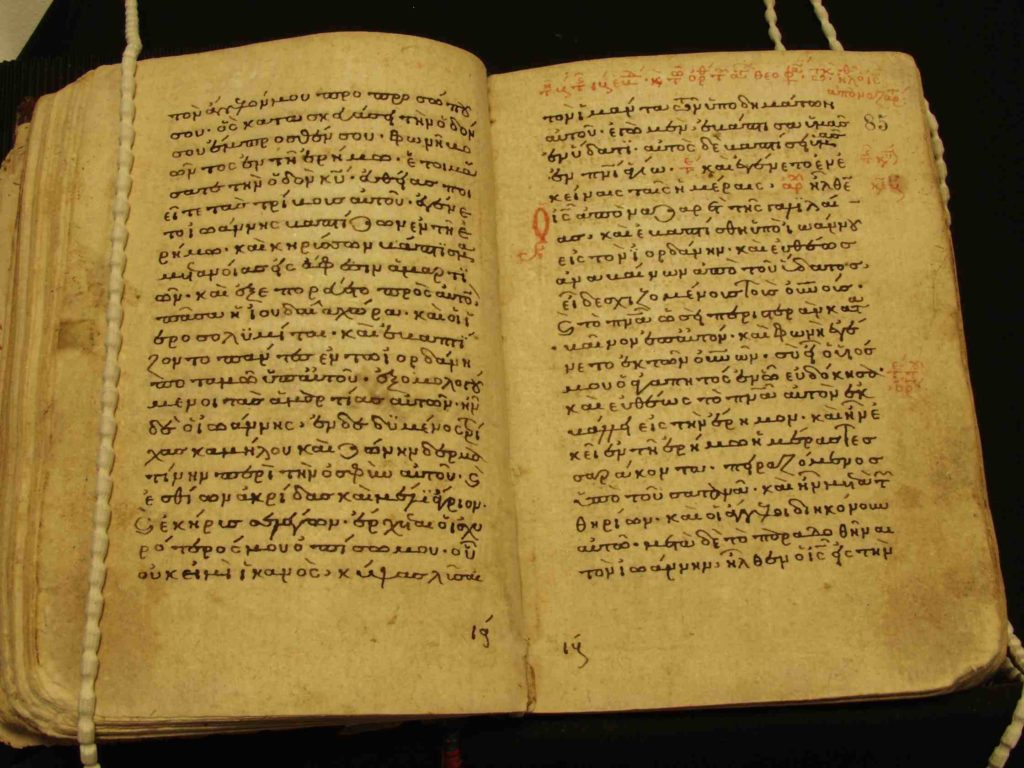
Greek manuscript of the New Testament. Is using multiple Bible translations better than knowing Biblical Greek?

Does a person need to know Biblical Greek to understand the New Testament, or is using multiple Bible translations, just as good, or better?

“Get wisdom. Though it cost all you have, get understanding”—Proverbs 4:7 NIV

“By studying Biblical Greek, you can gain a deeper understanding of the original text and the cultural context in which it was written”—Quora, February 6, 2023

Some Bible teachers and preachers are big on the idea that knowing Biblical Greek (Koine’) is important, even vital, in getting the best understanding of the Bible. While this may have a lot to do with their ego, we must grant that some are very sincere in holding and promoting this belief. It is certainly fine for anyone who has the inclination, the time, the resources, and the opportunity, to do so, that is, to learn Biblical Greek. It is a good thing that some have become scholars in Biblical Greek, and have been active in Bible translation and have written Biblical commentaries. But it takes many years of intensive study to become proficient in Biblical Greek. read more

Do We Have Eyewitness Testimony in the Gospels?

Do We Have Eyewitness Testimony in the Gospels?

Titles of the Gospels
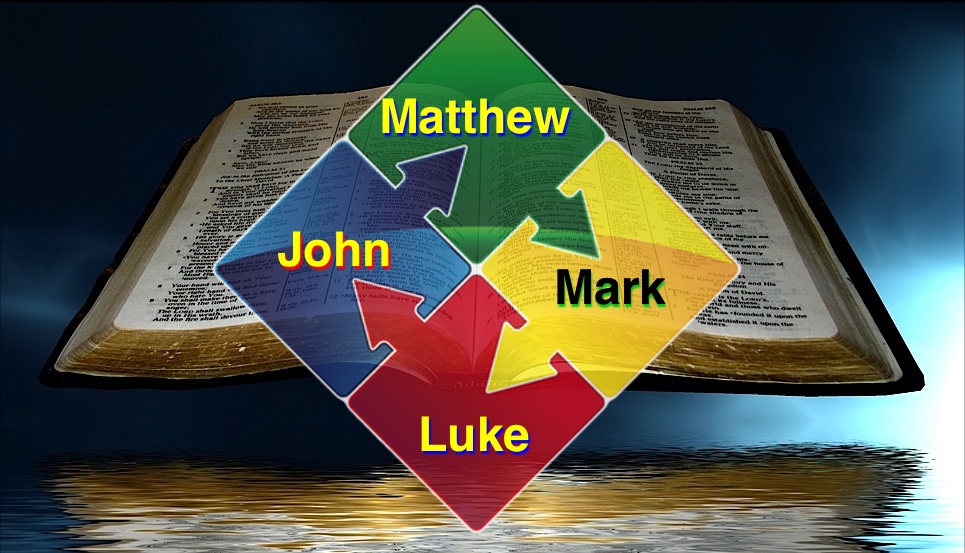
Did Matthew, Mark, Luke and John really use any eyewitness testimony when they wrote the Gospels? Were any of these four gospel writers eyewitnesses themselves?

 Do we have eyewitness testimony in the gospels?

“Even though we might desperately want to know the identities of the authors of the earliest Gospels, we simply don’t have sufficient evidence. The books were written anonymously and evidently not by eyewitnesses”—Bart D. Ehrman

The Gospels were not written by eyewitnesses, nor did they include any eyewitness testimony, so says the popular agnostic Bible scholar, who has quite a following. While such claims were rare prior to the 1800’s, they have been increasing, and ever more so in recent times. read more

JESUS’ BURIAL BY JOSEPH OF ARIMATHEA

JESUS’ BURIAL BY JOSEPH OF ARIMATHEA

Is there any evidence for the resurrection?
Are the gospel accounts of  the death and burial of Jesus by Joseph of Arimathea accurate?

Although all four Biblical gospels report Jesus’ burial by Joseph of Arimathea (Matthew 27:57-61; Mark 15:42:47; Luke 23:50-56; John 19:38-42), there are some skeptics and critics, such as the currently prominent agnostic Biblical “scholar” Bart Ehrman, who deny this fact. Experts point out that the more independent witnesses reports of an event that are available, the more likely the complete, composite report is true. Matthew and John were disciples of Jesus at the time of his execution, and its aftermath. So was Peter, who used Mark as his writer of the second Biblical gospel. Luke was familiar with “eyewitness reports circulating . . . from the early disciples,” and says, “having carefully investigated everything from the beginning, I also decided to write an accurate account” (Luke 1:1-3 NLT). So Luke’s gospel was based on accurate eyewitness accounts. read more

PONTIUS PILATE AUTHENTICATED

PONTIUS PILATE AUTHENTICATED

Pontius Pilate stone

“In the fifteenth year of Tiberius Caesar–when Pontius Pilate was governor of Judea”—Luke 3:1  NIV

Pontius Pilate is mentioned in all four the the gospels, Matthew, Mark, Luke and John, and in Acts and 1 Timothy, as the Roman governor before whom Jesus was brought to trial, and who, under pressure, passed the death death sentence upon Jesus (Matthew 27:1-26; Mark 15:1-15; Luke 22:66-23:25; John 18:28-19:16; Acts 4:27; 13:28; 1 Timothy 6:13). Pilate was “governor of Judea” from 26 CE to 36 CE, and is mentioned by the writer Tacitus. read more

Thessalonian Politarch Inscription Confirms Bible Accuracy

Thessalonian Politarch Inscription Confirms Bible Accuracy

Is the Bible reliable?
What is the significance of the Thessalonian politarch inscription?

What is a “politarch”?

“But when they did not find them, they dragged Jason and some other believers before the city officials [Greek, politarches], shouting: ‘These men who have caused trouble all over the world have now come here, and Jason has welcomed them into his house. They are all defying Caesar’s decrees, saying that there is another king, one called Jesus.’ When they heard this, the crowd and the city officials [Greek, politarches] were thrown into turmoil”—Acts 17:6-8 NIV read more

Who Wrote Hebrews? Did Paul?

Who Wrote Hebrews? Did Paul?

Is the Bible reliable?
Who wrote Hebrews?

Who wrote Hebrews? In thirteen New Testament letters, or epistles, Paul introduces himself as the writer. However, the writer of Hebrews is anonymous. Hebrews was accepted as an epistle of Paul by early writers, and throughout most of Christian history, the apostle Paul was viewed as the writer of Hebrews. However, in the last couple of hundred years, this view has been dismissed by many of the “experts.” What are the facts? Who wrote Hebrews?

Regardless of who who wrote the Letter to the Hebrews, the important thing to remember is that this writing, like the Old Testament before it, is what “the holy Spirit says” (Hebrews 3:7 NAB). The fact that the writer does not identify himself by name in the letter does not prove that Paul isn’t the writer. Many Old Testament Bible books don’t name the writer, and neither do the Gospels and Acts in the New Testament.

Differing Views of Writership

Most “scholars” and “experts” these days, especially since the 1800’s, do not think that the Christian apostle Paul wrote Hebrews. This view stands in contrast to the early Christians, who almost unanimously held the view that Paul wrote Hebrews, even though the writer isn’t named in the book itself.

“As early as the end of the second century the church of Alexandria in Egypt accepted Hebrews as a letter of Paul, and that became the commonly held view in the East. Pauline authorship was contested in the West in the fourth century, but then accepted. In the sixteenth century, doubts about that position were again raised, and the modern consensus is that the letter was not written by Paul. There is, however, no widespread agreement on any of the other suggested authors, e. g., Barnabus, Apollos, or Priscilla and Aquila. The document itself has no statement about its author”—Introduction to The Letter To The Hebrews, New American Bible (NAB) read more

The Fixed New Testament Text – a Huge Problem for Trinitarianism!

The Fixed New Testament Text – a Huge Problem for Trinitarianism!

The fixed New testament Text has been a huge problem for Trinitarianism.

“Command certain people not to teach false doctrines”—-1 Timothy 1:3 NIV

Since the Trinity Doctrine is said to be the main, or primary, teaching, of Christianity, why is it so disputed down to this day?

Accurate history tells us that:

(1) Various Trinities were taught and believed in many pagan religions prior to Jesus, going all the way back to ancient Babylon, 3,000 years before Christ!

(2) The Bible’s Old Testament canon closed about 400 BCE, saying nothing about any Trinity, or Trinitarian ideas..

(3) The Bible’s New Testament canon closed about 100 CE, also lacking any mention of any Trinity, or Trinitarian ideas.

(4) The Greek New Testament Master Refined Text became even more strongly fixed than ever during the latter part of the 20th century, with the publication of the Nestle-Aland (N-A) 26th Edition (now in its 28th Edition) and the United Bible Societies’ (UBS) 3rd Edition (now in its 5th Edition). These two independently done Greek Texts are now identical. They are based upon collation and critical anaylsis of the 5,800 extant New Testament manuscripts, some of which are dated to the 2nd, 3rd and 4th centuries CE.

(5) The integrity of the New Testament (NT) Text we have today is so far greater than anything else from ancient times that there is nothing anywhere close to it in textual integrity. This is what we would expect from “the word of God” (1 Thessalonians 2:13).

(6) It can truly be said of Christianity that it is a textually based religion. It is “written down,” “with paper and ink” (John 21:25; 2 John 14 NLT). The popular myth that the text of the Bible has been changed through handwritten copying and recopying through the centuries is unsupported by the facts.

(7) It was accurately predicted that “men will come forward perverting the truth” (Acts 20:30 NAB). However, the fixed Biblical text has served as a powerful safeguard against doctrinal changes.

(8) The Trinity doctrine, as we know it today, with the three in one idea, did not even appear on the scene until late in the 4th century CE, and was greatly disputed then, and it still is.

From the Bible we learn that:

(1) Jesus based his teachings upon the scriptures. “Everything must be fulfilled that is written about me in the Law of Moses, the Prophets and the Psalms” (Luke 24:44 NIV), which is the way the entire Old Testament was referred to in those days.

(2) The early Christian Church based its decisions upon the Scriptures—Acts 15:12-18

(3) The early individual Christians based their teachings entirely on the Scriptures— “He reasoned with them from the Scriptures . . . they received the message with great eagerness and examined the Scriptures every day to see if what Paul said was true” (Acts 17:2,3,11 NIV). Also see Acts 28:23.

(4) Teaching “different doctrine” (1 Timothy 1:3 ESV), or “false doctrines” (1 Timothy 1:3 NIV), was/were not allowed.

(5) Teaching “a different Jesus”, or “a different gospel” was not allowed—2 Corinthians 11:4 NLT; Galatians 1:6 NIV; NAB

(6) Going “beyond what is written in the scriptures” was not allowed—1 Corinthians 4:6 GWT

(7) “Speculations” were not allowed—Timothy 1:4 NIV

(8) The Church was to “test” (1 John 4:1 NIV), and “weigh carefully, what is said” ( 1 Corinthians 14:29 NIV)

(9) The fixed text of the Bible, especially the New Testament, serves as a safeguard against “all kinds of strange teachings” (Hebrews 13:9 NIV)

(10) A false doctrine might take hold for a while, but the Bible’s fixed text tends to bring the true Biblical teachings back into focus. “All people are like grass, and all their glory is like the flowers in the field; the grass withers and the flowers fall, but the word of the Lord endures forever” (1 Peter 1:24,25 NIV). This is the reason for the huge controversy over Trinitarian doctrine today. A false doctrine, such as the Trinity, is developed through a ‘distortion of the scriptures’ (2 Peter 3:15,16).

(11) “The faith that was once for all handed down to the holy ones” (Jude 3 NAB) was in written form with the completion of the New Testament by the end of the 1st century. This, and other scriptures, implies that there is nothing “add to” it (Proverbs 30:5,6 NIV). In fact God has preserved his word, like nothing else has ever been preserved. “All people are like grass, and all their glory is like the flowers of the field; the grass withers and the flowers fall, but the word of the Lord endures forever” (1 Peter 1:24,25 NIV). This fixed New Testament text serves as a safeguard against any doctrinal changes. It is true that unscriptural doctrinal changes, such as the Trinity, have been made, but “because of the truth,” “those who love the truth,” (2 John 1,2reject them, and stick with what the Bible itself teaches.

This fixed text of the Bible, especially the New Testament, is why the Trinity is so disputed, and is, in fact, contradicted, by the Bible itself.

Not one aspect of the Trinity doctrine is found within the Biblical text itself.

Some c=&0=& translations=&1=& rendered in=&2=& (KJV),=&3=& in a way that seems to support the Trinity doctrine. This is because they were based on texts composed from manuscripts that had spurious changes.

For example, the words “testify in heaven: the =&4=&were added to 1 John 5:7,8These words have been used to “prove” the Trinity doctrine. However, textual criticism revealed that these words are not in any Greek manuscript prior to the 14th century, so they are obviously spurious.

The KJV translation of 1 Timothy 3:16, “God was manifested in the flesh,” was based on a corrupted text, which would seem to support the Trinity doctrine. Discoveries of older, more accurate Greek manucsripts, combined with modern textual analysis revealed that the most ancient copies read: “Without any doubt, the mystery of our religion is =&5=&

John 1:1 is a favorite go-to “proof text” of Trinitarians. The usual translation in English is: “In the beginning was the Word, and the Word was with God, and the Word was God.”  However, Koine’ Greek language doesn’t have the indefinite articles “a” and “an.” The Greek of John 1:1 reads, “the Word was with the God, and the Word was divine” (AAT). This is a big difference! Jesus was with THE God, that is, Almighty God, in heaven, prior to his coming to earth. The footnote to John 1:1 in the New American Bible (NAB) is quite informative: “Was God: lack of a definite article in Greek signifies predication rather identification.” Predication describes something about the subject. Jesus is godlike, but he’s not Almighty God. Once again, the Greek text, rather than Trinitarian spin, helps us to get the correct understanding. John 1:18correctly translated, is a big help to understanding John 1:1“No one has seen God at any time; the only begotten God who is in the bosom of the Father; He has explained Him” (NASB). Since lots of people saw Jesus, he could not be God, because, “no one has ever seen God” (1 John 4:12 NIV). Jesus is called “God”, but he is begotten, meaning he was created. He did not exist prior to his creation. His “origins are from of old, from ancient times” (Micah 5:2 NIV). Trinitarians don’t like this, so many translations render John 1:18 differently. But the Greek text trumps biased translations.

John 8:58 is usually rendered as, “before Abraham was born, I am” (NIV). Trinitarians claim this connects Jesus to being the “I am” of Exodus 3:14However, the Greek is more accurately rendered as “I existed before Abraham was born” (AAT), or the slightly less accurate, “before Abraham was even born, I have always been alive” (NLT margin).

Acts 20:28 is often translated in a way that indicates that God died for our sins: “The church of God, which He purchased with His own blood” (NASB). However, since “No one has ever seen God” (1 John 4:12 NIV), and he is “eternal” (1 Timothy 1:17 NIV), and “the blood of his Son Jesus cleanses us from all sin” (1 John 1:7 NAB), the Greek text of Acts 20:28 is better translated as: “The church of God that he obtained with the blood of his own Son” (NRSV).

The fixed New Testament text helps with Romans 9:5“Theirs the patriarchs, and from them, according to the flesh, is the Messiah. God who is over all be blessed forever” (NAB). This is often translated with Trinitarian bias, such as, “the Messiah, who is God over all” (NIV). The NAB footnote clarifies the Greek,  by explaining, “However, Paul’s point is that ‘God who is over all’ aimed to use Israel, which had been entrusted with every =&6=&The usual translation of, “the Messiah, who is God over all,” contradicts the Trinity doctrine anyway, because, “in this Trinity . . . none is greater, or less, than another. But the whole three Persons are . . . coequal” (Athanasian Creed). If Jesus was God over all, that would include being “over” the Father and the holy Spirit.

Another Trintarian favorite is Philippians 2:5,6“Christ Jesus, who being in the form of God, did not consider it robbery to be equal to God” (NKJV).  The Greek text, however, reads: “Christ Jesus, Who, though he was in the form of God, did not =&7=&

Titus 2:13 is usually rendered as “of our great God and savior =&8=&which makes it appear that Jesus Christ is Almighty God. However, since Paul offered greetings “from God the Father and Jesus Christ our savior” (NAB), it is obvious that Paul did not mean that Jesus is Almighty God. The more accurate translation is, “of the great God and of our savior Jesus Christ” (NAB; NRSV margin).

2 Peter 1:1 is likewise rendered as though Jesus Christ is Almighty God in most translations: “Through the righteousness of our God and savior Jesus Christ”. However, the Greek is more accurately translated as: “the righteousness of our God and the savior Jesus Christ” (2 Peter 1:1 NAB margin; NRSV margin; KJV; ASV; Weymouth; Aramaic Bible in Plain English).

The=&9=& renderings=&10=& modern refined Greek Texts, such as the N-A and UBS, upon which many modern=&11=&

Anonymous Folklore, or Eyewitness Accounts of Jesus?

Anonymous Folklore, or Eyewitness Accounts of Jesus?

A popular myth is spread that the gospels, and the New Testament historical accounts, are simply anonymous folklore, embellished oral traditions and legends about a man named Jesus, who was likely a real, historical figure. As other articles on this site have shown, the entire New Testament was written within the lifetime of the Apostle John, who apparently lived on about 60-70 years after Jesus’ death. This is certainly believable since there are still alive today a number of people who were living back during WWII, which ended in 1945.

Peter, one of Jesus’ most intimate of his 12 apostles, besides writing 2 general letters to Christians, apparently shared with his younger associate in Christ, Mark, details that enabled Mark to accurately record his gospel (1 Peter 5:13). Mark did not simply write any so-called anonymous folklore about Jesus. In Peter’s 2nd general letter to Christians,  notice what he had to say:

“We have not depended on made-up stories in making known to you the mighty coming of our Lord Jesus Christ. With our own eyes we saw his greatness”—2 Peter 1:16 GNB

Although many were predictably beginning to “turn away from the truth, and turn aside to myths” (2 Timothy 4:4 NIV), because “false teachers . . . will exploit you with fabricated words” (2 Peter 2:1-3), this was not the case with true Christians who stuck with God’s reliably revealed word, the Bible.

Luke, written by Luke, the meticulous researcher, was written to, and dedicated to, Theophilus, who was probably one of Luke’s patrons. 

=&0=&things accomplished=&1=&down=&2=&from=&3=&beginning were eyewitnesses and servants of the word” (Luke 1:1,2 NLT)

With this in mind, since I myself have carefully investigated everything from the beginning, I too decided to write an orderly account for you, most excellent Theophilus.” (Luke 1:3 NIV) read more

WP2Social Auto Publish Powered By : XYZScripts.com