Some people today, including some who claim to be Christians, such as the Mormons, place much importance on genealogies. The Hebrew people recorded public genealogical records that document history, establish identity, and/or legitimate office. Family tradition, marriage, links to the past, inheritance and property rights were all important to them, as they are to people today (Deuteronomy 25:5-10; 1 Chronicles 1-9; Ezra 10:18-43). The key to legitimacy and identity is a direct irrefutable familial tie with the past. Bible and other genealogies may go backward in time from the present (1 Chronicles 6:31-33; Ezra 7:1-5; Luke 3:23-38), or forward in time from a certain point in the past (Genesis 5:1-32; 11:10-32; Ruth 4:18-23; Matthew 1:1-17). These two types of genealogies can be combined, as they are in Matthew 1:1-17. Additionally, genealogical rolls may either contain a simple succession of names or may be supplemented with expansive content pertaining to the activities of certain prominent individuals on the list.read more
Importance of Eyewitnesses of Jesus’ Death & Resurrection
Critics of the Bible often say there are no eyewitness accounts recorded in the Bible of Jesus’ death and resurrection. This article examines the facts of the issue of whether there are eyewitnesses of Jesus’ death and resurrection.
“Many have undertaken to draw up an account of the things that have been fulfilled among us,just as they were handed down to us by those who from the first were eyewitnesses and servants of the word.With this in mind, since I myself have carefully investigated everything from the beginning, I too decided to write an orderly account for you, most excellent Theophilus.”(Luke 1:1-3 NIV)read more
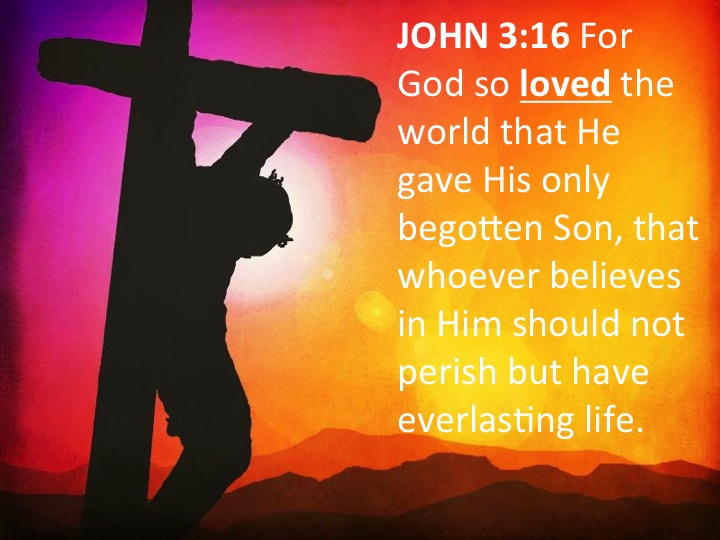
“For God loved the world so much that He gave His only begotten Son, that whoever believes in Him should not perish but have everlasting life”—John 3:16 NKJV
On November 8, 2018, an article was posted on Patheos entitled, “Why John 3:16 Isn’t About The Crucifixion“:
“In preparation for an upcoming online debate about PSA [Penal Substitutionary Atonement] Theory, I started wondering whether or not Jesus, or any of the Gospel authors, specifically communicated the Gospel as being about Jesus dying on the cross for our sins, or to appease the wrath of God, etc.read more
The woman caught in adultery story is well known today among Christians, and even in popular Western culture, but there are questions about it’s authenticity.
“Yahweh’s promises are promises unalloyed; natural silver which comes from the earth seven times refined”—-Psalm 12:6 NJB
“Every word of God is flawless . . . Do not add to his words or he will rebuke you and prove you a liar”—Proverbs 30:5,6 NIV
“I warn everyone who hears the words of the prophecy of this scroll: If anyone adds anything to them, God will add to that person the plagues described in this scroll. And if anyone takes words away from this scroll of prophecy, God will take away from that person any share in the tree of life and in the Holy City”—Revelation 22:18,19 NIVread more
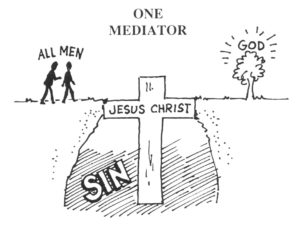
“There is one God and one mediator between God and mankind, the man Christ Jesus, who gave himself as a ransom for all”—1 Timothy 2:5,6 NIV
“Mediator. One who represents God to humans and humans to God–and who removes all alienation between them by offering himself as a ransom for ‘all'”—NIV Study Bible footnote on 1 Timothy 2:5
The Bible says that Jesus Christ is the mediator BETWEEN God and mankind. Trinitarians claim that Jesus is God, and their “God-man” also. How do they explain this apparent contradiction?
They claim that only Jesus could be the mediator because he is the “God-man”, that is, he’s “fully god, fully man”, they claim”, thus being part and parcel of both parties he represents.
Jesus is the Mediator between God and mankind. Yet, Trinitarians claim Jesus is also God, and call him “God-man.”Trinitarians say: “Jesus MUST be God in order to be our mediator.”
That is the crux of their argument. Since there is nothing in the scriptures to support such an idea, Trinitarians resort to equivocation by changing the meaning of “mediator”, since Jesus being the mediator BETWEEN humans and God (1 Timothy 2:5) presents a huge problem for their Trinity doctrine. (2 Corinthians 10:3-4).
Their argument that Jesus must be God to be the mediator between God and humanity is self-defeating since the definition of mediator is “one who interposes between two parties at variance to reconcile; an intermediary agent or go-between.”
Thus, by definition, a mediator is neither of the two parties for whom he mediates. The two parties discussed here are the “one God” and “mankind”. The “one mediator” between these two parties is “Christ Jesus”. The foundation of their argument against the plain truth of 1 Timothy 2:5, therefore, rests on a bogus premise. Thus, their entire argument fails.
“Jesus answered, ‘I am the way, and the truth and the life. No one comes to the Father except through me”—John 14:6 NIVread more
The Roman Catholic Church teaches that Jesus personally appointed Peter as the leader of the church, and the pope is Peter’s successor to that position. At the root of this doctrine is the claim that Jesus appointed Peter as leader when he called him a “rock.” But is this really what the Bible teaches?
Jesus Referred to Peter as a “Rock”
In Matthew 16, Jesus was speaking in front of a rather large cliff face near Caesarea Philippi. There is no doubt that this is historical, that is, it actually took place.
“You are Peter, and upon this rock I will build my Church”—Matthew 16:18 NAB
The Greek word for Peter is “Petros”, which means “a small stone,” whereas the Greek word for
The Bible says God cannot die. Yet Trinitarians assert that Jesus must be God himself in order to die for the sins of mankind stands in stark contradiction to all scriptural evidence. It was Jesus, not God, who died for sins.
It was Jesus – not God – who died for the sins of mankind
“LORD [Yahweh], are you not from everlasting?My God, my Holy One, you will never die” (Habakkuk 1:12 NIV)
From this scripture, we can see that it is impossible that Jesus could be the God who would die for the sins of mankind, since the prophecy of Habakkuk was written over 600 years prior to Jesus and clearly states that God will never die.
“For you know that it was not with perishable things such as silver or gold that you were redeemed from the empty way of life handed down to you from your ancestors,butwith the precious blood of Christ, a lamb without blemish or defect. ” (1 Peter 1:18,19 NIV)
Again, contrary to the Trinitarian assertion that without Jesus being God, then his blood is “ordinary”, and could not atone for sins, we see clearly stated that Jesus’ blood is precious, and does indeed atone for our sins. Why? Because, “God cannot be tempted” (James 1:13 NIV). Jesus is the only one who has
Are God, Jesus and the holy Spirit part of a Trinity? Is Jesus God? Let’s take a look at the Bible book of Titus to find some clues to answer these questions.
What does the Book of Titus say about God, Jesus, and the holy Spirit?
“Paul, a servant of God and an apostle of Jesus Christ.” (Titus 1:1NIV) “God” is named as being someone other than “Jesus Christ”. If Jesus was God, as Trinitarians claim, why are God and Jesus are referred to separately? It’s because they are separate and distinct individuals, and not merged into a mysterious Trinity! Why does Paul not say that he is a servant of the holy Spirit, or the Trinity? Because, even though the holy Spirit is real, it’s not a person, and the idea any sort of Trinity is not found in the Bible.
“Grace and peace from God the Father and from Christ Jesus our Savior.” (Titus 1:4 NIV) “God” is identified as someone other than Jesus, and is named as “the Father,” not the Son, or the holy Spirit, or the Trinity. Jesus is separate and distinct from God. “Grace and peace” are not said to come from the Trinity, because it is fictional, nor are they said to come from the holy Spirit, because it is not a person.
Many translations render Titus 2:13 as though Jesus and Almighty God are the same being, essence, or substance, due to Trinitarian bias, like this: “the appearing of the glory of our great God and Savior, Jesus Christ” (Titus 2:13 ESV). More accurately, however, the verse is translated as in the following fourteen Bible translations:
“Looking for that blessed hope, and the glorious appearing of the great God and our Saviour Jesus Christ” (Titus 2:13 KJV).
“the appearing of the glory, of the great God and of our savior, the Anointed One, Jesus” (Titus 2:13Hart)
“As we await the blessed hope, the appearance of the glory of the great God and of our Savior Jesus Christ” (Titus 2:13 NAB).
“While we wait for the blessed hope and the manifestation of the glory of our great God and our Savior, Jesus Christ” (Titus 2:13 NRSV margin).
“looking for the blessed hope and the appearing of the glory of glory our =&0=&
“looking for the blessed hope and appearing of the glory of the great God and our Saviour Jesus Christ” (Titus 2:13 ASV).
“Looking for the blessed hope and coming of the glory of the great God and our Savior Jesus Christ” (Titus 2:13 Douay)
Who is the ultimate authority? Most Churches believe, preach and teach the following:
“In this Trinity . . . None is greater, or less, than another. But the whole three Persons are . . . coequal”—Athanasian Creed
The Trinity is implied to be the ultimate authority in the famous creed quoted above. Not all Christians are in agreement about the roles of God the Father, Jesus, the holy Spirit and the Trinity. Some say God is the ultimate authority, some say Jesus is the ultimate authority, and some say the Trinity is the ultimate authority, and a few even say the holy Spirit is the ultimate authority . Some say they are equal. And some say Jesus is Almighty God. Red-letter Bibles put words the editors think were spoken by Jesus in red, which implies that Jesus’ words are more important than God’s words. But what does the Bible say? Let’s examine some scriptures to find the answer.
“All authority in heaven and on earth has been given to me…” – by whom?
“He has given him authority to judge because he is the Son of Man” (John 5:27). “I am not here on my own authority but he who sent me is true.” (John 7:28) Jesus plainly states his authority came from his Father, and that he didn’t come on his own authority, but God sent him.
“If anyone’s will is to do God’s will, he will know whether the teaching is from God or whether I am speaking on my own authority.” (John 7:17 ESV).”I do not speak on my own authority.” (John 14:10)read more
Are God, Jesus, and the Holy Spirit a Trinity in 2 Thessalonians?
In the Bible book of 2 Thessalonians, the Apostle Paul speaks of God, Jesus Christ, and the holy Spirit. If Paul and/or the early Christians believed Jesus is God or part of a Trinity, we should be able to find evidence of this in the New Testament letters. But is this the case in 2 Thessalonians? Is the Trinity in 2 Thessalonians? Let’s examine some of the pertinent verses to find out.
Paul speaks of both God, Jesus, and the holy Spirit in 2 Thessalonians. But does he believe God is a Trinity?