Browsed by
Category: Jesus Christ

John 1:1

John 1:1

There is some controversy as to how should John 1:1 be translated. Trinitarians often use the verse to support their contention that Jesus is the eternal Almighty God.

The traditional rendering in English is:

In the beginning was the Word, and the Word was with God, and the Word was God.

There are many other variations of rendering John 1:1 which are more accurate according to the Greek text, both in translation or paraphrase, John 1:1c also exist:

  • 1808: “and the Word was a god” – Thomas Belsham The New Testament, in an Improved Version, Upon the Basis of Archbishop Newcome‘s New Translation: With a Corrected Text, London.
  • 1822: “and the Word was a god” – The New Testament in Greek and English (A. Kneeland, 1822.)
  • 1829: “and the Word was a god” – The Monotessaron; or, The Gospel History According to the Four Evangelists (J. S. Thompson, 1829)
  • 1863: “and the Word was a god” – A Literal Translation of the New Testament (Herman Heinfetter [Pseudonym of Frederick Parker], 1863)
  • 1864: “and a god was the Word” – The Emphatic Diaglott by Benjamin Wilson, New York and London (left hand column interlinear reading)
  • 1879: “and the Word was a god” – Das Evangelium nach Johannes (J. Becker, 1979)
  • 1885: “and the Word was a god” – Concise Commentary on The Holy Bible (R. Young, 1885)
  • 1911: “and [a] God was the word” – The Coptic Version of the New Testament in the Southern Dialect, by George William Horner.[17]
  • 1924: “the Logos was divine” – The Bible: James Moffatt Translation, by James Moffatt.
  • 1935: “and the Word was divine” – The Bible: An American Translation, by John M. P. Smith and Edgar J. Goodspeed, Chicago.[19]
  • 1955: “so the Word was divine” – The Authentic New Testament, by Hugh J. Schonfield, Aberdeen.
  • 1958: “and the Word was a god” – The New Testament of Our Lord and Saviour Jesus Anointed (J. L. Tomanec, 1958)
  • 1970, 1989: “and what God was, the Word was” – The New English Bible and The Revised English Bible.
  • 1975 “and a god (or, of a divine kind) was the Word” – Das Evangelium nach Johnnes, by Siegfried Schulz, Göttingen, Germany
  • 1975: “and the Word was a god” – Das Evangelium nach Johannes (S. Schulz, 1975);
  • 1978: “and godlike sort was the Logos” – Das Evangelium nach Johannes, by Johannes Schneider, Berlin
  • 1985: “So the Word was divine” – The Original New Testament, by Hugh J. Schonfield.
  • 1998: “and what God was the Word also was” – This translation follows Professor Francis J. Moloney, The Gospel of John, ed. Daniel J. Harrington.
  • 2017: “and the Logos was god” – The New Testament: A Translation, by David Bentley Hart.

GREEK ANALYSIS

Jn 1:1 should rigorously be translated ‘the word was with the God [= the Father], and the word was a divine being'” (Dictionary of the Bible, 1965, by scholar John L McKenzie, S J). read more

Children of God, Brothers and Sisters of Christ

Children of God, Brothers and Sisters of Christ

Picture

Trinitarians often refer to Jesus Christ as “God the Son”. According to the scriptures, he is “the Son of God,” but not “God the Son”. Christians are “children of God”, and “brothers and sisters”  of Christ (Matthew 25:40; Hebrews 2:11; Matthew 12:50; Mark 3:35; Luke 8:21), but never “children of Christ” in the scriptures. According to the scriptures, Christians are “born of God” ( John 1:13; 1 John 3:9; 4:7; 5:1,4,18), but never “born of Christ”. Christ has “brothers and sisters” (Matthew 25:40; Hebrews 2:11; Matthew 12:50; Mark 3:35; Luke 8:21), but no children. God has “children”, but no brothers (Romans 8:14,15; Galatians 3:26; Revelation 21:6,7). read more

Is the Trinity in Jeremiah, Ezekiel and Daniel?

Is the Trinity in Jeremiah, Ezekiel and Daniel?

Is the Bible reliable?
Is the Trinity in Jeremiah, Ezekiel and Daniel?

It is sometimes said that the Trinity is the main teaching of the scriptures. During a crucial time for God’s people, before and after the destruction of Jerusalem, and thereafter God’s people taken off into exile to the world power of Babylon, God raised up and mightily used his prophets Jeremiah, Ezekiel and Daniel as major prophets for his people then, and for us now. Their recorded prophecies are in books bearing their names in the Bible’s Hebrew-Aramaic Scriptures, the Old Testament, and comprise a total 112 chapters. Naturally, we would expect to see the Trinity doctrine in these very important Bible books if the doctrine is true. No one can rightly say Trinitarians are not very imaginative and creative in their trying to find something in the Bible to support their doctrine. For example: “It has been said that Ezekiel is the prophet of the Spirit, as Isaiah is the prophet of the Son, and Jeremiah the prophet of the Father”  (brothersoftheson.com).” In the light of such glowing claims, we do well to ask, “Is the Trinity in Jeremiah, Ezekiel and Daniel?” read more

Is the Trinity in Psalms?

Is the Trinity in Psalms?

Psalms is one of the longest books in the Bible. Based on what many scholars and experts assert, we would expect to find this doctrine in such a long and prominent Bible book. Is the Trinity in Psalms? 

Does it strike you as odd that even the most scholarly proponents of the doctrine admit it is neither understandable nor explainable?

“The most difficult thing about the Christian concept of the Trinity is that there is no way to completely understand it or explain it. God is infinitely greater than we are; therefore, we should not expect to be able to fully understand Him. But we do trust the Bible, which teaches that the Father is God, Jesus is God, and the Holy Spirit is God. At the same time, the Bible also teaches there is only one God. So, the one God exists in three Persons.
It’s possible to understand some facts about the Trinity and some of the relationships the different Persons of the Trinity have to one another. But, ultimately, how a single Being can exist in three distinct Persons is incomprehensible to us. Our inability to understand, however, does not mean the doctrine of the Trinity is untrue or unbiblical. The word Trinity is not found in Scripture. It is a useful term in discussions of the triune God, as we speak of three coexistent, co-eternal divine Persons who are One. Although the word itself is not found in the Bible, the concept represented by the word Trinity certainly is.”-–GotQuestions.org read more

Promoting the “God-man” Is “Antichrist”

Promoting the “God-man” Is “Antichrist”

The God-Man

Trinitarianism asserts that Jesus Christ is a “God-man”. However, promoting this “God-man” is actually “antichrist”. How so? Notice:

“God-man (Koinē Greek: θεάνθρωπος, romanized: theánthropos; Latin: deus homo is a term which refers to the incarnation and the hypostatic union of Christ, which are two of mainstream Christianity‘s most widely accepted and revered christological doctrines. The first usage of the term “God-man” as a theological concept appears in the writing of the 3rd-century Church Father Origen:]’This substance of a soul, then, being intermediate between God and the flesh – it being impossible for the nature of God to intermingle with a body without an intermediate instrument –  the God-man is born.'”— Wikipedia read more

What does “Only Begotten” mean in Jesus’ case?

What does “Only Begotten” mean in Jesus’ case?


What does “only begotten” mean in Jesus case? Monogenēs may be used as an adjective. For example, monogenēs pais means only child, only legitimate child or special child. Monogenēs may also be used on its own as a noun. For example, o monogenēs means “the only one”, or “the only legitimate child” . . . Some interpretations of the word “unique” attempt to preclude birth, yet the full Greek meaning is always in the context of a child (genes). A unique child is also a born child, hence the full meaning of the word “begotten” as found in John 3:16 (KJV), for example”—Wikipedia  read more

Is The Trinity In Matthew?

Is The Trinity In Matthew?

 
Matthew 21:34–37 on Papyrus 104(recto; c. AD 150)
 

Is the Trinity in Matthew?

“A true and accurate knowledge of the Trinity is a blessing in and of itself . . . the Trinity is the highest revelation God has made of himself to His people. It is the capstone, the summit, the brightest star in the firmament of divine truths”—The Forgotten Trinity, page 10

“The Gospel according to Matthew . . . no other was so frequently quoted in the noncanonical literature of earliest Christianity”—Preface to Matthew in the New American Bible (NAB) read more

Are Jesus and God the Father Two Separate Individuals?

Are Jesus and God the Father Two Separate Individuals?

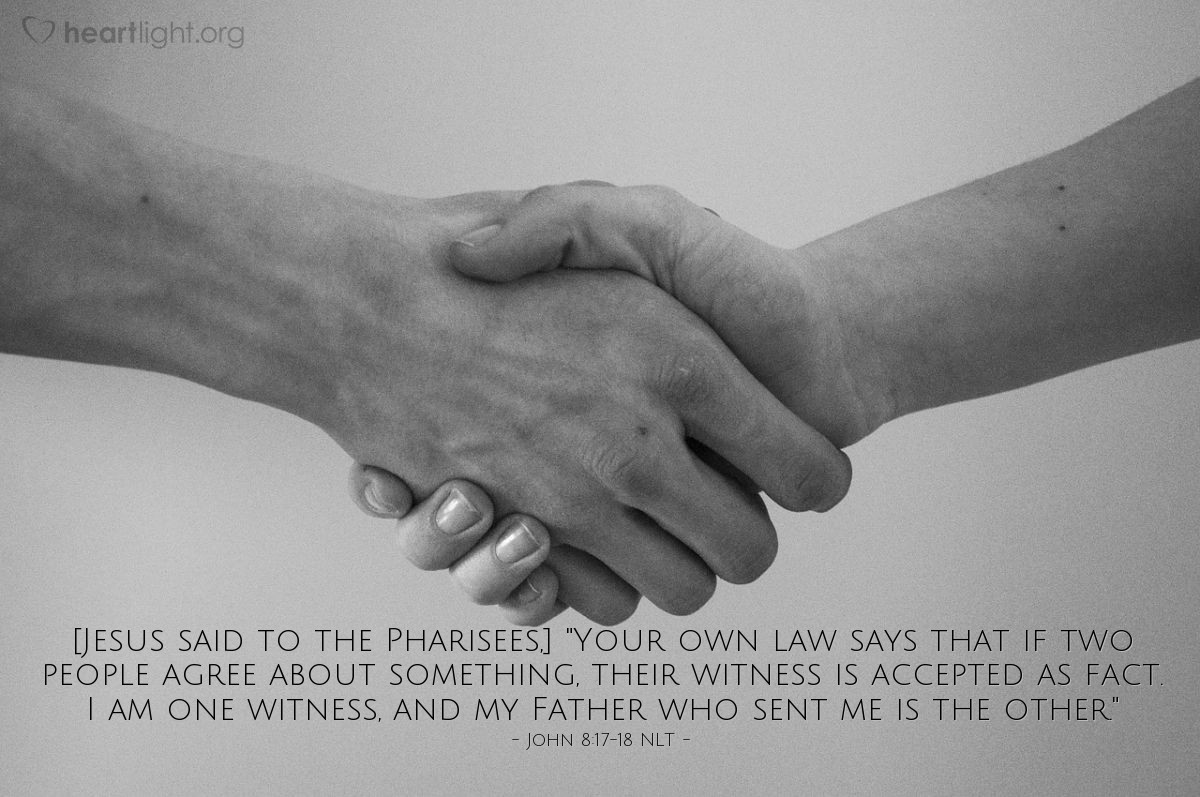
  <a class=John 8:17-18 NLT Illustrated: "What Greater Witness ..." />   Are Jesus and God the Father two separate individuals? This seems like a strange question to ask. Trinitarians try to explain how their doctrine works with explanations such as this: “While the three persons of the Godhead are distinct, they cannot be separated. That is, the Father, Son, and Holy Spirit are co-equal and co-eternal. They exist simultaneously, not consecutively” (Trinitarian website). Does this make any sense? They claim the doctrine is true, yet, they admit it is extremely difficult, if not impossible, to understand. Let’s examine what the Bible says, and see if the truth is really that difficult to understand.    John 8:16-18 “If I do judge, my decisions are true, because I am not alone. I stand with the Father, who sent me. In your own Law it is written that the testimony of two witnesses is true. I am one who testifies for myself; my other witness is the Father, who sent me” (NIV). In these verses, Jesus twice says “the Father . . . sent” him, which means they are two separate and distinct people, because the sender and the one sent cannot be the same, nor can they be in the same location. He also says the Father is with him, indicating they are separate and distinct. Jesus also says the witness of “two” individuals is true. ‘I’m one, and my Father who sent me is the other,’ he says.  Obviously, Jesus and his Father are two separate and distinct people.

John 10:30 – Are the Father and Jesus “one” within a Trinity? Or, are they “one” in unity, the same as the disciples are in John 17:11,20-23?  Since the disciples are not “God”, yet are to be “one” with God and Jesus and with one another, obviously they are “one” in unity. The Greek word “hen” is in the neuter gender, and is translated as “one”, but this is not the numeral “one”. To be the numeral “one” it would have to be in the masculine gender. Anyway, at John 8:17,18, Jesus said that he and his Father are “two”, numerically speaking. read more

Was Jesus Created?

Was Jesus Created?

<a class=Colossians 1:15 Who is the image of the invisible God, the ..." />

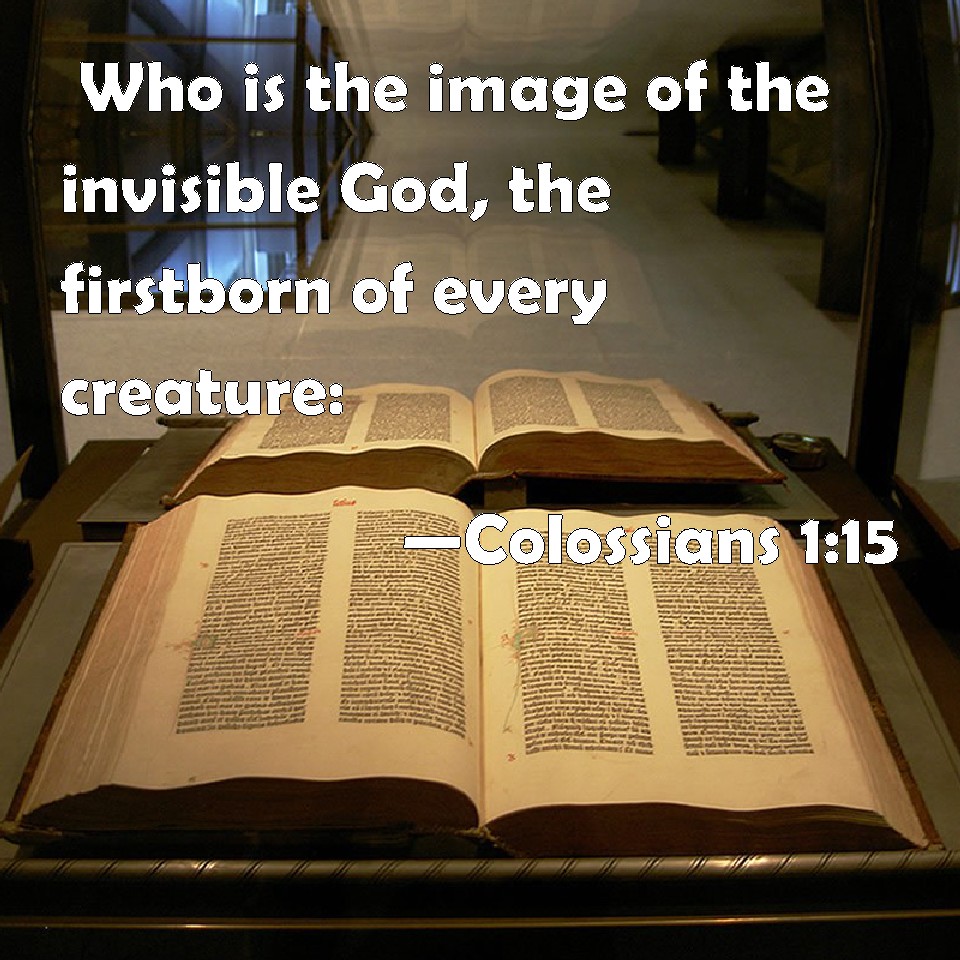
Was Jesus created? – No. not according many Bible scholars, preachers, creeds, and Christian denominations, who say Jesus has existed from eternity. Notice:

“The Son uncreated . . . the Son eternal”—Athanasian Creed

“Within the one Being that is God, there exists three eternally . . . coeternal persons”—The Forgotten Trinity, by James White, p 23

Since this is the case, why is there even any question about whether or not Jesus was created? — The reason why is because of what the Bible has to say. read more

Did Jesus Witness For Himself?

Did Jesus Witness For Himself?

From top-left: Aramaic, Hebrew, Greek, Latin, and English transcriptions of the name Jesus

Skeptics and critics have alleged that Jesus’ words in the gospel of John contradict about whether or not Jesus witnessed for himself. Did Jesus witness for himself?

ALLEGED CONTRADICTION:

“According to the Gospel of John, what did Jesus say about bearing his own witness?
(a) “If I bear witness to myself, my testimony is not true” (John 5:31)
(b) “Even if I do bear witness to myself, my testimony is true” (John 8:14)”

What Jesus was referring to in John 5:31? Was he saying that if he witnessed for himself his testimony wasn’t true? read more

WP2Social Auto Publish Powered By : XYZScripts.com