In the Bible book of 2 Thessalonians, the Apostle Paul speaks of God, Jesus Christ, and the holy Spirit. If Paul and/or the early Christians believed Jesus is God or part of a Trinity, we should be able to find evidence of this in the New Testament letters. But is this the case in 2 Thessalonians? Is the Trinity in 2 Thessalonians? Let’s examine some of the pertinent verses to find out.
Paul speaks of both God, Jesus, and the holy Spirit in 2 Thessalonians. But does he believe God is a Trinity?
“To the church of the Thessalonians in God our Father and the Lord Jesus Christ. Grace and peace to you from God the Father and the Lord Jesus Christ. He will punish those who do not know God and do not obey the gospel of our Lord Jesus.” (2 Thessalonians 1:1,2,8 ). In the opening greetings in these first few verses of the letter, God is clearly distinguished from Jesus Christ, as an entirely separate being and there is no mention of the holy Spirit. “God” is referred to as “our Father”, not “the Lord Jesus Christ”. Notice that Jesus is called “Lord,” not God, and there is a conspicuous absence of any greetings from the holy Spirit! If the holy Spirit is the third person of the Trinity, and if the Trinity is a true doctrine, why is the Spirit not mentioned here? Because the holy Spirit isn’t a person, and he Trinity is a “false doctrine” (1 Timothy 1:3). These three verses completely exterminate the Trinity doctrine.read more
We’re going to take a look at the relationship between God and Jesus in this short article about the Bible book of 2 John. Is there any indication that Jesus is God, or is equal to God? What about the holy Spirit? Is it mentioned in this letter? Are God and Jesus the same person, or are they two separate and distinct individuals? Is the Trinity in the letter of 2 John? Let’s find out.
“Grace, mercy and peace from God the Father and from Jesus Christ, the Father’s Son.” (2 John 1:3) Notice the conjunction “and” separates “God the Father” and “the Father’s Son”. Obviously, they are separate and distinct, with Jesus identified, not as “God the Son,” an expression that occurs nowhere in the Bible, but as “the Father’s Son.” We also notice that greetings do not come from the holy Spirit, which is very unusual if it is a person. Many other Scriptures indicate that “the Spirit of God” (Matthew 12:28) is a real force (Luke 1:17; Acts 1:8), but not a person (Luke 12:12: Matthew 10:20).read more
Is the Trinity in 1 Thessalonians? In the Bible book of 1 Thessalonians, are God and Jesus and spoken of as separate and distinct? Is the holy Spirit a person? Let’s examine these questions in some of the verses in 1 Thessalonians.
Is the Trinity in 1 Thessalonians? God and Jesus are spoken of as separate and distinct in 1 Thessalonians
“In God the Father and the Lord Jesus Christ.” (1 Thessalonians 1:1) Here, God and Jesus are referred to as two separate and distinct individuals. Why are they not “in” the holy Spirit, if it is a person? Why aren’t they in the Trinity?read more
Is the Trinity in Philippians? Is Jesus Christ Almighty God?
This article is part of our series about what is stated concerning God, Jesus and the holy Spirit, and whether they together comprise a Trinity, in the various books of the New Testament. We will examine the four chapter book of Philippians. Notice the distinctive relationship between God and Jesus throughout this book of Philippians, especially the superior role of God compared to Jesus. What does it say about the holy Spirit? Is the Trinity in Philippians?
Is the Trinity found in Philippians? The superior role of God compared to Jesus is evident from the Bible book of Philippians
“To all God’s holy people in Christ Jesus at Philippi.” (Philippians 1:1) Notice they are God’s, not Christ’s, holy people. God is always the one in control, and is using Christ to gather his people, which shows his superiority over Christ, and eliminates the equality aspect of the Trinity doctrine (John 14:28).read more
In the Bible, particularly the New Testament letters, greetings are given from God and Jesus in 20 of the 21 New Testament canonical letters. We know that God the Father and Jesus Christ are both persons, so we should expect to see their greetings, and we do in these 20 letters. (Third John does not have such a greeting or praises.) But what about the Holy Spirit and the Trinity? If the holy Spirit is a person, or if the Trinity is a real entity, we should expect to see some type of greetings from the holy Spirit, and/or the Trinity, and/or praises to the holy spirit, or Trinity, as well. But is this the case? Let’s examine the greetings in the letters to find out.read more
Can a Believer in the Trinity Have a Relationship with God?
The vast majority of Christian churches and preachers teach that the Trinity doctrine is true, and is a vitally important Biblical message. On this basis, therefore many sincere Christians believe in the Trinity doctrine. Can a believer in the Trinity have a relationship with God?
Below are some excerpts from a debate with a Trinitarian on an online forum, with the Trinitarian’s comments quoted verbatim :
Trinitarian said…
“ONLY ONE DIVINE BEING who exists within himself eternally and simultaneously as three distinct Personal Self-Awarenesses, Father, Son, and Holy Spirit”
These type of statements are pure fiction, as this premise has no Biblical support. Actually, there are three problems with them:
No Biblical proof
Contradicts the Bible
Makes no sense – eternal life depends on knowing God – John 17:3. Something that is nonsensical, like the Trinity God, cannot be known.
Trinitarian said…
“And it is true, since the Almighty IS Father, Son, and Holy Spirit. Yet not three Almighties, but only ONE Almighty…and he has NO equal. There is none like our God. And our God is Father, Son, and Holy Spirit.”read more
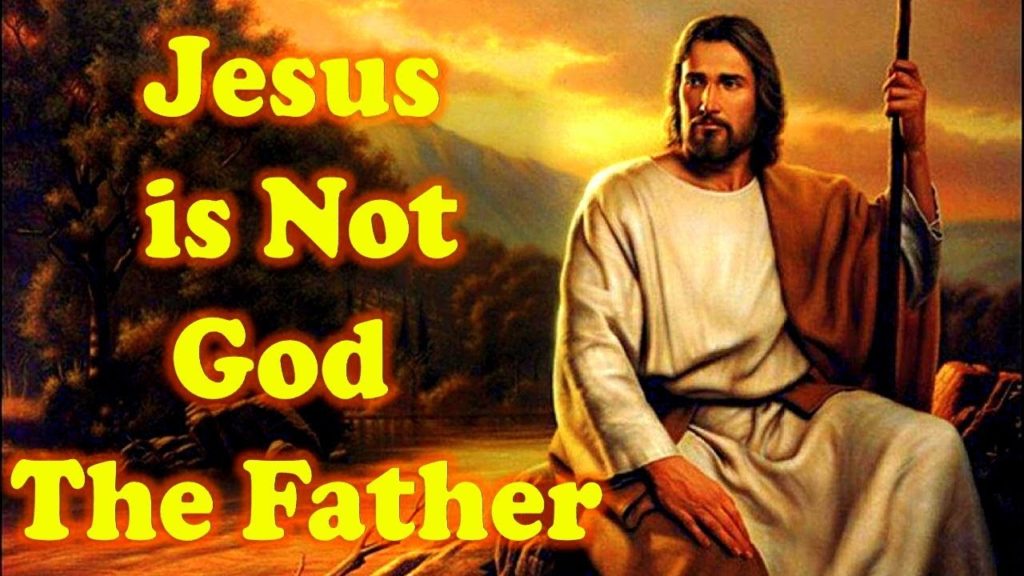
Is it possible that God the Father is the only one who is Almighty, and his Son, Jesus Christ and the holy Spirit are not Almighty?
“The Father is Almighty, the Son Almighty, and the Holy Spirit Almighty. And yet there are not three Almighties, but one Almighty”—Athanasian Creed
The Trinity doctrine asserts that the three Trinitarian beings “are co-equal and co-eternal.” Let’s examine what the Bible says about Almighty God.
ALMIGHTY GOD IS THE FATHER
“If I am indeed father, where is the honor due to me? says Yahweh Sabaoth” (Malachi 1:6 NJB). “Do we not all have one Father? Has not one God created us?” (Malachi 2:10 NASB). The “one God” is identified with “Yahweh”, the Father. These scriptures thus contradict the Trinity doctrine, which claims the one God is the Trinity – the Father, the Son, and the holy Spirit. God is identified as “one” [Hebrew “echad”], not three-in-one. “Echad” is the numeral “one.” It is not a compound unity.read more
Hebrews is a comprehensive treatise about Christian doctrine. Since the Trinity doctrine is asserted to be the main doctrine of Christianity, we would expect Hebrews to include significant mention of the Trinity doctrine, if it is true.
Is the Trinity doctrine in the book of Hebrews?
In our series about what is stated concerning God the Father, his Son Jesus, and the holy Spirit in the various books of the New Testament, we examine all the relevant scriptures of each particular book. In this article, we will examine the Letter to the Hebrews, and discover powerful testimony about whether or not the doctrine of the Trinity is in Hebrews. All quotes from NIV, unless noted otherwise. Hebrews says God speaks to through his Son.read more
In the book of Acts, did the Apostles teach or preach the Trinity doctrine?
This article is part of our series about what is stated concerning God, Jesus and the holy Spirit, and whether they comprise a Trinity, in the various books of the Bible. This article examines whether the Trinity was taught or preached the book of Acts of the Apostles.
Jesus had foretold that, “the Helper, the Holy Spirit which the Father will send in my place, will teach you everything and remind you of =&0=&“The Helper, the Holy Spirit” would “guide [them] into all the truth” (John 16:13 NIV). Acts records for us how this was done, by documenting the spread of Christianity during its first three decades, including its beginning, when the holy Spirit was “poured out” (Acts 2:33). If the Trinity is true, then the doctrine should be evident in the book of Acts, because it records what the early Christians taught and how Christianity was established throughout the Roman Empire.
Acts 1:3 – “During the forty days after he suffered and =&1=&The resurrection of Christ is the foundation of the Gospel, and it’s the affirmation of Jesus’ Sonship and Messiahship. This is what the early Church preached, as recorded in the Book of Acts and the New Testament letters. However, today many theologians and preachers are “preaching” “a different gospel” (Galatians 1:6-9 NIV), asserting that the essence of the Gospel is that “God became a man and died for our sins. In contrast, for the early church it was,“God has resurrected this Jesus.” (Acts 2:32 HCSB)
Acts 1:4 – “Wait for the gift my Father promised” (NIV). – The Father alone is the one who is in control. “The “gift” refers to the Holy Spirit, as promised in the Old Testament (e.g., Joel 2:28-29) and reiterated by Jesus in John 14:16-17” (Bible Hub Study Bible). Calling the holy Spirit a “gift” gives us a clue that the holy Spirit is not a person. According to Jesus, “the holy Spirit” (Luke 12:12 NAB), is “the Spirit of your Father” (Matthew 10:20).
Acts 1:7 – “It is not for you to know times or periods that the Father has set by his own authority” (NIV). – Jesus said his Father is in control, who operates entirely “by his own authority,” without the involvement of a Trinity ‘godhead’, or even Jesus. Jesus, on the other hand, said, “I don’t speak on my own authority” (John 12:49 NLT). “Jesus . . . cried out, ‘ . . . I am not here on my own authority, but he who sent me is true. You do not know him'” (John 7:28 NIV). Jesus said that he wasn’t even here on earth on his own authority, but was sent by his Father, whose authority he is under, because, as Jesus said, “the Father is greater” (John 14:28). This unequal authority between Jesus and his Father eliminates the equality aspect of the Trinity dogma. The equality aspect of the Trinity doctrine is thus obliterated by such Biblical truths.
Acts 1:8 – “You will receive power when the holy Spirit comes upon you” (NAB). This action had been foretold in the prophets. God said, “I will put my spirit within you” (Ezekiel 36:27 NRSV). The holy Spirit is God’s “spirit”, not another person. The language “comes upon you” is not appropriate when referring to a person, so this gives evidence the holy Spirit is not a person. Jesus connected “the holy Spirit” with “power’, which is essentially what the holy Spirit is. Without the holy Spirit being a person, the Trinity doctrine falls apart.
Acts 2:17 – “I will pour out a portion of my spirit upon all flesh” (NAB). Yahweh speaks, and refers to the holy Spirit as being “my spirit”, provides very strong evidence that the holy Spirit is not a person. The apostle Peter quoted the prophecy,”Thus you will know that I am in the midst of Israel, and that I am Yahweh your God, and there is no other . . . And it will be afterwards That I will pour out My Spirit on all mankind” (Joel 2:27,28 LSB). These scriptures show that ‘Yahweh is God and no other’, that is, he is incomparable, unique. The holy Spirit, which is also featured in this prophecy, is obviously not Yahweh, as Trinitarianism claims.Even more so, the language, “a portion of my spirit” gives additional evidence the holy Spirit cannot be a person, because a portion of a person cannot be ‘poured out.’ Without the holy Spirit being a person, the doctrine of the Trinity falls apart.
Acts 2:22 – “Jesus of Nazareth was a man accredited by God to you by miracles, wonders, and signs that God did among you through him.” (NIV) – Jesus was used by God, who is the superior one. Notice that “God” is not “Jesus,” who is “accredited by God to you”, and that “God did” the miracles “through” Jesus. Jesus is called “a man”. “God is not a man” (Numbers 23:19).
Acts 2:22,23 –“Jesus . . . –delivered up through God’s settled purpose and foreknowledge”(Weymouth New Testament) – Yahweh God the Father, as the one who is “supreme over all the earth” (Psalm 83:18 NLT), decided long in advance what Jesus would do. No one else but God, not even Jesus, is ever said to have a “settled purpose and foreknowledge”. Also, Jesus is called a “man” (Acts 2:23 NIV; LSB), so he couldn’t be God, because “God is not a man” (Numbers 23:19). Also, “God” is shown to be someone other than Jesus.
Acts 2:24 – “God raised him from the dead.” – “God” is again clearly shown to be someone other than Jesus. Jesus “died” (1 Corinthians 15:3); God didn’t. Why? “Yahweh . . . God . . . never dies” (Habakkuk 1:12 NJB), whereas Jesus was “dead” (Revelation 1:18). Trinitarians claim that “only the human part of Jesus died”. However, if any part of Jesus had remained alive, “Christ” could not have “died for our sins” (1 Corinthians 15:3).
Acts 2:30 – “Since he was a prophet and knew that God had sworn an oath to him to seat one of his descendants upon his throne.” (NAB) – God controlled everything, and he seated Jesus on “the throne of his father, David” (Luke 1:32), as foretold in fulfillment of Psalm 132:11. God is clearly shown to be someone other than Jesus.
Acts 2:31 – “he, foreseeing this, spoke concerning the resurrection of the Christ, that His soul was not left in Hades, nor did His flesh see corruption” (New King James Version). – Resurrection means coming back to life from the dead. Jesus was resurrected by God, the superior one, who did not die (Habakkuk 1:12 NJB). Notice that “his soul was not left in Hades”. “Hades” (Hebrew is “Sheol” [Psalm 16:10]) is the figurative place of “the dead” (Ecclesiastes 9:5,10). Jesus “was dead” (Revelation 1:18). If any part of “Christ” had remained alive, he could not have “died for our sins” (1 Corinthians 15:3). God is not “the Christ”, Jesus is. For these reasons, Jesus cannot be God.
Acts 2:32 – “God has resurrected this Jesus.” (HCSB) – “God” is obviously someone other than Jesus, because he brought the deceased Jesus back to life. Jesus “was dead” (Revelation 1:18). “God “is always alive, and “never dies” (Habakkuk 1:12 NJB). Jesus is clearly shown not to be eternal, since he “died” (1 Corinthians 15:3). Without the eternity factor, the Trinity doctrine collapses.Trinitarians sometimes assert that “God” = Trinity (3). Since Jesus was dead, that would only leave the other two members of the Trinity dogma alive, so God cannot = 3. When we analyze the Trinity doctrine in the light of the scriptures, we find that it is simply pure “nonsense” (Isaiah 32:6).
Acts 2:33 – “Exalted to the right hand of God, he received the promise of the holy Spirit from the Father and poured it forth, as you both see and hear” (NAB). This scripture is a death knell to the Trinity doctrine. Since “God” has Jesus at his right hand, and he channels the holy Spirit through Jesus to believing Christians. “God” is identified as “the Father”. Jesus is shown to be someone other than God, and also subservient to God, his Father, by being at “the right hand of God”. Additionally, the holy Spirit is called “it,” which proves it is not a person. These facts eliminate “the Son is God”, the equality, and the personhood of the holy Spirit, aspects of the Trinity doctrine, so the Trinity doctrine collapses.
Acts 2:34 – “The Lord said to my Lord: “Sit at my right hand'” (NIV) – Quoting from Psalm 110:1, “Yahweh declared to my Lord, ‘Take your seat at my right hand'” (NJB). Jesus is shown to be at God’s right hand of favor, so he couldn’t be God. God is the speaker, and the one who is in control, not Jesus. “Yahweh” is clearly shown to be someone other than Jesus.
Acts 2:36 – “God has made him both Lord and Christ, this Jesus” (ESV). – God the Father decided and granted Jesus Lordship and Messiahship. Jesus had neither of these “highly exalted” positions “from eternity” (Philippians 2:9 ESV), as Trinitarians like to claim. Trinitarians like to claim that title “Lord” makes Jesus God. But the scriptures tell us differently. “Christ” is obviously not God, because God made him both “Lord and Christ”.
Acts 3:13 – “The God of Abraham, Isaac and Jacob . . . has glorified his servant Jesus.” (NIV) – God gave glory to His servant, Jesus. Jesus cannot be Almighty God because he is GOD’S “SERVANT.” God’s “servant” cannot be Almighty God, nor is the servant equal to the master! What is interesting about this is that in Exodus 3:15, “Yahweh, the God of Abraham, the God of Isaac and the God of Jacob has sent me to you” (Exodus 3:15 LSB), “Yahweh” identifies himself as “God Almighty” (Exodus 6:2,3 LSB). Since Almighty God has “his servant Jesus”, Jesus cannot be Almighty God. As Jesus said, “The Father is greater than I am” (John 14:28 GWT; ISV; NET). Thus, there is no equality between Jesus and his Father, so Jesus cannot be Almighty God, as Trinitarians claim. Without equality, the Trinity doctrine collapses.





 Is it possible that God the Father is the only one who is Almighty, and his Son, Jesus Christ and the holy Spirit are not Almighty?