Is it possible that God the Father is the only one who is Almighty, and his Son, Jesus Christ and the holy Spirit are not Almighty?
“The Father is Almighty, the Son Almighty, and the Holy Spirit Almighty. And yet there are not three Almighties, but one Almighty”—Athanasian Creed
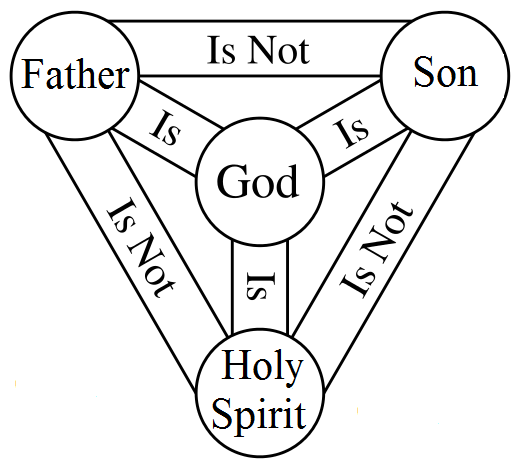
The Trinity doctrine asserts that the three Trinitarian beings “are co-equal and co-eternal.” Let’s examine what the Bible says about Almighty God.
ALMIGHTY GOD IS THE FATHER
“If I am indeed father, where is the honor due to me? says Yahweh Sabaoth” (Malachi 1:6 NJB). “Do we not all have one Father? Has not one God created us?” (Malachi 2:10 NASB). The “one God” is identified with “Yahweh”, the Father. These scriptures thus contradict the Trinity doctrine, which claims the one God is the Trinity – the Father, the Son, and the holy Spirit. God is identified as “one” [Hebrew “echad”], not three-in-one. “Echad” is the numeral “one.” It is not a compound unity.read more
The Trinity is said to be the main doctrine of Christianity. Verses from Hebrews 1 are often used to support the doctrine. However, there are some very valid and legitimate Trinity questions about what the verses in Hebrews actually say about God, Jesus, and the holy Spirit that need to be answered.
Hebrews 1:1 – “In the past God spoke to our ancestors through the prophets at many times and in various ways” (NIV). Who is the “God” mentioned here?
Hebrews 1:2 – “in these last days he has spoken to us by his Son, whom he appointed heir of all things and through whom he made the universe” (NIV).read more
There are questions about the Trinity in the gospel of John
Some Scriptures from the gospel of John are often used in support of the Trinity doctrine. However, there are some important questions about scriptures in the gospel of John regarding the Trinity doctrine that need answers.
Since things are not always what they seem to be at first glance, let’s ask some questions.
John 1:1 – Who is God here? The Father? Who is “the Word?” How is the first one called “God” different from the second one? Why is the first “God” qualified by the definite article “ho” in Greek, and the second God is not? Why does the REB say, “What God was, the Word was”? Why does AAT render it, “And the Word was divine”? Why is the verse rendered, “In the origin there was the Logos, and the Logos was present to God, and the Logos was god” (Hart)?read more
Hebrews is a comprehensive treatise about Christian doctrine. Since the Trinity doctrine is asserted to be the main doctrine of Christianity, we would expect Hebrews to include significant mention of the Trinity doctrine, if it is true.
Is the Trinity doctrine in the book of Hebrews?
In our series about what is stated concerning God the Father, his Son Jesus, and the holy Spirit in the various books of the New Testament, we examine all the relevant scriptures of each particular book. In this article, we will examine the Letter to the Hebrews, and discover powerful testimony about whether or not the doctrine of the Trinity is in Hebrews. Hebrews says God speaks to through his Son.read more
Why Does the Trinity Matter? – Is Jesus Christ Almighty God?
Does the Trinity matter? It matters because the Bible says:
“There is no wisdom, there is no discernment And there is no counsel against Yahweh”—Proverbs 21:30 LSB
Does this picture make sense? It is confusing and contradictory!
“Now this is eternal life, that they should know you, the only true God, and the one whom you sent, Jesus Christ.” (John 17:3)
The Bible says our eternal life depends on knowing the only true God the Father, and His Son, whom he sent, Jesus Christ. “Knowing” would have to include knowing who they are.
The Athanasian Creed, which many denominations accept, says a person’s eternal life depends on acceptance of certain statements of belief about God, Jesus, and the Holy Spirit (Ghost).
“Whosoever will be saved, before all things it is necessary that he hold the catholic faith. Which faith except every one do keep whole and undefiled; without doubt he shall perish everlastingly.”
“So that in all things, as aforesaid; the Unity in Trinity, and the Trinity in Unity, is to be worshipped. He therefore that will be saved, let him thus think of the Trinity.”
“Furthermore, it is necessary to everlasting salvation; that he also believe faithfully the Incarnation of our Lord Jesus Christ. For the right Faith is, that we believe and confess; that our Lord Jesus Christ, the Son of God, is God and Man; God, of the Substance [Essence] of the Father; begotten before the worlds; and Man, of the Substance [Essence] of his Mother, born in the world. Perfect God; and perfect Man, of a reasonable soul and human flesh subsisting.”
“And they that have done good shall go into life everlasting; and they that have done evil, into everlasting fire. This is the catholic faith; which except a man believe truly and firmly, he cannot be saved.”—Book of Common Prayer translation. See Schaff (1877b, pp. 66–71)read more
In the book of Acts, did the Apostles teach or preach the Trinity doctrine?
This article is part of our series about what is stated concerning God, Jesus and the holy Spirit, and whether they comprise a Trinity, in the various books of the Bible. This article examines whether the Trinity was taught or preached the book of Acts of the Apostles.
Jesus had foretold that, “the Helper, the Holy Spirit which the Father will send in my place, will teach you everything and remind you of =&0=&“The Helper, the Holy Spirit” would “guide [them] into all the truth” (John 16:13 NIV). Acts records for us how this was done, by documenting the spread of Christianity during its first three decades, including its beginning, when the holy Spirit was “poured out” (Acts 2:33). If the Trinity is true, then the doctrine should be evident in the book of Acts, because it records what the early Christians taught and how Christianity was established throughout the Roman Empire.
Acts 1:3 – “During the forty days after he suffered and =&1=&The resurrection of Christ is the foundation of the Gospel, and it’s the affirmation of Jesus’ Sonship and Messiahship. This is what the early Church preached, as recorded in the Book of Acts and the New Testament letters. However, today many theologians and preachers are “preaching” “a different gospel” (Galatians 1:6-9 NIV), asserting that the essence of the Gospel is that “God became a man and died for our sins. In contrast, for the early church it was,“God has resurrected this Jesus.” (Acts 2:32 HCSB)
Acts 1:4 – “Wait for the gift my Father promised” (NIV). – The Father alone is the one who is in control. “The “gift” refers to the Holy Spirit, as promised in the Old Testament (e.g.,
As part of our series about what is stated in the Bible concerning whether God, Jesus and the holy Spirit are a Trinity in the various books of the New Testament, this article examines the book of Galatians.
Galatians was possibly the earliest book of the New Testament that was written, and focuses on correct Christian doctrine. Was the Trinity part of Christian doctrine discussed in Galatians? Is any aspect of the Trinity doctrine mentioned in the book?
Galatians 1:1 – “Through Jesus Christ and God the Father who raised him from the dead” (NAB). – God is shown to be the Father. Jesus is not referred to as God. God and Jesus are revealed to be two separate and distinct individuals – the superior, God, resurrects the lesser one, Jesus, from the dead. “Yahweh . . . God . . . never dies” (Habakkuk 1:12 NJB). Jesus “was dead” (Revelation 1:18). Therefore, Jesus cannot be Almighty God.
Galatians 1:3– “Grace to you and peace from God our Father and the Lord Jesus Christ” (NAB). – Two separate and distinct individuals, namely “God our Father” and “Jesus Christ,” are mentioned, but there is no mention of the holy Spirit. Why not? There is no question the holy Spirit is real. Trinitarians claim it is a person. If the holy Spirit is the third part of a Trinity “Godhead,” as Trinitarians assert, it should have been mentioned here in these greetings. It’d not mentioned because it’s not a person, and therefore can’t send greetings. Why are there no greetings from the Trinity? Why is the Trinity never mentioned in the Bible? – Because it’s a ‘myth’ (1 Timothy 4:7).
Galatians 1:4 – “…who gave himself for our sins… according to the will of our God and Father.”(NIV)– Jesus’ willing sacrificial death was according to his Father’s “will,” which shows Jesus to be the subordinate to his “Father” who “is greater” (John 1:14).
Galatians 1:6 – “You are so quickly deserting the one who called you to live in the grace of Christ” (NIV). – God and Christ are presented as two different people, with God, the superior, doing the calling. God is clearly shown to be someone other than Jesus Christ.
Galatians 1:15-16 – “God… set me apart… was pleased to reveal his Son to me, so that I might proclaim him to the Gentiles.” (NAB) – “God” reveals “his Son” Jesus Christ to Paul, and uses Paul to “proclaim him to the Gentiles”. God, not Christ is shown to be the one who is in control. “His Son” is here clearly shown to be someone other than “God”.
Galatians 2:20-21 – “I live by faith in the Son of God, who loved me and gave himself for me. I do not set aside the grace of God, for it if righteousness could be gained through the law, Christ died for nothing” (NIV). Once again, we see from the scriptures that “God” is someone other than “Christ” and that “Christ died”, which means Christ can’t be God because “God . . . will never die” (Habakkuk 1:12 NJB). Over and over in the scriptures the important point that “Christ died” is emphasized. Trinitarians have invented “a different Jesus” (2 Corinthians 11:4 NLT), a so-called “God-man”, who, they claim, died “in his human nature, but not in his God nature”. However, the scriptures plainly state that “Christ died for our sins” (1 Corinthians 15:3). If any part of Christ had remained alive, he could not have died for our sins, which would mean “Christ died for nothing”.
Galatians 3:2,5,14 – “Did you receive the Spirit by the works of the law . . . does God give you his Spirit . . . by the works of the law” (NIV). “Through Christ Jesus, God has blessed . . . so that we who are believers might receive the promised =&0=&Here we see that God the Father, the Almighty God, operates through Christ Jesus so that believers can ‘receive the holy Spirit through faith’. The holy Spirit is referred to as “the Spirit”, “his Spirit”, and “the promised Holy Spirit”. These descriptions are not descriptive of a person, but of an entity, and provides evidence that the holy Spirit is not a person, contrary to Trinitarian dogma.
Galatians 3:16-18 –“To your seed, who is Christ… God granted it to Abraham through the promise.” (NIV) – God gave Abraham the promise that through his seed (Christ), all nations will be blessed. God is shown to be someone other than “your seed, who is Christ,” and superior to “Christ”, thus eliminating the equality aspect of the Trinity doctrine.
Galatians 3:20 – “Now a mediator is not for one person only, whereas God is only one” (NASB). “Now the mediator or go-between [in a transaction] is not [needed] for just one
In our series about what is stated concerning Jesus in the various books of the New Testament, this article examines the book of 1 Corinthians. It is claimed by many preachers and denominations that Jesus is part of a Trinity, along with God the Father and the holy Spirit. If this is so, we surely should find evidence of it in a New Testament book such as 1 Corinthians, which covers Christian beliefs. The holy Spirit is real, of course, but it is it a person? Is the Trinity doctrine in 1 Corinthians?
It is claimed by many theologians that the Trinity doctrine is THE most important doctrine of Christianity. For example:
“No doctrine is more fundamental to the Faith than the Trinity”—Dr Norman L Geisler
“The Trinity is a doctrine where error is especially deadly”—Dr John MacArthur
We believe that John MacArthur is onto something when he says, “The Trinity is a doctrine where error is especially deadly”, although we disagree about exactly what that “error” is. Let’s examine 1 Corinthians, by looking for evidence for, or against, the Trinity.
1 Corinthians 1:1-3,4,6,9 – “An apostle of Christ Jesus by the will of God . . . To the church of God in Corinth and to those sanctified in Christ Jesus . . . Grace and peace to you from God our Father and the Lord Jesus Christ. I always thank my God for you because of his grace given you in Christ Jesus . . . God thus confirming our testimony about Christ among you . . . God is faithful who has called you into fellowship with his Son, Jesus Christ our Lord . . . ” (NIV). – In the opening few verses of 1 Corinthians, God and Jesus are presented as entirely separate and distinct individuals. No greetings from the holy Spirit or the Trinity are mentioned. Why is the holy Spirit not mentioned here? Could it be because it’s not a person? Of course, the holy Spirit is real, even though it is not mentioned here. Now, if God and Jesus were part of a Trinity, as so boldly asserted by theologians, this would be a logical place to mention the holy Spirit, and/or Trinity, in these opening greetings.
1 Corinthians 1:2 – “To the church of God being in Corinth, having been sanctified in Christ Jesus, called to be holy, with all those in every place calling on the name of our Lord Jesus Christ, theirs and ours:” (Berean Literal Bible). Some claim that “calling on the name of our Lord Jesus Christ” means that early Christians prayed to Jesus, however, the scriptures reveal that is not the case. The phrase “to call on the name of our Lord . . . means to confess his lordship rather than to pray to him.” (The Interpreter’s Bible). The writer of 1 & 2 Corinthians, the apostle Paul, did not think of Jesus as God. He referred to “God” as being “the Father of our Lord Jesus Christ” (2 Corinthians 1:3 NLT), and said, “we pray to God” (2 Corinthians 13:7 ESV), not “our Lord Jesus Christ”.
1 Corinthians 1:28,30 – “God chose the lowly … It is because of him that you are in Christ Jesus, who has become for us wisdom from God.” – The scripture makes it plain that the Corinthian Christians are “in Christ Jesus” because of God’s choosing. We also learn that Jesus comes from God, but is not God himself. God does not come from Jesus. As Jesus himself said, “I came from God. I came from the Father” (John 16:27,28 NAB). Thus, the scriptures are quite clear that Jesus Christ is not God. If the holy Spirit was a person, and also if the Trinity really existed, it would seem like we should have seen some mention of them in this first, or introductory, chapter of 1 Corinthians. Why don’t we? We’ll find out why as we analyze the next chapter of the book.
1 Corinthians 2:10 – “These are the things God has revealed to us by his Spirit. The Spirit searches all things, even the deep things of God.” (NIV). Trinitarians have claimed that the word “searches” indicates something that only a person can do, proves the holy Spirit is a person. However, the holy Spirit is personified here, as it sometimes is in other scriptures (1 John 4:6). In this very first mention of the holy Spirit in 1 Corinthians, it is called “the Spirit” (NAB), or “his spirit” (NIV). God reveals things through the Spirit, because he operates by using the holy Spirit to accomplish his purposes. The language in this verse (“the Spirit”; “his Spirit”) is indicative of the fact that the holy Spirit is not a person. Without the spirit being a person, there is no Trinity.
1 Corinthians 2:11 – “Among human beings, who knows what pertains a person except the spirit of the person that is within? Similarly, no one knows what pertains to God except the Spirit of God” (NAB). The Spirit of God is compared with the spirit of humans. The activity of this “spirit of God” is compared with the “spirit” of the self-consciousness of humans. The spirit of humans is to their own individual thoughts as the Spirit of God is to his own thoughts. Holy Spirit is therefore “holy intelligence,” a revelation of the actual mind of God, but not a person, as Trinitarians assert.
1 Corinthians 2:12 – “We have not received the spirit of the world but the Spirit of God” (NRSV; NAB). Many translations render it with Trinitarian bias, “the Spirit who is from God”. Just as “the spirit of the world” isn’t a person, “the Spirit of God” isn’t a person either. We take note that it is “THE Spirit of God”. This is not descriptive of a person. Notice the similarity: “He breathed on them and said to them, ‘Receive the holy Spirit'” (John 20:22 NAB). “This action recalls Gn 2:7 where God breathed on the first man and gave him life; just as Adam’s life came from God, so now the disciples’ new spiritual life comes from Jesus” (NAB note). The point is that the holy Spirit isn’t a person.
1 Corinthians 2:13 – “Words taught by the Spirit”. Trinitarians have claimed this means the holy Spirit is a person, because it is said to ‘teach’. However, the holy Spirit is personified here, as it sometimes is in other scriptures. Notice that, once again, it is called “the Spirit. God reveals things through the Spirit, because he operates by using the holy Spirit to accomplish his purposes. The language in this verse (“the Spirit) is indicative of the fact that the holy Spirit is not a person. Without the spirit being a person, there is no Trinity.
1 Corinthians 2:16 –“Who has known the mind of Yahweh?… But we have the mind of Christ” (LSB margin).– “Yahweh” here is Almighty God the Father. There are distinctive differences between God and Jesus Christ. The ability to know “the mind of Christ”, but not the mind of God, is an indication that God “the Father is greater than” Christ (John 14:28). Jesus Christ admitted he did not know as much as his Father (Matthew 24:36; Mark 13:32; Acts 1:8). This eliminates the equality aspect of the Trinity doctrine. The holy spirit is not mentioned here because it is not a person, but is God’s “power” (Acts 1:8), and. therefore, has no mind. The Trinity is not mentioned because it is entirely fictional.
1 Corinthians 3:23 – “You are of Christ and Christ is of God.” – “Of God” means Christ comes from God the Father. However, God is not “of Christ”. Jesus said, “I came from God, I came from the Father” (John 16:27,28 NAB). He is “the firstborn of all creation” (Colossians 1:15 ESV; NASB; NAB; KJV), which means Jesus had a beginning to his life, so he has not been eternal. Without the Son being eternal, Jesus cannot be God, and the Trinity doctrine collapses..
1 Corinthians 4:1 – “As servants of Christ and as those entrusted with the mysteries God has revealed.” – Two entirely separate, distinct individuals are mentioned, “Christ,” and “God.” Notice, however, that it is “God” who has revealed the “mysteries”, not “Christ”, which shows that God is greater than Christ. God here is “the Father”, who Jesus said, “is greater than” he is (John 14:28). Thus, the equality aspect of the Trinity doctrine is eliminated.
1 Corinthians 5:7 – “For Christ, our Passover Lamb, has been sacrificed.” – ‘Christ was sacrificed’, not God. “God . . . never dies” (Habakkuk 1:12 NJB). However, Jesus “Christ died” and “was dead” (1 Corinthians 15:3; Revelation 1:18), so Jesus can’t be God. The fact that Jesus Christ hasn’t been eternal destroys the Trinity dogma.
1 Corinthians 6:11 – “In the name of the Lord Jesus Christ and through the Spirit of our God.” (NJB) – The holy Spirit, rather than being referred to as a person, is referred to as “the Spirit of our God”, meaning it emanates from God, but is not God. Without the holy Spirit being a person, the so-called third person of the Trinity, the entire Trinity doctrine collapses! The scriptures themselves are the worse enemy of “false doctrines” (1 Timothy 1:3 NIV), such as the Trinity.
1 Corinthians 8:6 – “there is for us only one God, the Father, who is the Creator of all things and for whom we live; and there is only one Lord, Jesus Christ, through whom all things were created and through whom we live.” (GNB) – ‘There is only one God, the Father’, not a 3-in-1 monstrosity. An obvious distinction is made here between God, who is “the Creator of all things”, and ‘Jesus Christ, through whom God created everything’. Even though Jesus Christ is called “Lord”, that doesn’t make him either “God”, or “the Creator”. Those titles belong to the “the Father”, as we can see from this verse. Jesus is obviously excluded from being God in this verse, and the holy Spirit isn’t even mentioned.
1 Corinthians 10:4 – “that rock was Christ”. Trinitarians have sometimes claimed that Jesus Christ being called “rock” because Almighty God is metaphorically called “the Rock” (Deuteronomy 6:4). “Rock” is used here as a figure of speech, similar to bread and water being used as figures of speech in John 4:14; John 6:30-35.. If the Trinity “Godhead” is true, then why are the Father and the holy Spirit not also included in this figurative “rock”? This is a clue that the Trinity is a ‘false doctrine’ (1 Timothy 1:3).
1 Corinthians 10:16 – “a participation in the blood of Christ… in the body of Christ” (NIV) – In discussing the significance of the Lord’s supper, the blood and body of Christ, not God, symbolize Christ’s sacrificial death. Since “Christ died” (1 Corinthians 15:3), and “God . . . never dies” (Habakkuk 1:12 NJB), Christ cannot be God.
1 Corinthians 11:3 – “The head of Christ is God” – “God is shown to be someone other than “Christ” in this verse. “God” is also shown to be superior (“the head”) over Christ.” Trinitarians sometimes claim that Jesus, the Son of God, if he wasn’t already equal to the Father prior to his resurrection, was made equal to Almighty God the Father at his resurrection. But this verse proves that Jesus was still not equal to his Father at his resurrection, and thereafter. As Jesus himself said, “the Father is greater than I am” (John 14:28 GWT). With the lack of equality between the the Father and the Son, as exemplified by this verse, one of the main tenets of the ‘false doctrine’ (1 Timothy 1:3 NIV) of the Trinity is blown away.
1 Corinthians 11:29 – “Eat and drink without discerning the body of Christ” – In discussing the significance of the Lord’s supper, the blood and body of Christ, not God, symbolize Christ’s sacrificial death. Since “Christ died” (1 Corinthians 15:3), and “God . . . never dies” (Habakkuk 1:12 NJB), Christ cannot be God.
1 Corinthians 12:6,11 – “There are differences of operations, and the same God who makes active all things in all persons . . . and one and the same Spirit makes all of these active, distributing to each appropriately, as it will” (1 Corinthians 12:6,11 Hart).“There are many different forms of activity, but in everybody it is the same God who is at work in them all. But at work in all these is one and the same Spirit, distributing them at will to each individual” (NJB). “But all these gifts are the activity of the one and same Spirit, distributing them to each individual at will” (1 Corinthians 12:11 REB). Most translations render verse 11, “just as He wills,” as if the holy Spirit is a person. Trinitarians use this as one of their “proofs” that the holy Spirit is a “person.” Note that in the accurately rendered Hart translation, the holy Spirit is referred to as “it”. Also, since “God has given us of his Spirit” (1 John 4:13 NAB), “God . . . has given us a share in his Spirit” (1 John 4:13 NJB), it is obvious the holy Spirit is not a person, since one cannot have “a share” of a person. God uses the “Spirit” to enforce and enact his will. Without the holy Spirit being a person, the Trinity doctrine collapses.
“Some of us are Jews, and some of us are Greeks. Some of us are slaves, and some of us are free. But we were all baptized into one body through one Spirit. And we were all made to share in the one Spirit.” (1 Corinthians 12:13 ICB) Christian unity is stressed, despite great diversity. The Greek word for “one” used here is “hen”, meaning unity.
1 Corinthians 15:3,4 – “Christ died for our sins . . . He was buried, and he was raised on the third day” – God didn’t die, because, “Yahweh . . . God . . . never dies” (Habakkuk 1:12 NJB). Jesus was resurrected, because he “was dead” (Revelation 1:18). Since “Christ died”, he cannot be God, and he has not been eternal, which are two of the main pillars of the Trinity dogma. The Trinity doctrine asserts that “the Son is eternal”. Scriptures, such as 1 Corinthians 15:3, prove this claim false. Trinitarians then say, “he died in his humanity, but not in his divinity. Is “Christ” not divine? Trinitarians are caught in their own trap. If any part of “Christ” didn’t die, then “Christ” could not have “died for our sins”, as the scriptures say he did. The scriptures thoroughly debunk “the Son is God”, and “the Son is eternal”, myths of the Trinity doctrine. With two of its major foundations scripturally eliminated, the Trinity dogma is vanquished.
1 Corinthians 15:3,5– “Christ . . . appeared to Cephas; then to the twelve” (NAB) – This scripture confirms Jesus isn’t God. How did he “appear” to Peter? Christ was “put to death in the flesh, he was made alive in the spirit” (1 Peter 3:18 NAB). “The Lord has truly been raised and has appeared to Simon” (Luke 24:34 NAB). This means that Jesus “appeared in another form” (Mark 16:12), such as a materialized body. Since Jesus Christ appeared to Peter after he was resurrected from the “dead” (Revelation 1:18), and God can’t die (Habakkuk 1:12), but Jesus did, Jesus cannot be God.
1 Corinthians 15:24,27,28 – “Then comes the end, when he hands over the kingdom to his God and Father” (NAB). “When it said =&0=&
We continue our series about what is stated concerning Jesus in the various books of the New Testament. Today, we will examine the book of Colossians.
Col1:1 – “Apostle of Christ by the will of God.” – Christ subordinate
Col 1:2 – “Brothers in Christ… peace from God our Father.” – Notice the relationship these Christians have – they are brothers of Christ, but children of God.
Col 1:3 – “God, the Father of our Lord Jesus Christ.”
Col 1:12-13 – “giving thanks to the Father… transferred us to the kingdom of his beloved Son.” – Notice the Father is in control and effects this transference.
Col 1:15 – “He is the image of the invisible God, the firstborn of all creation.” – The image is not the same as the Father. Jesus is also referred to as a creature, not creator.
Col 1:16 – “All things were created through him and for him.” – Jesus is not the originator, but was used by God mightily in creation.
Col 1:18 – “The firstborn from the dead.” – The first one resurrected by God to heaven “that in all things he himself might be preeminent.” – NAB ftn – When Christ was raised by God as firstborn from the dead he was placed (by God) over the Church.
Col 1:19-20 (NIV) – “God was pleased to have all his fullness dwell in him.” – God in control of Christ.
Col 1:20 (NIV) –“Through him [Christ] to reconcile to himself all things.” God uses Christ to reconcile “by making peace through his blood.” – God used Christ to make peace.
Col 1:21-22 (NLT) – “This includes you who were once far away from God… now he reconciled you to himself through the death of Christ… as a result he has brought you into his own presence.” – God uses Christ to bring people to him. God and Christ are obviously not the same.
Col 1:27 (NLT) – “God wanted them to know that the riches and glory of Christ are for you Gentiles, too.”
Col 1:28 – “So we tell others about Christ… We want to present them to God.” – God and Jesus are separate.
Col 2:2 – “and grasp God’s secret, which is Christ himself.” – REB
Col 2:8-9 – “Christ. For it is in him that all the fullness if God’s nature lives bodily.”
Col 2:10 – “You have been filled by Him, who is the head over every ruler and authority.” – God used/uses Jesus, and God also uses Christians, but this does not make anyone else God Almighty, including Jesus.
Col 2:12 – “God, who raised him from the dead.” – Jesus did not resurrect God.
Col
3:1 – “Where the Messiah is, seated at the right hand of God.” – Jesus is favored by God, but is not God.read more
In our series about what is stated concerning God, Jesus, and the holy Spirit in the various books of the New Testament, this article will examine the Gospel of Luke. Is the Trinity doctrine in the Book of Luke?
Luke 1:31 – “Name him Jesus,” (not God, “God the Son”, or Yahweh)
Luke 1:32– “He will be great and will be called the Son of the Most High, Yahweh God will give Him the throne of His father David” (LSB margin) – The “greater” gives to the lesser (John 14:28). He will be called, not God or “God the Son”, but “the Son of the Most High” who is “the Yahweh God.” Jesus has forefathers, such as David, but Yahweh God doesn’t have any forefathers, since he is “from eternity” (Psalm 90:2). This is another reason why Jesus cannot be God.
Luke 1:34 – “But Mary said to the angel, ‘How can this be, since I have no relations with a man?'” (NAB). “According to Luke, the virginal conception takes place through the holy Spirit, the power of God, and therefore Jesus has a unique relationship to Yahweh: he is the Son of God.” (NAB note on Luke 1:34). Even this Trinitarian commentary admits Jesus is not Yahweh, but is the Son of Yahweh God. The Son of God cannot be God, or the Trinitarian-concocted, “God the Son”.
Luke 1:35 –“The holy Spirit will come upon you, and the power of the Most High will overshadow you. Therefore the child to be born will be called holy, the Son of God” (NAB) (not God). The holy Spirit is shown in this verse to be”the power” of God, which means it is not portrayed as a person. The angel once again emphasizes the fact that the child will be called “the Son of God,” not God. If the holy Spirit was a person, Jesus would have been ‘the Son of the holy Spirit.’ Without the holy Spirit being a person, the holy Spirit can’t be God, and so the Trinity doctrine is falsified, which means there is no Trinity in Luke.
Luke 2:11 – “the Savior, the Messiah, the Lord has been born,” (not God). God is not the Messiah.
Luke 2:25,30 – “=&0=&God uses the holy Spirit to accomplish his work, but “it” is not a person (John 1:32 ESV; 14:17 NAB). Without the holy Spirit being a person, there is no Trinity. Jesus is said to be “the Messiah” and God’s “salvation”, not Jesus’ salvation. God is not “the Messiah”. Therefore, for all these reasons, and more, Jesus cannot be God.
Luke 2:32– “A light for revelation to the Gentiles” (NIV; NAB). Jesus is “a light” to reveal God to the nations, (not himself).”‘I will also give you as a light to the nations . . .’ Thus says Yahweh” (Isaiah 49:6 LSB).
Luke 2:40– “The favor of God was upon him” (ESV). God’s favor was on him (Jesus), which means that Jesus is someone other than God. Without the Son, Jesus, being God, there is no Trinity.
Luke 2:49 – “I must be in my Father’s house” – Father-Son relationship is emphasized. Jesus is shown to be subservient to his Father, not equal, as in Trinitarianism. Jesus himself said, “the Father is greater than I am” (John 14:28).
Luke 2:52 –=&1=&The claim of Jesus being omniscient is refuted by the fact that he kept “increasing” in wisdom, knowledge, and learning. If Jesus was God, there would be nothing he needed to learn. Contrast this with =&2=&of whom it is said,=&3=&
 Is it possible that God the Father is the only one who is Almighty, and his Son, Jesus Christ and the holy Spirit are not Almighty?
 The Trinity is said to be the main doctrine of Christianity. Verses from

.jpg)