It is often stated by those in authority in churches that God is a Trinity, and evidence of this is found throughout the entire Bible. There are twelve Bible books that aren’t used as much as other Bible books, called the Minor Prophets. Is the Trinity doctrine found in the Twelve Minor Prophets?
“The Father eternal, the Son eternal, the Holy Spirit eternal. The Father is God, the Son is God, and the Holy Spirit is God. And yet, there are not three Gods, but one God”—Athanasian Creed
The statement quoted above is said to be the primary belief of most Christian groups. If this is true, then we should find some evidence of it throughout the Bible.
The 12 relatively short Bible Books called “the minor prophets”, from Hosea to Malachi, make many references to Almighty God “Yahweh”, but no references to Jesus Christ by name, and some references to God’s spirit, or the holy Spirit. Do the twelve Minor Prophets support the Trinity doctrine?
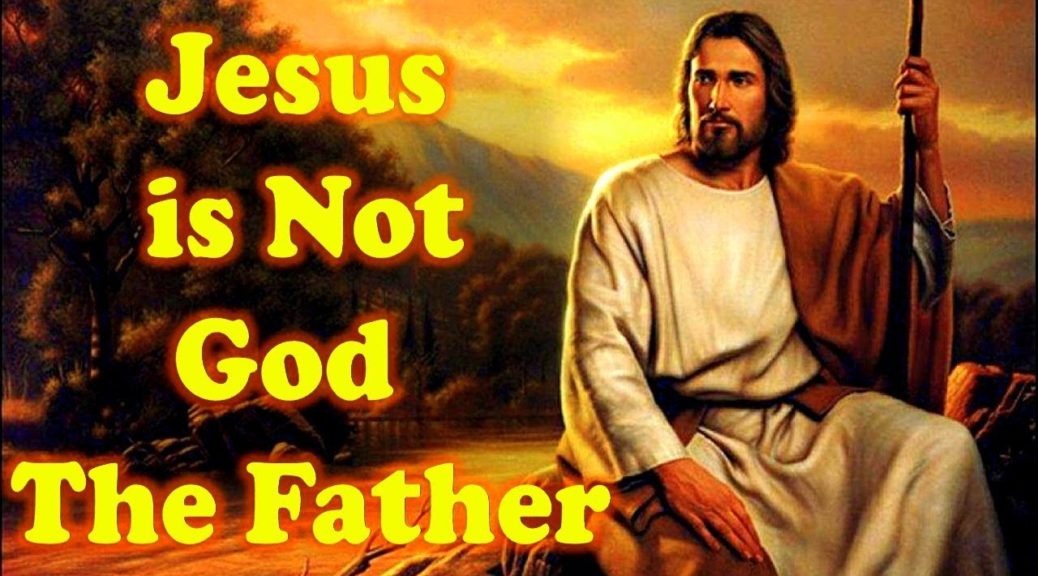
Hosea 8:5-6 – “I reject this calf . . . you worship . . . was created by your own hands. It is not God” (NLT). While the verse doesn’t directly mention the Christian Trinity, of course, because it wasn’t even “created” until the 4th and 5th centuries CE, it warns against any form of worship that isn’t directed solely to Yahweh, thus highlighting the folly and divine anger provoked by worshipping created things over the Creator. Trinitarian worship is like calf worship”Jesus said . . . ‘YOU SHALL WORSHIP YAHWEH YOUR GOD AND SERVE HIM ONLY’ (Matthew 4:10 LSB margin). “The true worshippers will worship the Father” (John 4:24), and “pray” to “our Father” (Matthew 6:9). In contrast, Trinitarians mostly worship, and pray to, Jesus in actual practice. There are pictures of Jesus all over the place, similar to calf worshippers with their visible idol. In contrast, “no one has ever seen God” (1 John 4:12 NIV), “no one has seen the Father” (John 6:46 NIV), because he’s “invisible” (1 Timothy 1:17 NIV), so no picture can be made of him. The Trinity doctrine miserably fails the scriptural “test” (1 Thessalonians 5:21; 1 John 4:1).
Hosea 10:12; 11:1 – “It is time to seek Yahweh . . . When Israel was a youth I loved him, And out of Egypt I called My Son” (LSB). Trinitarianism claims ‘the Son is Yahweh God’. But, what do the scriptures say? Hosea 11:1 is quoted in Matthew and applied to Jesus being called out of Egypt: “So Joseph got up and took the Child and His mother while it was night, and departed for Egypt. And he remained there until the death of Herod, in order that what had been spoken by Yahweh through the prophet would be fulfilled, saying ‘OUT OF EGYPT I CALLED MY SON'” (Matthew 2:15 LSB margin). Thus, the scriptures plainly indicate that Jesus is Yahweh’s Son, which means Jesus can’t be Yahweh. Without the Son being Yahweh God, the Trinity doctrine collapses.
Hosea 11:9 – “I am God and not a man” (NIV). Trinitarianism claims that Jesus was a “God-man, fully man and fully God”. However, the scriptures contradict Trinitarian concepts. How can we be absolutely sure that God cannot be a man? Jesus said: “God is a spirit” (John 4:23 GWT). In contrast, on earth, prior to his death, Jesus was “fully human in every way” (Hebrews 2:17 NIV). He was “put to death in the flesh, but made alive in the spirit” (1 Peter 3:18 LSB).
Hosea 12:5 “Even Yahweh, the God of hosts, Yahweh is His name of =&0=&This verse and the following commentary highlight the uniqueness and importance of Yahweh and his name (reputation).
=&1=&This phrase emphasizes the sovereignty and supreme authority of God over all heavenly armies and earthly powers. The term “LORD” is the English representation of the Hebrew name Yahweh, which signifies God’s eternal and self-existent nature. “God of Hosts” (Hebrew: “Yahweh Sabaoth”) is a title that underscores God’s command over the angelic armies, reflecting His omnipotence and ability to execute His will throughout creation. This title is frequently used in the Old Testament, especially in prophetic literature, to remind Israel of God’s power and His ability to protect and deliver His people. It also serves as a warning to those who oppose Him, as seen in passages like Isaiah 1:24 and Jeremiah 11:20. =&2=&This phrase highlights the fame and reputation of God’s name, which is revered and respected throughout the earth. The repetition of “LORD” (Yahweh) emphasizes the importance of His covenant name, which was revealed to Moses in Exodus 3:14-15 as “I AM WHO I AM.” This name signifies God’s unchanging nature and His faithfulness to His promises. The concept of God’s name being renowned is echoed in passages like Psalm 8:1 and Malachi 1:11, where His glory and majesty are recognized by all nations. In the New Testament, the name of Jesus is also exalted, as seen in Philippians 2:9-11, where every knee will bow and every tongue confess that Jesus Christ is Lord, to the glory of God the Father. This connection underscores the continuity of God’s revelation and the fulfillment of His promises through Christ.” (Bible Hub Study Bible).
While Yahweh God the Father operates through his Son, Jesus Christ, only “Yahweh” is referred to as “the God of hosts”. “Jesus is Lord, to the glory of God the Father” (Philippians 2:11). Trinitarians gloss right over the latter part of the phrase. Yahweh reigns supreme over all, including Jesus.
Joel 2:27,28 – “Thus you will know that I am in the midst of Israel, and that I am Yahweh your God, and there is no other . . . And it will be afterwards That I will pour out My Spirit on all mankind” (LSB). These scriptures show that ‘Yahweh is God and no other’, that is, he is incomparable, unique. The holy Spirit, which is also featured in this prophecy is obviously not Yahweh God, as Trinitarianism claims. In fact, the wording is contrary to the Trinitarian idea that the holy Spirit is a person. Even more so, when this scripture is quoted by the apostle Peter on the day the holy Spirit is poured out, notice the wording: “This is what was spoken through through the prophet Joel: ‘It will come to pass in the last days,’ God says, ‘that I will pour out a portion of my spirit upon all flesh'” (Acts 2:16,17 NAB). Yahweh speaks, and refers to the holy Spirit as being “my spirit”, which provides very strong evidence that the holy Spirit is not a person. Even more so, the language, “a portion of my spirit” gives additional evidence the holy Spirit cannot be a person, because a portion of a person cannot be ‘poured out.’ ‘Pouring out a portion of’ a person’ doesn’t make good sense. Understanding that the holy Spirit is God’s “power” (Luke 1:17; Acts 1:8), and not a person, does make sense. Without the holy Spirit being a person, the doctrine of the Trinity falls apart.
Amos 4:13; 5:16,18, 27 – “Yahweh God of hosts is His name” (LSB). “Yahweh, God of hosts, the Lord”, ” . . . the day of Yahweh . . . the day of Yahweh”. Yahweh, whose name is the God of hosts” (LSB). Most translations substitute the generic “the LORD” for the Hebrew “YHWH” in the ancient manuscripts, and even admit it in their prefaces. “Yahweh appears in the OT over 6,800 . . . The translation Yahweh is substantiated by scholarly reconstructions” (LSB preface). The generic “the LORD” is preferred by Trinitarians because it hides the fact that “God” is uniquely “Yahweh” the “Father” (Malachi 2:10,12 LSB; NASB). However, the Bible emphasizes the importance of his “name” “Yahweh” (Isaiah 52:5-6 LSB).
Amos 8:11 – “‘Behold, days are coming,’ declares Lord Yahweh, ‘When I will send a famine on the land, Not a famine for bread or a thirst for water, But rather for hearing the words of Yahweh'” (LSB). “The title ‘Lord GOD’ underscores the authority and sovereignty of God, reminding the audience of His ultimate control over history and events” (Bible Hub Study Bible). “The Lord God” is identified in the scriptures as “the Almighty” (Revelation 1:8; 4:8). Therefore, “Yahweh” is “the Lord God”, “the Almighty”. There is only one “Almighty”, “Yahweh”. He is not “the Lamb” Jesus Christ” (Revelation 21:22). Jesus indicated that he is not Yahweh (Matthew 22:41-46). “Yahweh” “God” is identified as the “Father” (Malachi 2:10,12 LSB; NASB). In contrast with the scriptures, Trinitarianism claims, “the Father is Almighty, the Son Almighty, and the Holy Spirit Almighty” (Athanasian Creed). Thus, in Trinityland churches, there is an extreme spiritual famine for hearing Biblical truth about Yahweh. “Yahweh declares, ‘ . . . My name is continually blasphemed all day long” (Isaiah 52:5 LSB), by the generic substitution of “the LORD” for Yahweh in their Bibles, and being called a Trinity.
Obadiah 21 – “And the saviors will ascend Mount Zion To judge the mountain of Esau, And the kingdom will belong to Yahweh” (LSB). Trinitarians sometimes claim that Jesus being called “Savior” means that he’s God. It is true that both Christ and Yahweh God the Father share the title of “savior”. But Trinitarians overlook the fact that some humans are also “saviors” in the Bible. This verse is one of several in the Bible that proves the Trinitarian claim false. “This phrase refers to the leaders or saviors who will rise to bring about God’s justice and restoration . . . The ascent of deliverers to Zion signifies a divine appointment and empowerment to execute God’s will. This imagery connects to the idea of God’s chosen people being restored and elevated to a place of prominence and authority” (Bible Hub Study Bible). While God’s holy people, the Christian “Israel of God” (Galatians 6:16 NIV) will be elevated to “prominence and authority”, as “saviors”, they are obviously not God. Just as human “saviors” aren’t God, neither is the Messiah, Jesus Christ, the Son of God, Almighty God. Shared titles do not equate to the same “being”.
Jonah 1:9 – “Jonah . . . said to them, ‘I am a Hebrew, and I fear Yahweh, the God of heaven, who made the sea and dry land” (LSB). God’s prophet Jonah thus identifies “Yahweh” as being “Yahweh GOD, THE ALMIGHTY, WHO . . . created all things” (Revelation 4:8,11 LSB).
Jonah 1:17 – “Yahweh appointed a great fish to swallow Jonah, and Jonah was in the stomach of the fish three days and three nights” (LSB). Jesus used this historical account of Jonah to picture his upcoming death. “Just as JOANH WAS THREE DAYS AND THREE NIGHTS IN THE BELLY OF THE SEA MONSTER, so will the Son of Man be three days and three nights in the heart of the earth” (Matthew 12:40 LSB). “They will kill him, and He will be raised on the third day” (Matthew 17:23 LSB). This debunks the Trinity dogma, because “Christ died” and “was dead” (1 Corinthians 15:3; Revelation 1:18), whereas “Yahweh . . . God . . . never dies” (Habakkuk 1:12 NJB). Therefore, Jesus cannot be God.
Nahum 1:2,7,9 read more
 The Bible’s final book, Revelation, predicts the future for the Church and humankind. The Trinity doctrine is said to be the main doctrine of Christianity, so we would expect to find the Trinity in Revelation, if the doctrine is true. The very first verse of the Book of Revelation gives us a clue as to the answer to the question of whether the Trinity doctrine is in Revelation: