Browsed by
Category: Archaeological Evidence

Thessalonian Politarch Inscription Confirms Bible Accuracy

Thessalonian Politarch Inscription Confirms Bible Accuracy

Is the Bible reliable?
What is the significance of the Thessalonian politarch inscription?

What is a “politarch”?

“But when they did not find them, they dragged Jason and some other believers before the city officials [Greek, politarches], shouting: ‘These men who have caused trouble all over the world have now come here, and Jason has welcomed them into his house. They are all defying Caesar’s decrees, saying that there is another king, one called Jesus.’ When they heard this, the crowd and the city officials [Greek, politarches] were thrown into turmoil”—Acts 17:6-8 NIV read more

Ivory Discovered at Samaria and Nimrud Confirm Bible Accounts

Ivory Discovered at Samaria and Nimrud Confirm Bible Accounts

Is the Bible reliable?
Ivory discovered by archaeology at Samaria and Nimrud confirm what the Bible says.

Ivory discovered at the sites of ancient Samaria and Nimrud confirm some of the details mentioned in the Bible about the material prosperity experienced during the latter part of the northern kingdom of Israel.

“All your words are true”—Psalm 119:160 NIV

“All people are like grass, and all their glory is like the flowers of the field; the grass withers and the flowers fall, but the word of the Lord endures forever”—1 Peter 1:24,25 NIV

The Bible documents the age-old trade and use of ivory. The unified 12 tribe kingdom under Solomon’s peaceful 40 year reign gained great material prosperity.  read more

Evidence of the Great Earthquake in Amos & Zechariah

Evidence of the Great Earthquake in Amos & Zechariah

Is the Bible reliable?
Is there any geological evidence of the great earthquake referred to in Amos and Zechariah?

Critics have claimed the Bible is mostly fiction, including  the earthquake referred to in the Bible books of Amos and Zechariah.

“The words of Amos, one of the shepherds of Tekoa–the vision he saw concerning Israel two years before the earthquake, when Uzziah was king of Judah and Jeroboam son of Jehoash was king of Israel”—Amos 1:1 NIV

Recent geological studies have detected a massive seismic event, apparently a huge 8.2 earthquake, in the area where Amos lived. This event, which has been dated to around 760-750 BCE,  which was during the latter part of the long reign of Judean king Uzziah (792–740 BCE), and was the largest ever detected on the Dead Sea transform fault.  read more

ASHERAH WORSHIP IN ANCIENT ISRAEL Discovered

ASHERAH WORSHIP IN ANCIENT ISRAEL Discovered

ancient and modern idolatry
The Bible warned the ancient Israelites to avoid Asherah and Baal worship

Critics say the Bible is not as ancient as it claims to be, and is often not historically accurate. God’s chosen people were warned against the worship of the pagan fertility false goddess Asherah prior to entering the promised land. “You do not plant an Asherah of any trees for yourself near the altar of your God YHWH, which you make for yourself” (Deuteronomy 16:21 LSV). Archaeological evidence discovered in ancient Israel provides ample evidence confirming such Asherah worship. read more

POOL OF SILOAM DISCOVERED IN 2004 CONFIRMS JOHN 9:7

POOL OF SILOAM DISCOVERED IN 2004 CONFIRMS JOHN 9:7

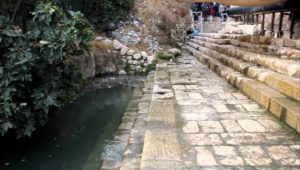
The actual location of the Biblical Pool of Siloam has been discovered, confirming the Bible’s authenticity.

“The living and enduring word of God. For, ‘All people are like grass, and all their glory is like the flowers of the field; the grass withers and the flowers fall off, but the word of the Lord endures forever'”—1 Peter 1:24,25 NIV

The more that time passes, the more proof emerges that the Bible is indeed, “the word of God”—1 Thessalonians 2:13

“‘Go,’ he told him, ‘wash in the Pool of Siloam’ (this word means ‘Sent’). So the man went and washed, and came home seeing'”—John 9:7 NIV read more

Sea Levels Much Lower Before Flood of Bible

Sea Levels Much Lower Before Flood of Bible

The Bible tells us of a global flood, due to a tremendous amount of extra water being dumped onto the earth, to the point of covering all of earth’s highest mountains (Genesis chapters 6-8). This additional water caused sea levels to sharply rise globally, and means that sea levels were lower prior to this global flood.

“As it was in the days of Noah, so it will be at the coming of the Son of Man. In [those] days before the flood, the were eating and drinking, marrying and giving in marriage, up to the day that Noah entered the ark. They did not know until the flood came and carried them all away. So it will be [also] at the coming of the Son of Man”—Matthew 24:37-39 NAB

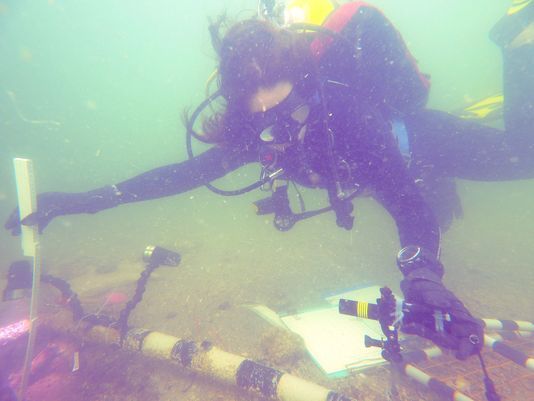
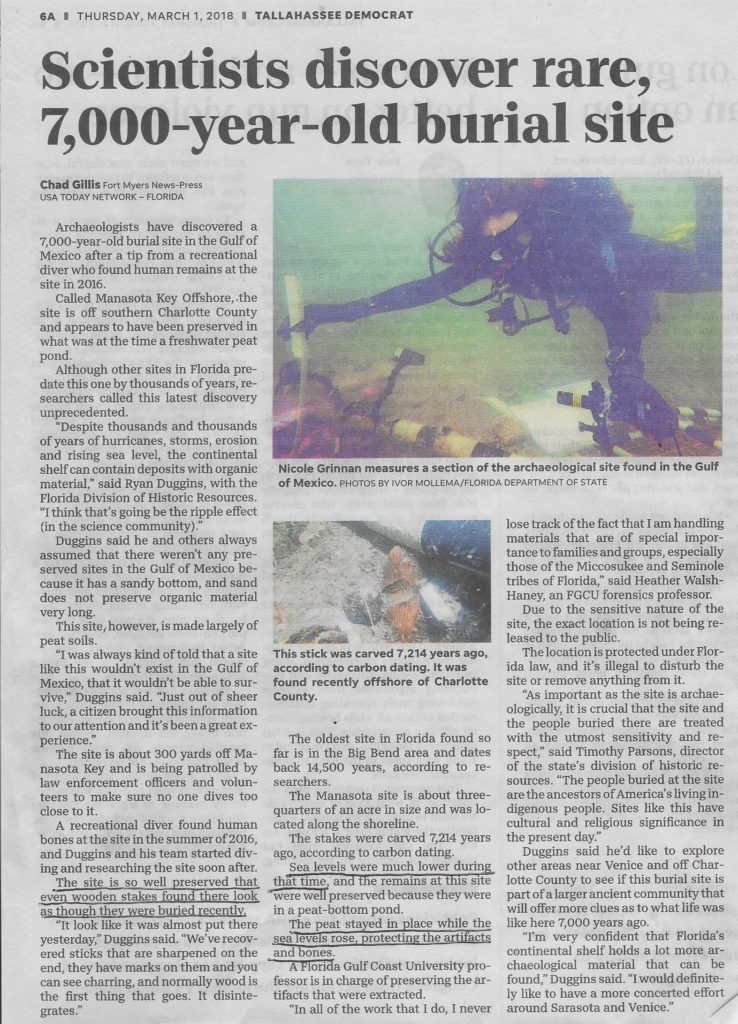
Archaeologists have discovered a 7,000-year-old burial site in the Gulf of Mexico after a tip from a recreational diver who found human remains at the site in 2016. More details can be read in this article.

The ancient burial site discovered off the southwest Florida coast lends credence to what we know from the Bible about the flood in Genesis 6-8. The article states that “sea levels were much lower during that time”, and then goes on to say that “sea levels rose”. How does this harmonize with the Biblical account of the global flood?

“All the springs of the great deep burst through, and the sluices of heaven opened. And heavy rain fell on earth for forty days and forty nights” (Genesis 7:11 NJB). A gigantic amount of water was somehow released upon the earth within a relatively short time. Psalm 104:6,7 possibly explains where the water came from: “You covered it (the earth) with the watery depths as with a garment; the waters stood above the mountains. But at your rebuke they fled, at the sound of your thunder they took to flight” (NIV). They were released at the start of the flood.

This global deluge resulted in 

“the water covered even the highest mountains on the earth, rising twenty-two feet above the highest peaks” (Genesis 7:19,20 NLT) read more

Clay Seals of Isaiah the Prophet and King Hezekiah Found

Clay Seals of Isaiah the Prophet and King Hezekiah Found

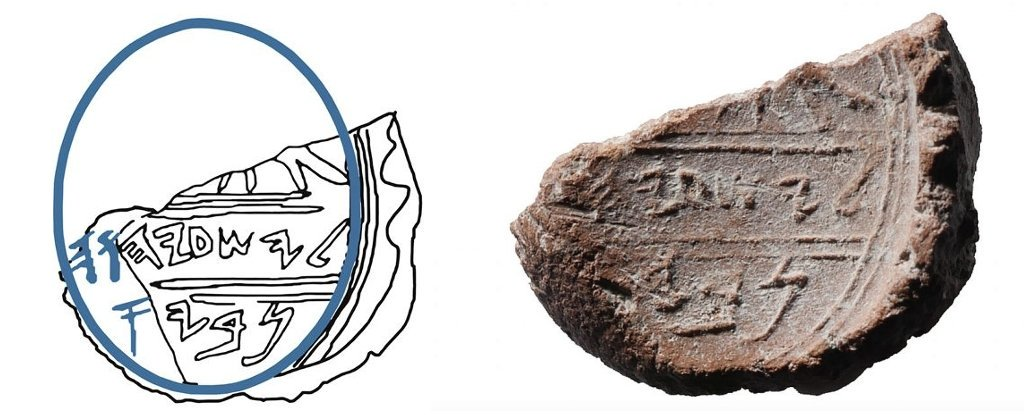
Critics of the Bible claim that it is largely a work of fiction. However, recent archaeological discoveries are proving the Bible true and its critics wrong. Two examples od this are the discoveries of the clay seals of the prophet Isaiah, and of King Hezekiah.

For the first time, archaeological evidence (a seal impression) of Isaiah has been discovered, it seems. See the article by Michelle Starr published on February 23, 2018. The book of Isaiah is quoted more often than any other prophetic Old Testament book, and is second only to Psalms in overall New Testament quotes. Below is the article about the discovery of the clay seal of the prophet Isaiah:

The Biblical figure Isaiah who prophesied the coming of the Messiah may have been an actual real person.

Researchers have found an ancient clay seal from around the time he was reportedly alive, marked with his name.

Called a bulla, the seal was retrieved from a 2,700-year-old midden in the Ophel, dating it to around 8th century BCE, and it’s inscribed with the Jewish prophet’s name.

It was found just 3 metres from where the bulla of King Hezekiah of Judah, to which Isaiah was an adviser, was found in 2015.

“We appear to have discovered a seal impression, which may have belonged to the prophet Isaiah, in a scientific, archaeological excavation,” said lead author Eilat Mazar of the Hebrew University in Jerusalem.

“If it is the case that this bulla is indeed that of the prophet Isaiah, then it should not come as a surprise to discover this bulla next to one bearing King Hezekiah’s name given the symbiotic relationship of the prophet Isaiah and King Hezekiah described in the Bible.”

The bulla, sadly broken, is about a centimetre (0.4 inches) in diameter, stamped with the name Yesha’yah[u] (Isaiah) in Hebrew letters. Following it were the letters NVY, which are the first three letters of the Hebrew word for prophet, which is spelled nun-beit-yod-aleph.

Whether or not the aleph was present is impossible to determine, since the bulla is broken after the yod. But if it had been, the seal would have read, in its entirety, “Isaiah the Prophet.”

“The absence of this final letter … requires that we leave open the possibility that it could just be the name Navi,” Mazar said. “The name of Isaiah, however, is clear.”

The seal could have belonged to some other Isaiah hanging around at the time, since the name was a common one, and bullae commonly reference the signatory’s father. Isaiah’s father was not Navi, but Amoz.

However, if the bulla does refer to Isaiah the Prophet, it would constitute the first evidence for his existence outside of religious texts, including the Bible, where his exploits are described in the Book of Isaiah.

The authorship of the Book is unclear, but he seemed to be very close to King Hezekiah, who ruled between around 727 and 698 BCE. It was Isaiah, according to the Bible, who advised Hezekiah to resist the warring Assyrians, preventing the invasion of Jerusalem by way of divine intervention.

Although the bulla can’t constitute definitive proof that Isaiah existed, it’s still an extraordinary find, Mazar said. Its proximity to the bulla of Hezekiah and the fact that only persons of status used bullae at least opens the very plausible possibility that the seal belonged to the Biblical Isaiah.

Also, fascinatingly, on the reverse side is the imprint of weave, indicating that the seal had been used to close a cloth package – and it’s marked by the fingerprint, likely from the person who sealed the package. Perhaps this was Isaiah himself.

“The discovery of the royal structures and finds from the time of King Hezekiah at the Ophel is a rare opportunity to reveal vividly this specific time in the history of Jerusalem,” Mazar wrote in her paper.

“The finds lead us to an almost personal ‘encounter’ with some of the key players who took part in the life of the Ophel’s Royal Quarter, including King Hezekiah and, perhaps, also the prophet Isaiah.”

The paper has been published in the journal Biblical Archaeology Review. read more
Belshazzar – Discoveries Prove Bible True and Critics Wrong!

Belshazzar – Discoveries Prove Bible True and Critics Wrong!

“In the first year of Belshazzar king of Babylon, Daniel had a dream.”—Daniel 7:1 NIV

“In the third year of King Belshazzar’s reign, I, Daniel, had a vision.”—Daniel 8:1 NIV

“King Belshazzar gave a great banquet for a thousand of his nobles and drank wine with them.”—Daniel 5:1 NIV

“Nebuchadnezzar his father”—Daniel 5:2 NAB

“His =&0=&

Nabonidus Chronicle mentioning Belshazzar
Cyrus of Persia reveals his exceedingly low estimation of the character of Belshazzar in the Nabonidus Chronicle

Until the 1870’s, Daniel (and works dependent on it) was the only source of information about Belshazzar. Critics, therefore, claimed that Daniel’s references to Belshazzar were fiction, and the author of Daniel was a fraud. At that time, all other extant sources said Nabonidus was the last king of Babylon. Critics were silenced when archival texts began to be discovered in Babylon, beginning with the Nabonidus Chronicle, which was written shortly after Babylon’s capture by the Medes and Persians in 539 BCE. Today, Belshazzar is well-authenticated as a historic personage through archaeological discoveries and studies. In fact, at least 37 archival texts have been discovered naming Belshazzar, proving he was a real person, and revealing his position to be exactly what the Bible says it to be, ruler of Babylon during his father’s extended absence, in the final years of the Neo-Babylonian Empire.

Even though Belshazzar is always referred to as “son of the king” in Assyrian sources, Belshazzar exercised all the functions of kingship, including receiving tribute, granting leases and attending to the upkeep of temples, as attested in several business letters and contracts contemporary to his reign. A Babylonian text, the Verse Account of Nabonidus, says that Nabonidus put the military troops under Belshazzar’s command and entrusted the kingship to him before departing to the west. Actually, during almost the entire ten-year rule of Belshazzar, his father, Nabonidus, was ‘out of town’, which left Belshazzar to ‘run of the place’, exactly like what is portrayed in Daniel.

“Whoever reads this writing and tells me what it means . . . will be made the third highest ruler in the kingdom.”—Daniel 5:7 NIV read more

THE FALL OF BABYLON AND THE HISTORIAN HERODOTUS

THE FALL OF BABYLON AND THE HISTORIAN HERODOTUS

The ancient Greek historian Herodotus recorded history that confirms the Bible’s predictions of the fall of Babylon.

“Babylon will suddenly fall and be broken”—Jeremiah 51:9 NIV

“A drought will strike her water supply, causing it to dry up”—Jeremiah 50:38 NLT

“Her mightiest warriors no longer fight. They stay in their barracks, their courage gone . . . The news is passed from one runner to the next as the messengers hurry to tell the king that his city has been captured. All the escape  read more

PROPHETIC ACCURACY DANIEL— ANTIOCHUS IV EPIPHANES

PROPHETIC ACCURACY DANIEL— ANTIOCHUS IV EPIPHANES

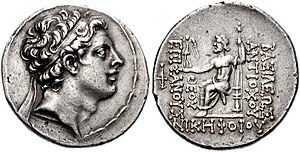
Antiochos Epiphanes IV

Actions of this Syrian King, Antiochus IV Epiphanes, are foretold over 350 years in advance by Daniel’s God Yahweh, revealing them to his prophet for recording in Daniel 8:9-12, 23-25; 11:21-39. These visions are so extremely accurate in prophetic detail that critics, doubters and unbelievers claim that it is impossible that Daniel could have recorded them “in the first year of Darius the Mede”, which was in 537-536 BCE (Daniel 11:1 NIV), or “in the third year of Belshazzar” (Daniel 8:1 NIV), which was about 551 BCE. read more

WP2Social Auto Publish Powered By : XYZScripts.com