Browsed by
Author: BibleAuthenticity

Should Easter & the Lord’s Supper Be Celebrated? If so, When?

Should Easter & the Lord’s Supper Be Celebrated? If so, When?

Jesus, not God

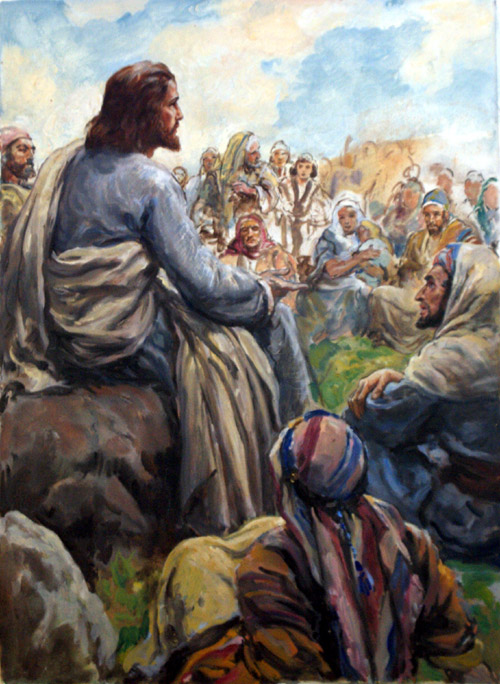
Easter is by far the most prominent celebration for most Christian churches, with Lord’s Supper celebrated occasionally, but without the prominence given to Easter. Jehovah’s Witnesses only celebrate the Lord’s Supper, which they call “The Memorial of Christ’s Death”, but not Easter. Do Christians need to celebrate either of these two events, or only one of them, and, if so, when?

“The Lord’s Supper . . . do this in remembrance of me . . . For whenever you eat this bread and drink this cup, you proclaim the Lord’s death until he comes”—1 Corinthians 11:19,26 NIV read more

DOES BEING “SAVIOR” MEAN THAT JESUS IS GOD?

DOES BEING “SAVIOR” MEAN THAT JESUS IS GOD?

Anyone who loves me will obey my teaching
Does being called “Savior” mean Jesus that is God?

Trinitarians often use the following scripture to “prove” that Jesus is God. Does being called “savior” mean that  Jesus is God?

“I, even I, am the LORD, and apart from me there is no savior” (Isaiah 43:11 NIV)

“I, I am Yahweh, and there is no other Saviour but me” (Isaiah 43:11 NJB)

Trinitarians will then point out that Jesus Christ is referred to as “Savior”  many times in the New Testament, as if there are no other saviors. However, this assertion is easily debunked by the Scriptures themselves. One very good example of this scriptural proof is: read more

To Understand Bible Prophecy, Consider the Context

To Understand Bible Prophecy, Consider the Context

Is the Bible reliable?
How can we understand Bible prophecy?

Jehovah’s Witnesses  published an article entitled “An Attack Coming From the North” (The Watchtower–Study Edition, April 2020), in which they admit that their prior explanation of the prophecy of Joel 2:7-9 was out of context, and therefore inaccurate. To accurately understand Bible prophecy, we must consider the context!

Their new explanation of this prophecy is very similar to the one that what they call “Christendom” has explained for a long time, that is, the Babylonians would invade Judah and Jerusalem from the north and take over. Unfortunately for the JW’s, however, they still hold to their 607 BCE date for the destruction of Jerusalem, since it fits in with their ill-fated 1914 date. read more

DOES REVELATION TEACH THE TRINITY?

DOES REVELATION TEACH THE TRINITY?

The Bible’s final book, Revelation, predicts the future for the Church and humankind. The Trinity doctrine is said to be the main doctrine of Christianity, so we would expect to find the Trinity in Revelation, if the doctrine is true. The very first verse of the Book of Revelation gives us a clue as to the answer to the question of whether the Trinity doctrine is in Revelation:

“The revelation from Jesus Christ, WHICH GOD GAVE HIM to show his servants what must soon take place” (Revelation 1:1 NIV). [Emphasis ours]. Trinitarians claim that the Son of God, Jesus Christ, is “fully God”. How can that be, since, first of all, in this verse, we see that “God” is someone other than “Jesus Christ”. Next we notice that “God gave him” “the revelation”. If Jesus was Almighty God, as Trinitarians claim, he would not have to be “given” anything, much less the Revelation by God–he would already have it–and know it! The Trinity doctrine not only is not in the scriptures, it contradicts the scriptures, and it makes no sense! “God is not the author of confusion” (1 Corinthians 14:33 KJV). read more

Did Jesus Really Die On the Cross?

Did Jesus Really Die On the Cross?

Crucifixion of Jesus

Did Jesus really die on the cross? Some critics claim he didn’t die on the cross, but only appeared to be dead, and later awakened in his tomb, and escaped. Let’s look at the evidence.

“But when they came to Jesus and found that he was already dead, they did not break his legs. Instead, one of the soldiers pierced Jesus’ side with a spear, bringing a sudden flow of blood and water” (John 19:33,34 NIV).

Some skeptics claim that Jesus somehow survived his crucifixion, and was unknowingly placed alive in the tomb, where he revived, and early on Sunday morning escaped from the tomb alive. This is quite a far-fetched story, but nevertheless, many people believe it. However, when we carefully consider all the known and pertinent facts, such a theory flies in the face of all the evidence. read more

Do the Twelve Minor Prophets Support Trinity Doctrine?

Do the Twelve Minor Prophets Support Trinity Doctrine?

Who Were the “Minor Prophets”? Part One: Hosea-Micah – Dr ...

It is often stated by those in authority in churches that God is a Trinity, and evidence of this is found throughout the entire Bible. There are twelve Bible books that aren’t used as much as other Bible books, called the Minor Prophets. Is the Trinity doctrine found in the Twelve Minor Prophets?

“The Father eternal, the Son eternal, the Holy Spirit eternal. The Father is God, the Son is God, and the Holy Spirit is God. And yet, there are not three Gods, but one God”—Athanasian Creed

The statement quoted above is said to be the primary belief of most Christian groups. If this is true, then we should find some evidence of it throughout the Bible.

The 12 relatively short Bible Books called “the minor prophets”, from Hosea to Malachi, make many references to Almighty God “Yahweh”, but no references to Jesus Christ by name, and some references to God’s spirit, or the holy Spirit. Do the twelve Minor Prophets support the Trinity doctrine?

Hosea 8:5-6 – “I reject this calf . . .  you worship . . . was created by your own hands. It is not God” (NLT). While the verse doesn’t directly mention the Christian Trinity, of course, because it wasn’t even “created” until the 4th and 5th centuries CE, it warns against any form of worship that isn’t directed solely to Yahweh, thus highlighting the folly and divine anger provoked by worshipping created things over the Creator. Trinitarian worship is like calf worship”Jesus said . . . ‘YOU SHALL WORSHIP YAHWEH YOUR GOD AND SERVE HIM ONLY’ (Matthew 4:10 LSB margin). “The true worshippers will worship the Father” (John 4:24), and “pray” to “our Father” (Matthew 6:9). In contrast, Trinitarians mostly worship, and pray to, Jesus in actual practice. There are pictures of Jesus all over the place, similar to calf worshippers with their visible idol. In contrast, “no one has ever seen God” (1 John 4:12 NIV), “no one has seen the Father” (John 6:46 NIV), because he’s “invisible” (1 Timothy 1:17 NIV), so no picture can be made of him. The Trinity doctrine miserably fails the scriptural “test” (1 Thessalonians 5:21; 1 John 4:1).

Hosea 10:12; 11:1  – “It is time to seek Yahweh . . . When Israel was a youth I loved him, And out of Egypt I called My Son” (LSB). Trinitarianism  claims ‘the Son is Yahweh God’. But, what do the scriptures say? Hosea 11:1 is quoted in Matthew and applied to Jesus being called out of Egypt: “So Joseph got up and took the Child and His mother while it was night, and departed for Egypt. And he remained there until the death of Herod, in order that what had been spoken by Yahweh through the prophet would be fulfilled, saying ‘OUT OF EGYPT I CALLED MY SON'” (Matthew 2:15 LSB margin). Thus, the scriptures plainly indicate that Jesus is Yahweh’s Son, which means Jesus can’t be Yahweh. Without the Son being Yahweh God, the Trinity doctrine collapses.

Hosea 11:9 – “I am God and not a man” (NIV). Trinitarianism claims that Jesus was a “God-man, fully man and fully God”.  However, the scriptures contradict Trinitarian concepts. How can we be absolutely sure that God cannot be a man? Jesus said: “God is a spirit” (John 4:23 GWT). In contrast, on earth, prior to his death, Jesus was “fully human in every way” (Hebrews 2:17 NIV). He was “put to death in the flesh, but made alive in the spirit” (1 Peter 3:18 LSB).

Hosea 12:5  “Even Yahweh, the God of hosts, Yahweh is His name of =&0=&This verse and the following commentary highlight the uniqueness and importance of Yahweh and his name (reputation).
=&1=&This phrase emphasizes the sovereignty and supreme authority of God over all heavenly armies and earthly powers. The term “LORD” is the English representation of the Hebrew name Yahweh, which signifies God’s eternal and self-existent nature. “God of Hosts” (Hebrew: “Yahweh Sabaoth”) is a title that underscores God’s command over the angelic armies, reflecting His omnipotence and ability to execute His will throughout creation. This title is frequently used in the Old Testament, especially in prophetic literature, to remind Israel of God’s power and His ability to protect and deliver His people. It also serves as a warning to those who oppose Him, as seen in passages like Isaiah 1:24 and Jeremiah 11:20. =&2=&This phrase highlights the fame and reputation of God’s name, which is revered and respected throughout the earth. The repetition of “LORD” (Yahweh) emphasizes the importance of His covenant name, which was revealed to Moses in Exodus 3:14-15 as “I AM WHO I AM.” This name signifies God’s unchanging nature and His faithfulness to His promises. The concept of God’s name being renowned is echoed in passages like Psalm 8:1 and Malachi 1:11, where His glory and majesty are recognized by all nations. In the New Testament, the name of Jesus is also exalted, as seen in Philippians 2:9-11, where every knee will bow and every tongue confess that Jesus Christ is Lord, to the glory of God the Father. This connection underscores the continuity of God’s revelation and the fulfillment of His promises through Christ.”  (Bible Hub Study Bible). 
While Yahweh God the Father operates through his Son, Jesus Christ, only “Yahweh” is referred to as “the God of hosts”. “Jesus is Lord, to the glory of God the Father” (Philippians 2:11). Trinitarians gloss right over the latter part of the phrase. Yahweh reigns supreme over all, including Jesus.

Joel 2:27,28 – “Thus you will know that I am in the midst of Israel, and that I am Yahweh your God, and there is no other . . . And it will be afterwards That I will pour out My Spirit on all mankind” (LSB). These scriptures show that ‘Yahweh is God and no other’, that is, he is incomparable, unique. The holy Spirit, which is also featured in this prophecy is obviously not Yahweh God, as Trinitarianism claims. In fact, the wording is contrary to the Trinitarian idea that the holy Spirit is a person. Even more so, when this scripture is quoted by the apostle Peter on the day the holy Spirit is poured out, notice the wording: “This is what was spoken through through the prophet Joel: ‘It will come to pass in the last days,’ God says, ‘that I will pour out a portion of my spirit upon all flesh'”  (Acts 2:16,17 NAB). Yahweh speaks, and refers to the holy Spirit as being “my spirit”, which provides very strong evidence that the holy Spirit is not a person.  Even more so, the language, “a portion of my spirit” gives additional evidence the holy Spirit cannot be a person, because a portion of a person cannot be ‘poured out.’ Pouring out a portion of’ a person’ doesn’t make good sense. Understanding that the holy Spirit is God’s “power” (Luke 1:17; Acts 1:8), and not a person, does make sense. Without the holy Spirit being a person, the doctrine of the Trinity falls apart.

Amos 4:13; 5:16,18, 27 – “Yahweh God of hosts is His name” (LSB). “Yahweh, God of hosts, the Lord”, ” . . . the day of Yahweh . . . the day of Yahweh”. Yahweh, whose name is the God of hosts” (LSB). Most translations substitute the generic “the LORD” for the Hebrew “YHWH” in the ancient manuscripts, and even admit it in their prefaces. “Yahweh appears in the OT over 6,800 . . . The translation Yahweh is substantiated by scholarly reconstructions” (LSB preface). The generic “the LORD” is preferred by Trinitarians because it hides the fact that “God” is uniquely “Yahweh” the “Father” (Malachi 2:10,12 LSB; NASB). However, the Bible emphasizes the importance of his “name” “Yahweh” (Isaiah 52:5-6 LSB).

Amos 8:11 – “‘Behold, days are coming,’ declares Lord Yahweh, ‘When I will send a famine on the land, Not a famine for bread or a thirst for water, But rather for hearing the words of Yahweh'” (LSB). “The title ‘Lord GOD’ underscores the authority and sovereignty of God, reminding the audience of His ultimate control over history and events” (Bible Hub Study Bible). “The Lord God” is identified in the scriptures as “the Almighty” (Revelation 1:8; 4:8). Therefore, “Yahweh” is “the Lord God”, “the Almighty”. There is only one “Almighty”, “Yahweh”. He is not “the Lamb” Jesus Christ” (Revelation 21:22). Jesus indicated that he is not Yahweh (Matthew 22:41-46). “Yahweh” “God” is identified as the “Father” (Malachi 2:10,12 LSB; NASB). In contrast with the scriptures, Trinitarianism claims, “the Father is Almighty, the Son Almighty, and the Holy Spirit Almighty” (Athanasian Creed). Thus, in Trinityland churches, there is an extreme spiritual famine for hearing Biblical truth about Yahweh. “Yahweh declares, ‘ . . . My name is continually blasphemed all day long” (Isaiah 52:5 LSB), by the generic substitution of “the LORD” for Yahweh in their Bibles, and being called a Trinity.

Obadiah 21 – “And the saviors will ascend Mount Zion To judge the mountain of Esau, And the kingdom will belong to Yahweh” (LSB). Trinitarians sometimes claim that Jesus being called “Savior” means that he’s  God. It is true that both Christ and Yahweh God the Father share the title of “savior”. But Trinitarians overlook the fact that some humans are also “saviors” in the Bible. This verse is one of several in the Bible that proves the Trinitarian claim false. “This phrase refers to the leaders or saviors who will rise to bring about God’s justice and restoration . . . The ascent of deliverers to Zion signifies a divine appointment and empowerment to execute God’s will. This imagery connects to the idea of God’s chosen people being restored and elevated to a place of prominence and authority” (Bible Hub Study Bible). While God’s holy people, the Christian “Israel of God” (Galatians 6:16 NIV) will be elevated to “prominence and authority”, as “saviors”, they are obviously not God. Just as human “saviors” aren’t God, neither is the Messiah, Jesus Christ, the Son of God, Almighty God. Shared titles do not equate to the same “being”.

 Jonah 1:9 – “Jonah . . . said to them, ‘I am a Hebrew, and I fear Yahweh, the God of heaven, who made the sea and dry land” (LSB). God’s prophet Jonah thus identifies “Yahweh” as being “Yahweh GOD, THE ALMIGHTY, WHO . . . created all things” (Revelation 4:8,11 LSB).

Jonah 1:17 – “Yahweh appointed a great fish to swallow Jonah, and Jonah was in the stomach of the fish three days and three nights” (LSB). Jesus used this historical account of Jonah to picture his upcoming death. “Just as JOANH WAS THREE DAYS AND THREE NIGHTS IN THE BELLY OF THE SEA MONSTER, so will the Son of Man be three days and three nights in the heart of the earth” (Matthew 12:40 LSB). “They will kill him, and He will be raised on the third day” (Matthew 17:23 LSB). This debunks the Trinity dogma, because “Christ died” and “was dead” (1 Corinthians 15:3; Revelation 1:18), whereas “Yahweh . . . God . . . never dies” (Habakkuk 1:12 NJB). Therefore, Jesus cannot be God.

Nahum 1:2,7,9 read more
Is the Trinity Doctrine Taught in 1 Peter, or Contradicted?

Is the Trinity Doctrine Taught in 1 Peter, or Contradicted?


The book of 1 Peter opens up with a statement that has been that has been used to support the Trinity doctrine. The question for us to consider is, “Do we find the Trinity in 1 Peter?”

Written some 30 years or so after Jesus’ death and the start of Christianity, 1 Peter is rich in doctrine. This is why we should find some evidence of the Trinity in 1 Peter, if the doctrine is true.Trinitarians point to the naming of the three who are said to be in the Trinity as proof of its existence. For example:

“Who have been chosen according to the foreknowledge of God the Father, through the sanctifying of the Spirit, to be obedient to Jesus Christ and sprinkled with his blood” (1 Peter 1:2 NIV). “God the Father”, “the Spirit”, and “Jesus Christ” are each mentioned, and they do all three exist. But Trinitarians simply count 1, 2, 3, and say, “Aha! There’s the Trinity!”, thus imaging the doctrine right into the text. However, the mere mention of three does not tell us anything about their supposed “equality”, “Godship”, “Almightiness”, “eternity”, nor of the supposed”personhood” of the Spirit, nor of their supposed “oneness” of “substance”, “being”, or “essence”. In fact, only one of the three is identified as God (the Father), which is something else that Trinitarians blindly overlook. Nothing! Rather, “God the Father” is shown to be in control with his “foreknowledge”. In fact, only “the Father” is said to have such “foreknowledge”, meaning that he knows things that “Jesus Christ” doesn’t know, as also proven with other scriptures (Matthew 24:36; Mark 13:32; Acts 1:7), which is a very clear indication of the Father’s superiority over Jesus (John 14:28; 1 Corinthians 15:24-28; Philippians 2:12), and their separateness and distinction (John 8:17,18). The holy Spirit is here, as always, described by “the”, indicating that it is not a person, and therefore it cannot know anything. Being “sprinkled with” “Jesus” Christ’s “blood” indicates that he “”died”  (1 Corinthians 15:3), which also means that Christ cannot be Almighty God, since “God . . . never dies” (Habakkuk 1:12 NJB).

“Praise be to the God and Father of our Lord Jesus Christ . . . he has given us new birth . . . through the resurrection of Jesus Christ from the dead” (1 Peter 1:3 NIV) read more

Are Jesus, God, and the holy Spirit a Trinity in 1 Timothy?

Are Jesus, God, and the holy Spirit a Trinity in 1 Timothy?

Is the Bible reliable?
Is the Trinity in 1 Timothy?

It is frequently asserted by Bible preachers and teachers that Jesus Christ is “God the Son”, along with “God the Father”, and “God the Holy Spirit,” they are part of a Trinity “Godhead”. If this is so, then we should find plenty of scriptural evidence to support it. Do we find the Trinity in 1 Timothy? Since 1 Timothy was written by the renowned Bible scholar and teacher, the apostle Paul, to counter false teachers and false teachings, including

“false doctrines” read more

Who Wrote Hebrews? Did Paul?

Who Wrote Hebrews? Did Paul?

Is the Bible reliable?
Who wrote Hebrews?

Who wrote Hebrews? In thirteen New Testament letters, or epistles, Paul introduces himself as the writer. However, the writer of Hebrews is anonymous. Hebrews was accepted as an epistle of Paul by early writers, and throughout most of Christian history, the apostle Paul was viewed as the writer of Hebrews. However, in the last couple of hundred years, this view has been dismissed by many of the “experts.” What are the facts? Who wrote Hebrews?

Regardless of who who wrote the Letter to the Hebrews, the important thing to remember is that this writing, like the Old Testament before it, is what “the holy Spirit says” (Hebrews 3:7 NAB). The fact that the writer does not identify himself by name in the letter does not prove that Paul isn’t the writer. Many Old Testament Bible books don’t name the writer, and neither do the Gospels and Acts in the New Testament.

Differing Views of Writership

Most “scholars” and “experts” these days, especially since the 1800’s, do not think that the Christian apostle Paul wrote Hebrews. This view stands in contrast to the early Christians, who almost unanimously held the view that Paul wrote Hebrews, even though the writer isn’t named in the book itself.

“As early as the end of the second century the church of Alexandria in Egypt accepted Hebrews as a letter of Paul, and that became the commonly held view in the East. Pauline authorship was contested in the West in the fourth century, but then accepted. In the sixteenth century, doubts about that position were again raised, and the modern consensus is that the letter was not written by Paul. There is, however, no widespread agreement on any of the other suggested authors, e. g., Barnabus, Apollos, or Priscilla and Aquila. The document itself has no statement about its author”—Introduction to The Letter To The Hebrews, New American Bible (NAB) read more

Does 2 Timothy Support the Trinity?

Does 2 Timothy Support the Trinity?

Three Reasons You Should Preach Through 2 Timothy - 9Marks

In Paul’s final canonical letter, and now facing certain execution at the hands of the Romans, we would expect Paul to at least make some mention of the doctrine of Trinity, if it is true, since it is purportedly the “primary doctrine of Christianity”.
“Paul, an apostle of Christ Jesus by the will of God, in keeping with the promise of life that is in Christ Jesus” (2 Timothy 1:1 NIV). “Christ Jesus” and “God” are introduced here in the opening line of Paul’s letter to Timothy. There is no mention in this opening greeting of the holy Spirit, or a Trinity. Why not, if the holy Spirit is a person, and the Trinity is true doctrine. God, not Jesus, obviously is the one who is supreme, since Paul is “an apostle of Christ Jesus by the will of God“. There is no mention, nor is there any evidence of, any personhood of holy Spirit, or of any “equality” between God and Jesus, or the existence of a Trinity “Godhead”.

“Grace, mercy and peace from God the Father and Christ Jesus our Lord” (2 Timothy 1:2 NIV). In this verse, “God” is identified as “the Father”, someone other than “Christ Jesus our Lord”. We do not find any reference to, or greetings from, a Trinity, nor of the holy spirit, but we do have “God the Father and Christ Jesus our Lord” named as separate and distinct individuals. The holy Spirit is real, but if t he holy spirit was a person, or the Trinity was real, we would expect that there would be greetings from them, but there are not any. These facts provide, not only no evidence of the Trinity doctrine, but rather, powerful evidence against the dogma

“Guard this rich trust with the help of the holy Spirit that dwells within us” (2 Timothy 1:14 NAB). “The holy Spirit” is referenced by the definite article “the.” The holy Spirit is real. It is God’s power (Luke 1:15-17; Acts 1:8) and no name is ever given to “the holy Spirit”, both of which are evidences that the holy Spirit is not a person.

“Remember Jesus Christ, raised from the dead” (2 Timothy 2:8 NIV). Since “God . . . will never die” (Habakkuk 1:12 NIV), but Jesus “was dead” (Revelation 1:18), Jesus cannot be Almighty God. “God has resurrected this Jesus” (Acts 2:32 HCSB), which is strong evidence that God the Father is superior to Jesus, and, thus, there is no equality (John 14:28; 1 Corinthians 11:3)..

“In the presence of God and of Christ Jesus, who will judge the living and the dead” (2 Timothy 4:1 NIV). read more

WP2Social Auto Publish Powered By : XYZScripts.com