Browsed by
Tag: jesus

Children of God, Brothers and Sisters of Christ

Children of God, Brothers and Sisters of Christ

Picture

Trinitarians often refer to Jesus Christ as “God the Son”. According to the scriptures, he is “the Son of God,” but not “God the Son”. Christians are “children of God”, and “brothers and sisters”  of Christ (Matthew 25:40; Hebrews 2:11; Matthew 12:50; Mark 3:35; Luke 8:21), but never “children of Christ” in the scriptures. According to the scriptures, Christians are “born of God” ( John 1:13; 1 John 3:9; 4:7; 5:1,4,18), but never “born of Christ”. Christ has “brothers and sisters” (Matthew 25:40; Hebrews 2:11; Matthew 12:50; Mark 3:35; Luke 8:21), but no children. God has “children”, but no brothers (Romans 8:14,15; Galatians 3:26; Revelation 21:6,7). read more

Biblical Truths About God, Jesus, and the Holy Spirit

Biblical Truths About God, Jesus, and the Holy Spirit

WHO IS GOD?

-Jesus himself referred to his “Father” as “the ONLY true God” (John 17:1,3).

“There is . . . one Lord, one faith, one baptism; ONE GOD AND FATHER”—Ephesians 4:4-6 LSB

“For us there is ONLY one God, the Father”—1 Corinthians 8:6 NASB

WHO IS JESUS?

“The true God” has “his Son, Jesus Christ” (1 John 5:20).

“Yahweh” “God Almighty” “has glorified His servant Jesus” (Exodus 3:15; 6:2,3; Acts 3:13 LSB). read more

Is the Trinity In Genesis?

Is the Trinity In Genesis?

  God looked over all that He had made, and it was excellent in every way. This ended the sixth day. On the seventh day God rested. God blessed the seventh day and declared it holy, because it was when He ceased His work of creation. – Slide 22  

“The doctrine of the Trinity is embedded in the Scriptures from Genesis to Revelation” (The Master’s Seminary Blog). With such a bold statement as this, we would surely expect the Trinity to be in Genesis, the first book of the Bible. Is the Trinity in Genesis? 

“In the beginning God created the heavens and the earth” (Genesis 1:1). “Let us make mankind in our own image” (Genesis 1:26 NIV). The Hebrew word “Elohim” is translated “God,” which is the plural of “El,” so it is asserted that “Elohim” stands for the Trinity. In other words, it is claimed that “the Trinity created the heavens and the earth,” and “the Trinity spoke to itself (“us”) about creating humans.” Since, however, the Hebrew “Elohim” is also used for excellence or majesty, and, in the Bible, often is used for the Almighty God, Yahweh. Even the singular pagan god Dagon is described as “Dagon our god [Elohim]” (1 Samuel 5:7). So the use of “Elohim” does not guarantee that the “God” referred to is plural. The Biblical Almighty God is a singular God, according to the Bible. Notice: “Yahweh is our God. Yahweh in one!” (Deuteronomy 6:4 LSB).  The Hebrew word for “one” used here is “echad”, the numeral “one”. Jesus quoted this by saying, “YAHWEH OUR GOD IS ONE YAHWEH” (Mark 12:29 LSB margin). The Greek word for “one” used here is “heis”, the numeral “one”. “God is only one” (Galatians 3:20 NASB). “There is no God but one . . . for us there is but one God” (1 Corinthians 8:4,6). Even if “Elohim” had been used in its plural sense in Genesis 1:1,26, there is nothing to indicate a threesome. Thus, Trinitarians simply imagine the Triune God right into the text Genesis 1:1,26. and never stop to really think it through. There isn’t even one single aspect of the Trinity dogma in this context, i.e., nothing about three being God, or Almighty, or eternal, or equal, or of three being of one “substance”, “essence”, or “being”, etc. There’s simply nothing in the text to even hint at three of anything. read more

Is the Trinity in Psalms?

Is the Trinity in Psalms?

Psalms is one of the longest books in the Bible. Based on what many scholars and experts assert, we would expect to find this doctrine in such a long and prominent Bible book. Is the Trinity in Psalms? 

Does it strike you as odd that even the most scholarly proponents of the doctrine admit it is neither understandable nor explainable?

“The most difficult thing about the Christian concept of the Trinity is that there is no way to completely understand it or explain it. God is infinitely greater than we are; therefore, we should not expect to be able to fully understand Him. But we do trust the Bible, which teaches that the Father is God, Jesus is God, and the Holy Spirit is God. At the same time, the Bible also teaches there is only one God. So, the one God exists in three Persons.
It’s possible to understand some facts about the Trinity and some of the relationships the different Persons of the Trinity have to one another. But, ultimately, how a single Being can exist in three distinct Persons is incomprehensible to us. Our inability to understand, however, does not mean the doctrine of the Trinity is untrue or unbiblical. The word Trinity is not found in Scripture. It is a useful term in discussions of the triune God, as we speak of three coexistent, co-eternal divine Persons who are One. Although the word itself is not found in the Bible, the concept represented by the word Trinity certainly is.”-–GotQuestions.org read more

Contradiction About When Jesus Went To Paradise?

Contradiction About When Jesus Went To Paradise?

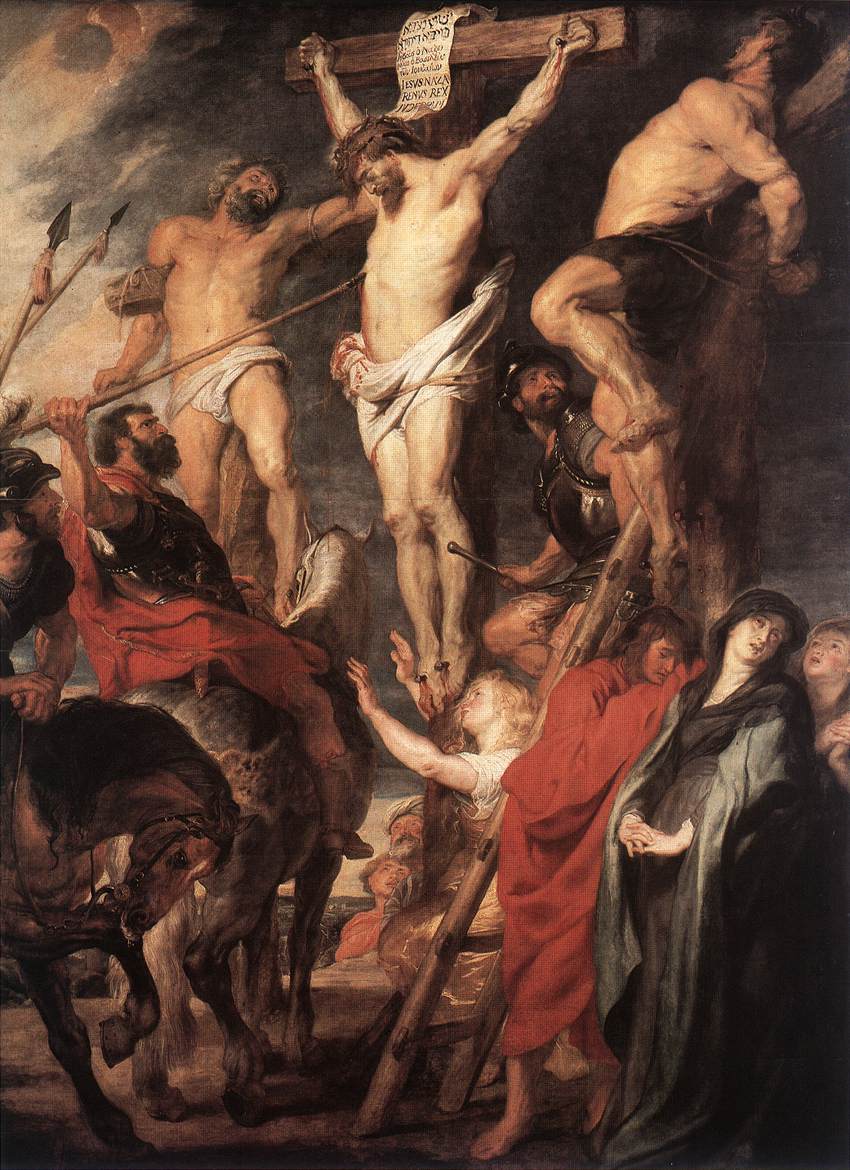
File:Peter Paul Rubens - Christ on the Cross between the Two Thieves - WGA20235.jpg

One of the alleged “contradictions” in the Bible is that there is a contradiction about when Jesus went to “Paradise”. Here is the claimed contradiction:

Did Jesus ascend to Paradise the same day of the crucifixion?
(a) Yes. He said to the thief who defended him, “Today you will be with me in Paradise” (Luke 23:43)
(b) No. He said to Mary Magdelene two days later, “I have not yet ascended to the Father” (John 20:17)

The seeming problem here comes from the punctuation of Luke 23:43 in most translations, which makes it appear as though Jesus went to “paradise” the day he died. “He [Jesus] said to him, ‘Truly I say to you, today you shall be with me in paradise” (Luke 23:43). read more

Is The Trinity In Matthew?

Is The Trinity In Matthew?

 
Matthew 21:34–37 on Papyrus 104(recto; c. AD 150)
 

Is the Trinity in Matthew?

“A true and accurate knowledge of the Trinity is a blessing in and of itself . . . the Trinity is the highest revelation God has made of himself to His people. It is the capstone, the summit, the brightest star in the firmament of divine truths”—The Forgotten Trinity, page 10

“The Gospel according to Matthew . . . no other was so frequently quoted in the noncanonical literature of earliest Christianity”—Preface to Matthew in the New American Bible (NAB) read more

Are Jesus and God the Father Two Separate Individuals?

Are Jesus and God the Father Two Separate Individuals?

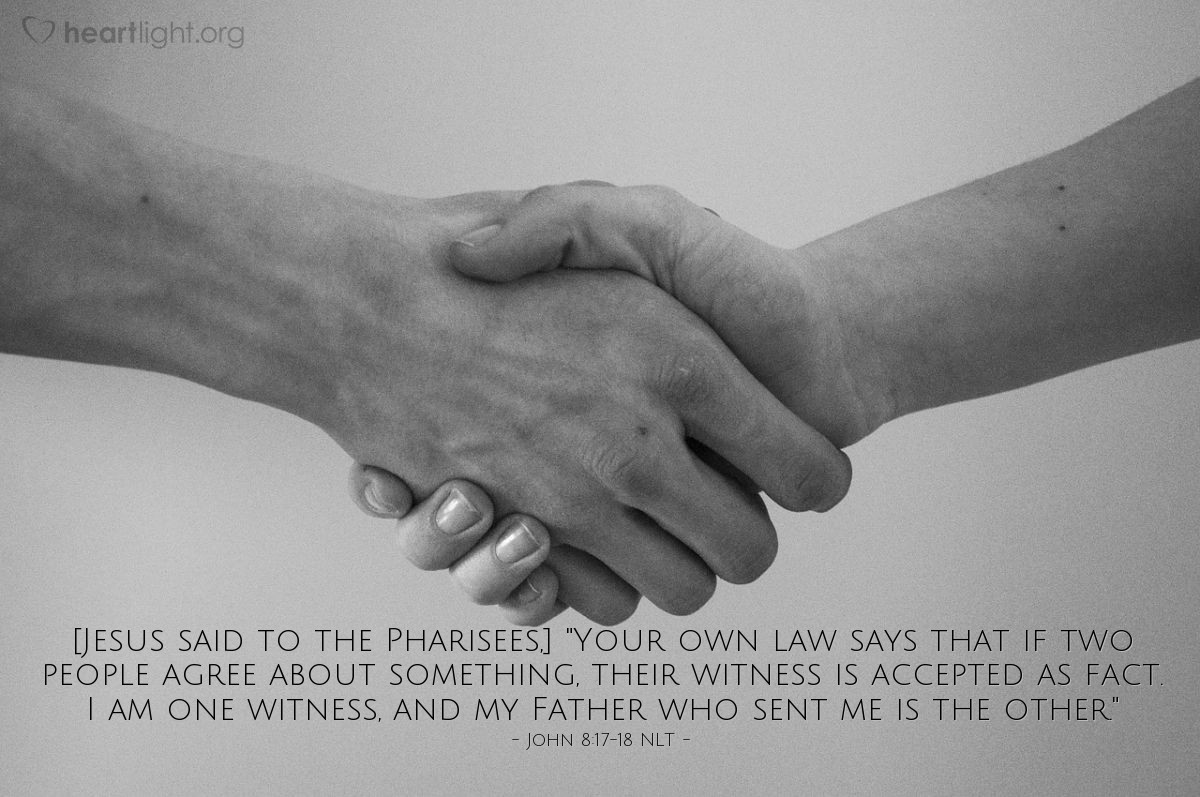
  <a class=John 8:17-18 NLT Illustrated: "What Greater Witness ..." />   Are Jesus and God the Father two separate individuals? This seems like a strange question to ask. Trinitarians try to explain how their doctrine works with explanations such as this: “While the three persons of the Godhead are distinct, they cannot be separated. That is, the Father, Son, and Holy Spirit are co-equal and co-eternal. They exist simultaneously, not consecutively” (Trinitarian website). Does this make any sense? They claim the doctrine is true, yet, they admit it is extremely difficult, if not impossible, to understand. Let’s examine what the Bible says, and see if the truth is really that difficult to understand.    John 8:16-18 “If I do judge, my decisions are true, because I am not alone. I stand with the Father, who sent me. In your own Law it is written that the testimony of two witnesses is true. I am one who testifies for myself; my other witness is the Father, who sent me” (NIV). In these verses, Jesus twice says “the Father . . . sent” him, which means they are two separate and distinct people, because the sender and the one sent cannot be the same, nor can they be in the same location. He also says the Father is with him, indicating they are separate and distinct. Jesus also says the witness of “two” individuals is true. ‘I’m one, and my Father who sent me is the other,’ he says.  Obviously, Jesus and his Father are two separate and distinct people.

John 10:30 – Are the Father and Jesus “one” within a Trinity? Or, are they “one” in unity, the same as the disciples are in John 17:11,20-23?  Since the disciples are not “God”, yet are to be “one” with God and Jesus and with one another, obviously they are “one” in unity. The Greek word “hen” is in the neuter gender, and is translated as “one”, but this is not the numeral “one”. To be the numeral “one” it would have to be in the masculine gender. Anyway, at John 8:17,18, Jesus said that he and his Father are “two”, numerically speaking. read more


Was Jesus Created?

Was Jesus Created?

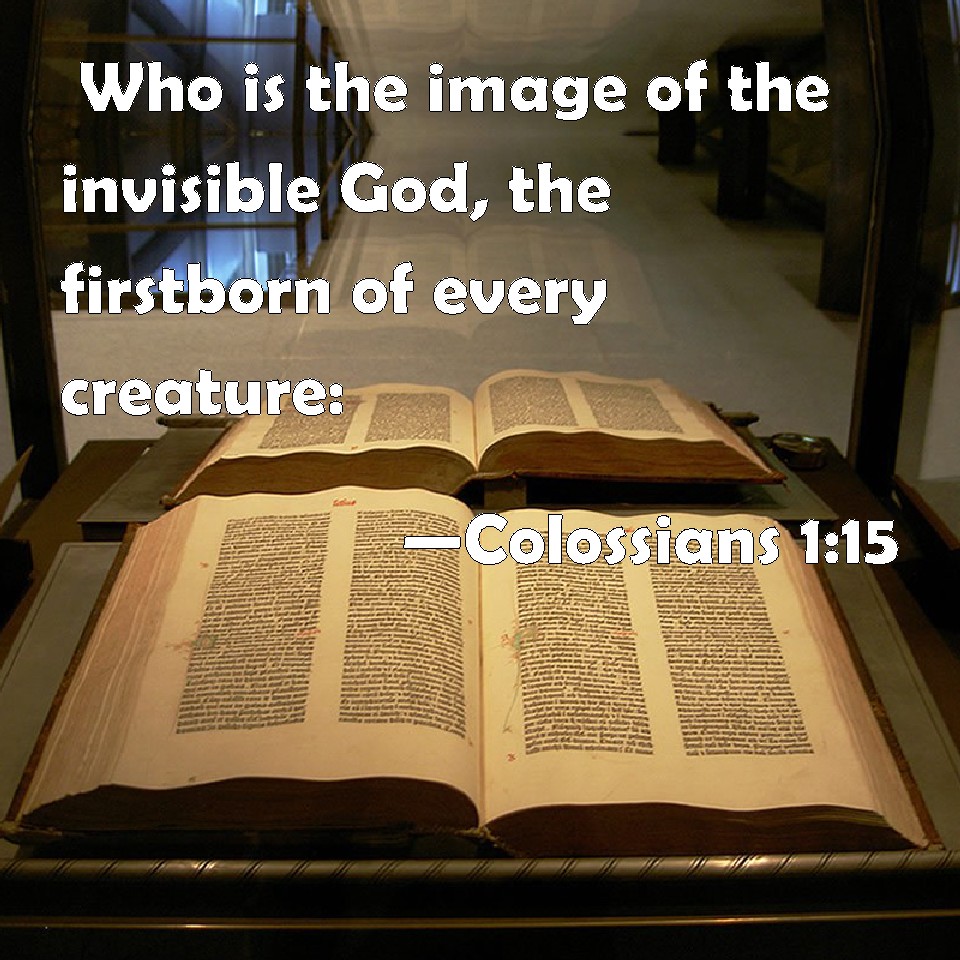
<a class=Colossians 1:15 Who is the image of the invisible God, the ..." />
Was Jesus created? – No. not according many Bible scholars, preachers, creeds, and Christian denominations, who say Jesus has existed from eternity. Notice:

“The Son uncreated . . . the Son eternal”—Athanasian Creed

“Within the one Being that is God, there exists three eternally . . . coeternal persons”—The Forgotten Trinity, by James White, p 23

Since this is the case, why is there even any question about whether or not Jesus was created? — The reason why is because of what the Bible has to say. read more

Is Jesus the Only Begotten God?

Is Jesus the Only Begotten God?

 
The Gospel of John

Is Jesus “the only begotten God” (John 1:18). Most translations render the phrase as, “the only begotten Son”. However, the very important Greek manuscript P66 from about 175-200 CE, shown above, has “the only begotten God” at John 1:18. But, why the difference? Which rendering from the Greek text of John 1:18 is more accurate? How can Jesus be “God” (John 1:1), and also be “the begotten from the Father” (John 1:14)

John 1:18“No one has seen God at any time; the only begotten God who is in the bosom of the Father, He has explained Him” (NASB). read more

Was Jesus Incarnated as a God-man with a Dual Nature?

Was Jesus Incarnated as a God-man with a Dual Nature?

Two natures of Christ | Hypostatic Union, Description ...

Was Jesus really a God-man with a Dual Nature?

“Thy calf . . . the invention of Israel: a workman made it, and it is no god”—Hosea 8:5,6 Douay-Rheims

The Trinity doctrine of ‘the Father, the Son and the holy Spirit each being God, yet there is only one God,’ was finally formulated in 381 CE at the Council of Constantinople, almost 300 years after the Bible was complete. But this doctrine created some problems with things the Bible said. Almighty God is “eternal”, “who alone has immortality” (1 Timothy 1:17 NIV; 6:16 NAB). Since Jesus Christ is said to be God, how could someone who is eternal and immortal die?  Seventy years later, in 451 CE, over 350 years after the Bible was complete, at the Council of Chalcedon, the Trinitarian church leaders came up with a way to solve the problem of Jesus being God, yet he died.  They came up with a seemingly ingenious, yet mysterious, idea that Jesus became a “God-man” who had an “Incarnation” with a “Dual Nature”,  something they called a “Hypostatic Union”, thus claiming that the man Jesus died, but the God Jesus continued to live on. These ideas became a central component of the Trinity doctrine, as we can see from the following quotes: read more

WP2Social Auto Publish Powered By : XYZScripts.com