Browsed by
Tag: eyewitness

When Was the Gospel of Matthew Written?

When Was the Gospel of Matthew Written?

The Gospel of Matthew was written anonymously, but was universally attributed to Jesus apostle Matthew, until the 1800’s. Today, most scholars, and skeptics and critics no longer believe this. Instead, they claim the Gospel of Matthew is based largely on the Gospel of Mark, which they assert was written first, and also on the totally speculative “Q” source. They claim, therefore, that Matthew is unlikely to have been written by one of Jesus closest followers, namely the former tax collector, and apostle of Jesus, Matthew Levi, but instead was written in the 80’s or 90’s CE by one or more second generation disciples. What does the evidence actually show as to when the Gospel of Matthew was written? read more

Importance of Eyewitnesses of Jesus’ Death & Resurrection

Importance of Eyewitnesses of Jesus’ Death & Resurrection

Critics of the Bible often say there are no eyewitness accounts recorded in the Bible of Jesus’ death and resurrection. This article examines the facts of the issue of whether there are eyewitnesses of Jesus’ death and resurrection.

Many have undertaken to draw up an account of the things that have been fulfilled among us, just as they were handed down to us by those who from the first were eyewitnesses and servants of the word. With this in mind, since I myself have carefully investigated everything from the beginning, I too decided to write an orderly account for you, most excellent Theophilus.” (Luke 1:1-3 NIV)

New Testament writers, especially in the Gospels and Acts, were very careful to record that they were relaying the testimony of eyewitnesses, many of whom were still alive when the most of the Testament was written. Their accounts were not fabrications or hallucinations or legends. They were real!

Let’s look at some of the testimony about eyewitnesses of the resurrected Jesus.:

“Then he appeared to more than =&0=&

For we did not follow cleverly devised stories when we told you about the coming of our Lord Jesus Christ in power, but we were eyewitnesses of his majesty.” (2 Peter 1:16 NIV)

God exalted him at his own right hand as leader and savior to grant Israel to repentance and forgiveness of sins. We are witnesses of these things, as is the holy Spirit, that God has given to those who obey him.” (Acts 5:31,32 NAB)

The importance of being actual eyewitnesses of Christ cannot be overstated. Notice the following proof texts concerning witnesses of his death and after his resurrection.

His death:

Many women who had followed Jesus from Galilee and ministered to Him were there, looking on from a distance. Among them were Mary Magdalene, Mary the mother of James and Joseph, and the mother of Zebedee’s sons.” (Matthew 27:55,56 HCSB)

Mary Magdalene and the other Mary were seated there, facing the tomb.” (Matthew 27:61 HCSB)

After his resurrection:

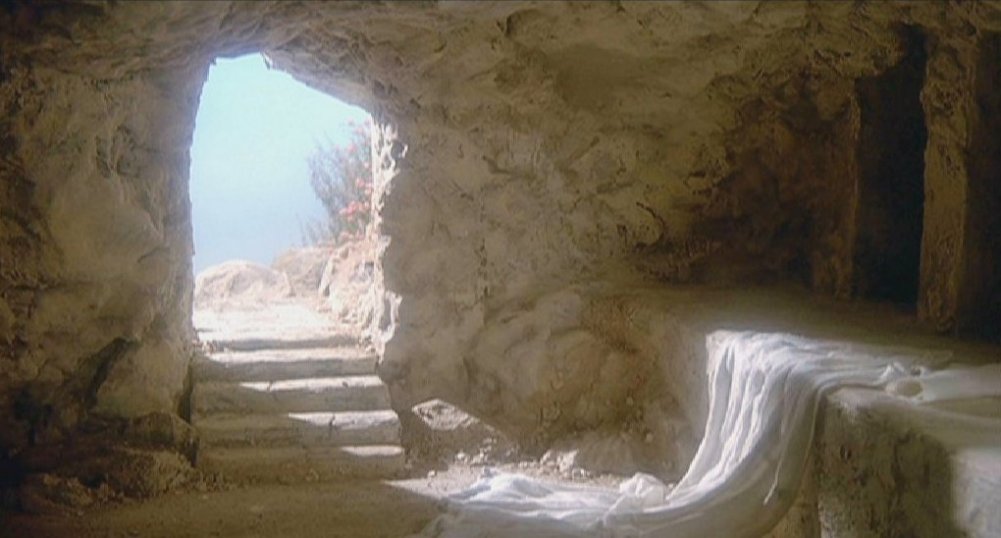
He is not here! For He has been resurrected, just as He said. Come and see the place where He lay.” (Matthew 28:6 HCSB)

Then go quickly and tell His disciples, ‘He has been raised from the dead. In fact, He is going ahead of you to Galilee; you will see Him there.’ Listen, I have told you.” (Matthew 28:7 HCSB)

When they saw him they fell down before him, though some hesitated.” (Matthew 28:17 NJB)

His death:

There were also women looking on from a distance. Among them were Mary Magdalene, Mary the mother of James the younger and of Joses, and Salome.” (Mark 15:40 HCSB)

Now Mary Magdalene and Mary the mother of Joses were watching where He was placed.” (Mark 15:47 HCSB)

After his resurrection:

When they entered the tomb, they saw a young man dressed in a long white robe sitting on the right side; they were amazed and alarmed.” (Mark 16:5 HCSB)

His death:

All the crowds that had gathered for this spectacle, when they saw what had taken place, went home, striking their chests. But all who knew Him, including the women who had followed Him from Galilee, stood at a distance, watching these things.” (Luke 23:48,49 HCSB)

“One of the soldiers pierced Jesus’ =&1=&

The certification of his death:

“Pilate was =&2=&

Gospel of Mark – Peter’s Eyewitness Gospel

Gospel of Mark – Peter’s Eyewitness Gospel

The Gospel According to Mark
Is Mark’s Gospel an early memoir of the Apostle Peter?

The early church is unanimous that the Gospel according to Mark was written by John Mark. (Acts 12:12; Acts 12:25; Acts 13:5; Acts 13:13; Acts 15:37; Colossians 4:10; 2 Timothy 4:11; Philemon 24)

Papias – c. 140 quotes an earlier source saying:

  1. Mark was a close associate of Peter, from whom he received his information. (1 Peter 5:13) Peter regards Mark with such warmth and affection that he calls him his son.
  2. This information didn’t come to Mark as a finished, sequential account of the life of Jesus, but as the preaching of Peter – preaching directed to the needs of Christian communities. Mark accurately preserved this material and arranged and shaped it.

The title “According to Mark” appears in all the ancient canonical lists and many ancient manuscripts, and is thought to have been added very early in the history of the text.

Early church fathers all affirm Mark wrote the Gospel:

  • Papias (140)
  • Justin Martyr (150)
  • Iranaeus (185)
  • Origen
  • Tertullian
  • Clement of Alexandria (195)
  • Eusebius (326) – quotes Papias saying “elder” (John) attributed to Mark

Second and third century books falsely claimed apostles as authors rather than secondary figures such as Mark.

“A young man, wearing nothing but a linen garment, was following Jesus. When they seized him, he fled naked, leaving his garment behind.” (Mark 14:51-52) The “young man” here may be Mark. “Linen” clothes were a sign of wealth. He was from a wealthy family in Jerusalem. (Acts 12:12-13)

Possible evidence of Mark as Peter’s “interpreter” is the simplified chronological order of events in Mark that mirrors Peter’s rehearsal of those events in Acts. (Acts 3:13-14; Acts 10:36-43)

Peter’s eyewitness accounts include many descriptive scenes in Mark, which are lacking in other gospels. For example:

  • Mark 1:20 – “Hired men” worked for Zebedee.
  • Mark 1:40 – Leper entreating Jesus “on bended knee.”
  • Mark 5:5 – Demonized man “slashing himself with stones.”
  • Mark 13:3, 26 – Great prophecy given on Mount of Olives “with the temple in view.”
  • read more

    Is the Bible Reliable? — Bible Authenticity

    Is the Bible Reliable? — Bible Authenticity

    Is the Bible reliable?
    Can the Bible be trusted?

    Is the Bible reliable? Does it contain myths, or are the stories true? Did the writers simply write down stories they had heard from other people, or did they experience the things firsthand that they wrote about?

    The Bible is not made up of cleverly devised fables or myths. “We did not follow cleverly devised myths when we known to you the power and coming of our Lord Jesus Christ” (2 Peter 1:16 NAB).  Many of the Bible writers were actually eyewitnesses of their written accounts.  “But we had been eyewitnesses of his majesty” (2 Peter 1:16 NAB; see also 1 Peter 5:1) Eyewitnesses also handed down their accounts to others who carefully researched these things. (Luke 1:1-3) Still others studied and pondered. (Ecclesiastes 12:9-10) But none came from human will. (2 Peter 1:21)

    All scripture was inspired by God: 

    “All Scripture is God-breathed and is useful for teaching, rebuking, correcting and training in righteousness, so that the servant of God may be thoroughly equipped for every good work” (2 Timothy 3:16,17 NIV).   read more

    WP2Social Auto Publish Powered By : XYZScripts.com