Browsed by
Tag: eternal

Was Jesus Created?

Was Jesus Created?

Is the Bible reliable?
Was Jesus created?

Was Jesus created? – No. not according many Bible scholars, preachers, creeds, and Christian denominations, who say Jesus has existed from eternity.

JESUS ASSERTED TO BE ETERNAL, UNCREATED

Notice:

“The Son uncreated . . . the Son eternal”—Athanasian Creed

“Within the one Being that is God, there exists three eternally . . . coeternal persons”—The Forgotten Trinity, by James White, p 23

Since this is the case, why is there even any question about whether or not Jesus was created? — The reason why is because of what the Bible has to say. read more

What Are John 3:16 & The Gospel About?

What Are John 3:16 & The Gospel About?

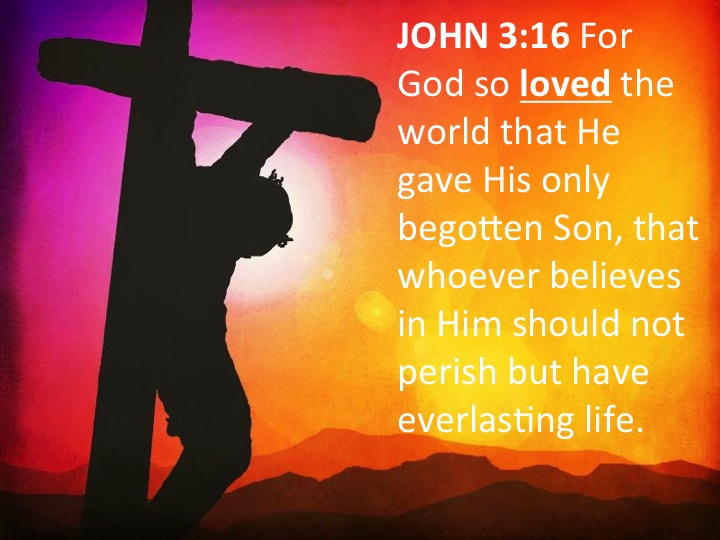
“For God loved the world so much that He gave His only begotten Son, that whoever believes in Him should not perish but have everlasting life”—John 3:16 NKJV

On November 8, 2018, an article was posted on Patheos entitled, “Why John 3:16 Isn’t About The Crucifixion“:

“In preparation for an upcoming online debate about PSA [Penal Substitutionary Atonement] Theory, I started wondering whether or not Jesus, or any of the Gospel authors, specifically communicated the Gospel as being about Jesus dying on the cross for our sins, or to appease the wrath of God, etc.

In the process of exploring this question, I started with John 3:16 because, growing up, I had always equated it with the crucifixion. However, I realized that this entire conversation has nothing to do with the crucifixion, nor does it even mention the death of Jesus at all.

Here’s what the verse actually says:

For God so loved the world that He gave His only begotten Son, that whosoever believes in him will not perish but have everlasting life.”

Now, I think most of the time we have been told to read the word “gave” in this sentence to mean that “God laid Jesus down on the cross as an atoning sacrifice for the sins of the world and sacrificed Him for us.”

But, quite obviously, it does not say any such thing.

What it says is that God loved the world. He loved the world so much that he gave us Jesus and that if anyone would trust in him, and his teachings, he would live and not die.

I’ve also started to realize that whenever Jesus talks about “eternal life” or “will not perish”, he is not talking about the afterlife, or about what happens to us after we die.

In a very practical way, John 3:16 is a verse about how those who follow the path of Jesus will escape the coming destruction of Jerusalem and live beyond that event.

Here’s the deal: Jesus showed up as the promised Messiah at a time when the Jewish people were seeking a violent, revolutionary hero who would lead the uprising against their Roman oppressors. Instead, Jesus tells them to repent of this desire for violent revolution and warns them that if they live by the sword they will all die by the sword. He teaches them to love their enemies, turn the other cheek, walk the extra mile, and seek to overcome evil with good.

The promise, then, that Jesus makes is that they will have life that extends beyond the end of the age [that is, the end of the Jewish age], if they follow His teachings. If they refuse, then they will be slaughtered along with the destruction of the Temple, the end of the daily sacrifice, and the death of the Jewish Priesthood. [Which, by the way, is exactly what happened to those who rejected the message and path of Jesus].

So, the promise of John 3:16 is that those who trust in Jesus [that’s what the word “believe” really means], and put his teachings into practice, will not reap the fruit of rebellion [which is death], but survive the end of the age which Jesus promises will come within a single generation.

Forty years later, that prediction came to pass.

And, just as Jesus promised, those who followed the Way of Christ, escaped the “wrath of God” – which was simply the reaping of a harvest of rebellion against Rome – and the Christians who were in Jerusalem fled to the city of Pella months before the Roman army surrounded the city and began to lay siege to it.

In this way, the promise of John 3:16 was fulfilled: Those who put their trust in the Way of Christ – which was to love their enemies, bless those who cursed them, and do good to those who hated them – escaped the horror of AD 70. They did not perish but inherited life beyond the end of the age [or “eternal life” that extended beyond the present age].

Jesus never communicated the Gospel as saying a prayer so you could go to heaven when you die, or as a human sacrifice that would appease the wrath of God. What Jesus said the Gospel was is simply this: “Change your way of thinking! The Kingdom of God is here, right now! You can live under the rule and reign of God today. No need to wait until you’re dead. The Good News is for your life now, not for after you die.”

Here are just a few examples from Scripture:

“I must preach the good news of the kingdom of God to the other towns also, because that is why I was sent.” (Luke 4:43)

“The time has come,” he said. “The kingdom of God is at hand. Repent and believe the good news!” (Mark 1:15)

“Jesus went through all the towns and villages, teaching in their synagogues, preaching the good news of the kingdom and healing every disease and sickness.” (Matt 9:35)

“Jesus went throughout Galilee, teaching in their synagogues, preaching the good news of the kingdom..” (Matt 4:23)

Jesus taught this Gospel, and so did the Disciples, and the Apostles, including Paul and Peter and Philip, etc.

Why are we teaching any other Gospel than this one?

That’s a great question. (And another blog post).”

Now let’s see what the Bible really says about John 3:16 and the Gospel:

For God so loved the world that he gave his one and only Son, that whoever believes in him shall not perish but have eternal life.” (John 3:16 NIV) read more

Eternal Security: Once Saved, Always Saved?

Eternal Security: Once Saved, Always Saved?

Some modern-day Christians have been taught to believe in the doctrine known as “eternal security” (commonly known as “once saved, always saved”). But is this belief scriptural? Let’s allow the scriptures to speak for themselves.

eternal security
Is the doctrine of eternal security supported by the Bible?

“I mention it that you may be saved” (John 5:34 NIV). Notice Jesus says, “you may be saved”, not ‘you are saved, case closed, period’, as some would have us believe”. Salvation is not guaranteed to everyone, or anyone. See Matthew 7:21-23.

“For in this hope we were saved” (Romans 8:24 NIV). “It is by grace you have been saved.” (Ephesians 2:5).  As these verses show, in one sense, salvation is past tense.“I mention it that you may be saved.” (John 5:34)

To us who are being saved it is the power of God.” (1 Corinthians 1:18 NIV). “We are to God the pleasing aroma of Christ among those who are being saved.” (2 Corinthians 2:15 NIV). “Being saved” in these two verses is in the present tense. Salvation began at baptism and this process continues during a Christian’s life, as long as he/she is faithful. So in another sense, salvation is an ongoing process for Christians.

“The one who stands firm to the end will be saved.” (Matthew 10:22; 24:13). To be finally saved, we must be faithful to the end, and not give up. According to the Scriptures, “Once saved, always saved” is unscriptural. This may be surprising for some, but it is true.

The Apostle Paul did not consider anyone, including himself, to have eternal security

This can be clearly seen from the Apostle Paul’s candid discussion of his “goal” in Philippians 3:11-14:

“And so, somehow, attaining to the resurrection from the dead. Not that I have already obtained all this, or have already arrived at my goal, but I press on to take hold of that for which Christ Jesus took hold of me. Brothers and sisters, I do not consider myself yet to have taken hold of it. But one thing I do: Forgetting what is behind and straining toward what is ahead, I press on toward the goal to win the prize for which God has called me heavenward in Christ Jesus.”

These verses make it obvious that Paul did not consider himself “once saved, always saved.” Other verses he wrote will also emphasize this point.

“For in this hope you were saved.” (Romans 8:24). Paul speaks of salvation in the past tense. “But…” But what? “Hope that is seen is not hope at all.” (Romans 8:24) So the salvation Roman Christians had received was not finalized, otherwise it would “be seen,” which “is no hope at all.” This can be seen in the final part of verse 24: “Who hopes for what they already have?”

“But if we hope for what we do not yet have, we wait for it patiently.” (Romans 8:25). Paul is saying “the redemption of our bodies” referred to in verse 23 is not yet attained. Therefore, the “salvation” referred to in verse 24 is not yet finalized. These Christians are not “once saved, always saved.”

“I discipline my body and keep it under control, lest after preaching to others I myself should be =&0=&Paul here mentions the fact that he could potentially become disqualified in the race for life if he did not control himself. Obviously, Paul did not consider himself to be “Once Saved, Always Saved.”

Jude Did Not Believe In Eternal Security

Some preach a gospel that leads people to believe that salvation is as simple as one’s making a declaration such as “I believe that Jesus died for my sins”. The Scriptures, however, tell us differently.

Jude gives us another excellent example of the unscriptural thinking of the eternal security theology. Jude wanted to write about:

“The salvation we share ….” (Jude 1:3 CSB)

But he decided it was more urgent to “remind you … the Lord first saved a people out of Egypt.” (Jude 1:5 HCSB) After the Israelites and their companions crossed the Red Sea “out of Egypt” they had salvation in a sense, in some ways like “the salvation we share” as Christians, that Jude wanted to write about.

“And later destroyed those who did not believe.” (Jude 1:5 HCSB) Just as many of the “once saved” Israelites and their companions were “destroyed” (Numbers 11:33,34; 14:29; 15:36; 16:31-35; 21:6; 25:9), Jude uses this example as a warning that salvation is contingent on faithfully continuing on in their godly course. Thus, salvation is not eternal security.

“By this gospel you are saved, if you hold firmly to the word I preached to you. Otherwise, you have believed in vain” (1 Corinthians 15:3 NIV). Notice the phrase, “IF you hold firmly to the word,” indicating no one’s salvation is guaranteed, but, rather, is predicated upon continuing obedience. Each Christian must faithfully continue to obey God and his word to the end of their life (Matthew 24:13).

The Book of Hebrews on Salvation read more

Once Saved, Always Saved? How About Works?

Once Saved, Always Saved? How About Works?

Once saved, always saved
How about works?

Many modern Christians believe in the doctrine known as “eternal security” (commonly known as “once saved, always saved”). But is this belief scriptural? Let’s allow the scriptures to speak for themselves.

“I mention it that you may be saved.(John 5:34  NIV). Salvation is not guaranteed to everyone, or anyone. See Mt 7:21-23.

“For in this hope you were saved.” (Romans 8:24 NIV).  In one sense, salvation  is past tense.

“It is by grace you have been saved.” (Ephesians 2:5 NIV).

“To us who are being saved it is the power of God.” (1 Corinthians 1:18 NIV).  In another sense, salvation is an ongoing process.

“We are to God the pleasing aroma of Christ among those who are being saved.” (2 Corinthians 2:15 NIV) read more

WP2Social Auto Publish Powered By : XYZScripts.com