Link to Bible Authenticity on Delphi Forums
All are invited to visit our discussion forum on Delphi Forums. Here is link:
https://forums.delphiforums.com/authenticbible
All are invited to visit our discussion forum on Delphi Forums. Here is link:
https://forums.delphiforums.com/authenticbible
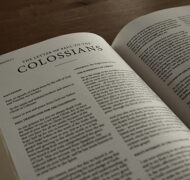
Is Jesus “the only begotten God” (John 1:18). Most translations render the phrase as, “the only begotten Son”. However, the very important Greek manuscript P66 from about 175-200 CE, shown above, has “the only begotten God” at John 1:18. But, why the difference? Which rendering from the Greek text of John 1:18 is more accurate? How can Jesus be “God” (John 1:1), and also be “the begotten from the Father” (John 1:14)?
John 1:18 – “No one has seen God at any time; the only begotten God who is in the bosom of the Father, He has explained Him” (NASB).
Map of the Hittite Empire at its greatest extent, with Hittite rule c. 1300 BC
|
There are over 50 mentions in the Bible of a people called Hittites. However, no such people are mentioned in the histories of Greece, Egypt or any other ancient national group. By the 19th century, skeptical scholars had relegated these Biblical accounts to the realm of myth. With no archaeological evidence and no mention in known ancient sources, the Hittites seemed to be just another Biblical “myth.” However, archaeological discoveries in the late 19th and early 20th centuries produced evidence that the critics were wrong and the Bible right about the Hittites.
Trinitarians have used some scriptures out of context to assert “proof” of their dogma that the holy Spirit is a person. Is the holy Spirit a person? This article analyzes some of the assertions Trinitarians have made about certain scriptures, claiming the holy Spirit is a person. These so-called “proofs of the personhood of the holy Spirit” are each debunked, one by one, as follows. The Trinitarian “proofs” of “the personhood of the holy Spirit” are shown in italics, and the Biblical explanations of truth follow each one.
Skeptics and Bible critics have claimed the Bible contradicts itself about how many fornicating Israelites were killed by the plague at Acacia Grove, ( Shittim in Hebrew). One account says 24,000 and another account says 23,000, making the Bible unreliable, they claim. How many were killed at Acacia Grove?
ALLEGED CONTRADICTION:
“When the Israelites dwelt in Shittim they committed adultery with the daughters of Moab. God struck
them with a plague. How many people died in that plague?
(a) Twenty-four thousand (Numbers 25:1 and 9)
(b) Twenty-three thousand (I Corinthians 10:8)”

Was Jesus really a God-man with a Dual Nature?
“Thy calf . . . the invention of Israel: a workman made it, and it is no god”—Hosea 8:5,6 Douay-Rheims
The Trinity doctrine of ‘the Father, the Son and the holy Spirit each being God, yet there is only one God,’ was finally formulated in 381 CE at the Council of Constantinople, almost 300 years after the Bible was complete. But this doctrine created some problems with things the Bible said. Almighty God is “eternal”, “who alone has immortality” (1 Timothy 1:17 NIV; 6:16 NAB). Since Jesus Christ is said to be God, how could someone who is eternal and immortal die? Seventy years later, in 451 CE, over 350 years after the Bible was complete, at the Council of Chalcedon, the Trinitarian church leaders came up with a way to solve the problem of Jesus being God, yet he died. They came up with a seemingly ingenious, yet mysterious, idea that Jesus became a “God-man” who had an “Incarnation” with a “Dual Nature”, something they called a “Hypostatic Union”, thus claiming that the man Jesus died, but the God Jesus continued to live on. These ideas became a central component of the Trinity doctrine, as we can see from the following quotes:

Even though the Bible is clear that there are, “in fact there are many gods and many lords” (1 Corinthians 8:6 NRSV). a question arises, Does Jesus being called “Lord” mean he’s God?
THE LORD JESUS CHRIST HAS A GOD OVER HIM
Ephesians 1:3 – “…to the God and Father of our Lord Jesus Christ.” This verse clearly indicates that Jesus has a God over him. This God of Jesus is his Father. Someone who has God over him cannot be God. The fact that Jesus is called “Lord” obviously doesn’t make him God.
Ephesians 4:5,6 – “one Lord, one faith, one baptism, one God and Father of all.” (ESV) Jesus is the “one Lord” here, and Yahweh, his Father, is the “one God.” This unity is expressed in very simple terms. A key takeaway from this verse is that the “one God” does not include the “one Lord”, Jesus Christ. Without Jesus being God, the Trinity doctrine collapses.
1 Corinthians 8:6 – “there is for us only one God, the Father, who is the Creator of all things and for whom we live; and there is only one Lord, Jesus Christ, through whom all things were created and through whom we live.” (GNB) – An obvious distinction is here made here between God, who is “the Creator of all things”, and ‘Jesus Christ, through whom God created everything’. Even though Jesus is called “Lord”, that doesn’t make him either “God”, or “the Creator”. Those titles belong to the “the Father”, as we can see from this verse.
While there have at times been unconfirmed reports of people living longer, the facts confirm that human lifespan is limited to no more than about 120 years. About 50 years ago, for example, there was a man living in Florida, USA, named Charlie Smith, who claimed to be 130 years old. However, before the flood of Noah’s day, about 4400-5500 years ago, God announced his decision that eventually the human age limit would be about 120 years.
“Yahweh said, ‘My spirit cannot be indefinitely responsible for human beings who are only flesh; let the time allowed for each be a hundred and twenty years.'”—Genesis 6:3 NJB

Skeptics and critics have claimed the gospels contradict about Peter’s denials rooster crowing in regard to Jesus’ prediction. Did Jesus predict one or two rooster crowings? Were there one or two rooster crows? Here is the alleged “contradiction”:
What did Jesus say about Peter’s denial?
(a) “The cock will not crow till you have denied me three times” (John 13:38).
(b) “Before the cock crows twice you will deny me three times” (Mark 14:30). When the cock crowed
once, the three denials were not yet complete (see Mark 14:72). Therefore prediction (a) failed.
Skeptics and critics claim the Bible is not historical, but “cleverly devised legends” (2 Peter 1:16 Weymouth). However, the New Testament timeline is confirmed by both prophecy and history. We’ve examined how the various details of Daniel’s prophecy of the seventy weeks of years were fulfilled in another article on this website. Now let’s look at many of the details from the perspective of the New Testament timeline in connection with these events.
HISTORICAL TIMELINE OF DANIEL’S SEVENTY WEEKS
539 or 538 BCE — The “seventy weeks” prophecy is given to the prophet Daniel in “the first year [of]
Darius . . . of the Medes” (Daniel 9:1,24-27 NKJV)