Browsed by
Category: Proof

Did an Eclipse Cause Three Hour Darkness at Jesus’ Execution?

Did an Eclipse Cause Three Hour Darkness at Jesus’ Execution?

Did a Total Eclipse cause the three hour darkness at Jesus’ execution?

There was a mysterious three hour darkness during the time when Jesus was being executed. What caused this three hour darkness?

“It was now about noon and darkness came over the land until three in the afternoon because of an eclipse of the sun”—Luke 23:44,45 NAB

The way the New American Bible (NAB) renders it,as above, one would think that the cause of the three hour midday total darkness was “an eclipse of the sun.”  If the possibility of the supernatural is excluded, an eclipse would naturally be the only possibility. Could this have been an actual eclipse? Let’s examine the gospels very carefully regarding this d event: read more

Do Gospels Contradict About the Earthquake & the Stone Moved?

Do Gospels Contradict About the Earthquake & the Stone Moved?

Is there any evidence for the resurrection?
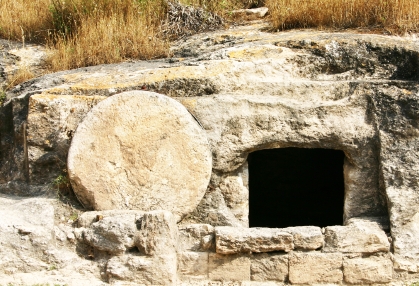
Do the gospels contradict about when the earthquake occurred and the stone was moved at the resurrection of Jesus?

Critics claim that the gospels Matthew, Mark, Luke and John contradict about the time when the earthquake occurred and the stone was moved at the time of Jesus’ resurrection.

“I am struck by a certain consistency among otherwise independent witnesses in placing Mary Magdalene both at the cross and at the tomb on the third day. If this is not a historical datum but something that a Christian storyteller made up and then passed along to others, how is it that this specific bit of information has found its way into accounts that otherwise did not make use of one another? . . . all of our early gospels–not just John and Mark (with Matthew and Luke as well) but also the Gospel of Peter, which appears to be independent of all of them–indicate that it was Mary Magdalen who discovered Jesus’ empty tomb. How did all of these independent accounts happen to name exactly the same person in this role? It seems hard to believe that this just happened by way of a fluke of storytelling. It seems much more likely that, at least with the traditions involving the empty tomb, we are dealing with something actually rooted in history”—Peter, Paul, and Mary Magdalene, p 226, by Bart Ehrman  read more

When, and by Whom, Was the Book of Isaiah Written?

When, and by Whom, Was the Book of Isaiah Written?

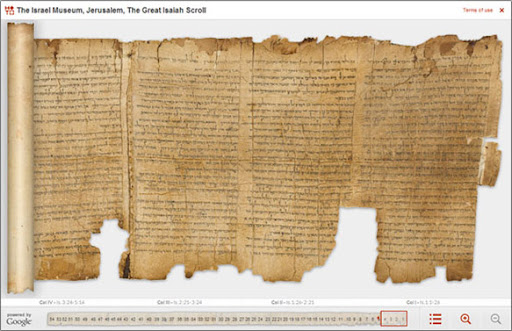
When was the book of Isaiah written?

“The vision which Isaiah, son of Amos, saw concerning Judah and Jerusalem in the days of Uzziah, Jotham, Ahaz and Hezekiah, kings of Judah”—Isaiah 1:1 NAB

Until about the last 250 years, the book of Isaiah was generally accepted by Christians as being written entirely by the prophet Isaiah in the latter part of the 8th century BCE. Nowadays, however, many “scholars” think the book was written by various writers over the course of several centuries, citing factors such as differences in subject matter, style, theology, vocabulary, and the viewpoint that predictive prophesy is impossible. The real reason for this is, however, that they don’t think predictive prophecy is possible. While there are a variety of views about the writership of Isaiah, critics often claim that chapters 40-66 were not written by “Isaiah, son of Amos.” However, careful examination of the book reveals that chapters 36-39 are a historical interlude that concludes the first section of the book, chapters 1-35, and introduces the last section, chapters 40-66. This reveals the unity of the entire book.  read more

Advantages of Using Multiple Bible Translations

Advantages of Using Multiple Bible Translations

NT canon
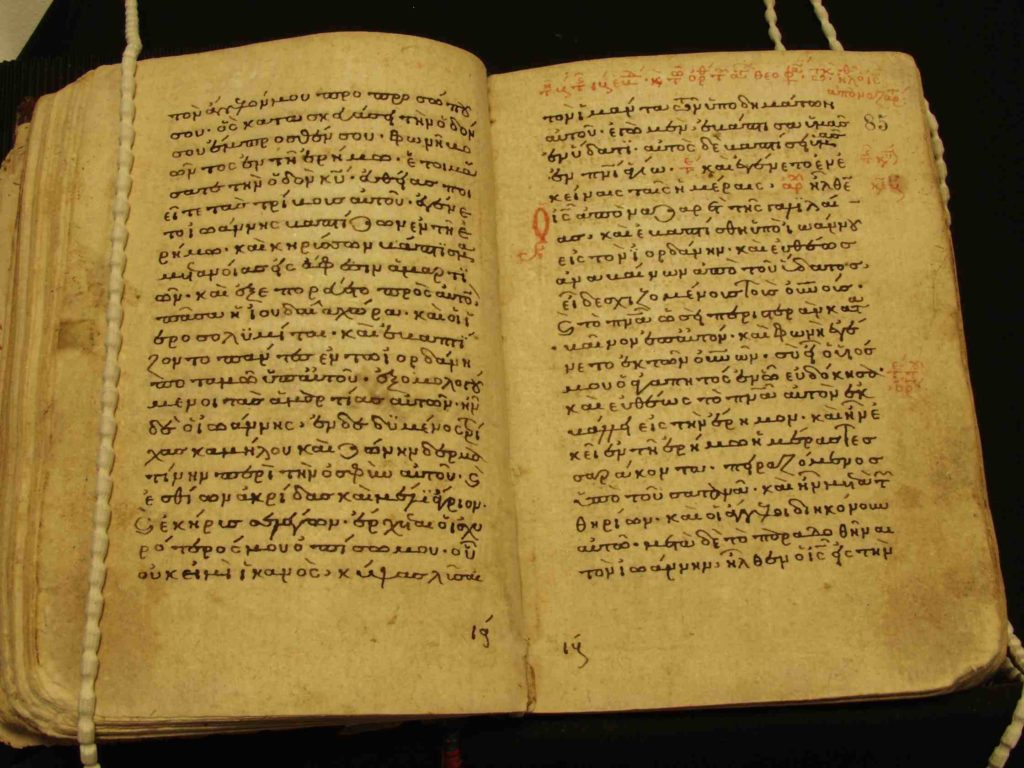
Greek manuscript of the New Testament. Is using multiple Bible translations better than knowing Biblical Greek?

Does a person need to know Biblical Greek to understand the New Testament, or is using multiple Bible translations, just as good, or better?

“Get wisdom. Though it cost all you have, get understanding”—Proverbs 4:7 NIV

“By studying Biblical Greek, you can gain a deeper understanding of the original text and the cultural context in which it was written”—Quora, February 6, 2023

Some Bible teachers and preachers are big on the idea that knowing Biblical Greek (Koine’) is important, even vital, in getting the best understanding of the Bible. While this may have a lot to do with their ego, we must grant that some are very sincere in holding and promoting this belief. It is certainly fine for anyone who has the inclination, the time, the resources, and the opportunity, to do so, that is, to learn Biblical Greek. It is a good thing that some have become scholars in Biblical Greek, and have been active in Bible translation and have written Biblical commentaries. But it takes many years of intensive study to become proficient in Biblical Greek. read more

IS THE BOOK OF JONAH HISTORY OR FICTION?

IS THE BOOK OF JONAH HISTORY OR FICTION?

How does the Bible picture the modern church?Critical scholars say the book of Jonah is fiction. “Now the word of Yahweh came to Jonah the son of Amittai” (Jonah 1:1 LSB). However, the book itself presents the account as historical, authentic non-fiction.

CRITICAL SCHOLARS VIEW OF JONAH

Many Protestant and Catholic scholars and commentaries regard the book of Jonah as fiction.

“A light satire, with no prentions to being historical . . . This fictional form is unique in the prophetic tradition”—Catholic commentary on Jonah read more

Archaeological Discoveries of Baalis, King of Ammon

Archaeological Discoveries of Baalis, King of Ammon

Is the Bible reliable?
Archaeological discoveries of Baalis, king of Ammon, help confirm the Bible’s accuracy

Critics claim the Bible is largely a work of fiction. However, archaeological discoveries of Baalis, king of Ammon help to prove the Bible’s authenticity.

“Now Johanan, son of Kareah, and all the military leaders in the field came to Gedaliah in Mizpah and said to him, ‘Surely you are aware that Baalis, the Ammonite king has sent Ishmail, son of Nethaniah, to assassinate you?’ But Gedaliah, son of Ahikam, would not believe them”—Jeremiah 40:14 NAB

Even in minor details, the Bible proves true, when examined in the light of external evidence. “Baalis, the Ammonite king” is mentioned only once in the Bible (Jeremiah 40:14), and that in a very incidental way. A seal and a seal impression with the name of Baalis have been discovered. read more

Articles About Israel On This Site

Articles About Israel On This Site

Due to the fierce fighting that has been going on in Israel and Gaza lately, there is much keen interest in Israel and the Bible. Below are some articles on this website about Israel and the Bible:

“Should We Pray for Israel?”

“Does Modern Israel fulfill Bible Prophecy?”

“Are Restoration Prophecies About Israel Literal — Or Symbolic?”

“The Spiritual Use of ‘Israel’ in the Bible”

“Restoration Prophecies — Israel of God” read more

Alexander the Great Predicted in Bible 200 Years in Advance

Alexander the Great Predicted in Bible 200 Years in Advance

Is the Bible reliable?
The Bible accurately predicted details of Alexander the Great 200 years in advance.

Critics assert that accurate predictive prophecy is impossible. However, Alexander the Great was predicted in the Bible 200 years in advance.

“Alexander of Macedon son of Philip . . . defeated Darius king of the Persians and Medes, whom he succeeded as ruler, as first of Helias. He undertook many campaigns, gained possession of many fortresses . . . So he advanced to the ends of the earth, plundering nation after nation; the earth grew silent before him, and his ambitious heart swelled with pride. He assembled very powerful forces and subdued provinces, nations and princes, and they became his tributaries . . . Alexander had reigned twelve years when he died”—1 Maccabees 1:1-7 NJB read more

Ahaz and Rezin Authenticated as Kings of Judah and Aram

Ahaz and Rezin Authenticated as Kings of Judah and Aram


Ahaz Banner 2

Critics have long doubted the Bible’s historicity, but archaeology has authenticate the existence of many of the people, places, things and events in the Bible. Ahaz and Rezin have been authenticated as kings of Judah and Aram, or Syria,

“Ahaz . . . reigned in Jerusalem sixteen years”—2 Kings 16:2 NIV

He is remembered most for his war against Israel (under Pekah) and Aram (Syria) (under Rezin):

“Then Rezin king of Aram and Pekah son of Remaliah king of Israel marched up to fight against Jerusalem and besieged Ahaz, but they could not overpower him”—2 Kings 16:5 NIV read more

IS MORDECAI IN ESTHER HISTORICALLY ACCURATE?

IS MORDECAI IN ESTHER HISTORICALLY ACCURATE?

Is the Bible reliable?
Is Mordecai in Esther historically accurate? 

Can we trust the Bible’s historical accuracy when it mentions a Jew named Mordecai in Esther? Referring to the book of Esther, notice how these commentaries relegate its content to mostly fiction:

“The book is a free composition, not a historical document”—Catholic Commentary

“The only character known to history is Ashasuerus”—Catholic Commentary

ANALYSIS OF THE BIBLICAL ACCOUNT 

Let’s now look at some of the Biblical account about Mordecai.

“Now there was at the citadel in Susa a Jew whose name was Mordecai, the son of Jair, the son of Shimei, the son of Kish, a Benjamite, who had been taken into exile from Jerusalem with captives who had been exiled with Jeconiah king of Judah, when Nebuchadnezzar the king of Babylon had exiled”—Esther 2:5,6 1:1 NASB read more

WP2Social Auto Publish Powered By : XYZScripts.com