Browsed by
Category: Trinity

Nontrinitarianism

Nontrinitarianism

Ephesians
The Book of Ephesians provides some clues as to Nontinitarianism.
  Most Christians believe in the doctrine of the Trinity. But what is Nontrinitarianism?  

“The trinity of God is defined by the church as the belief that in God are three persons who subsist in one nature”—Dictionary of the Bible, page 800, by John L McKenzie, S. J.

Something “defined by the church” influences many people in the world. But, more importantly, is “the trinity of God” found in the scriptures?

“The brief as so defined by the church was reached only in the 4th and 5th centuries AD and hence is not explicitly and formally a biblical belief”—Dictionary of the Bible, page 800, by John L McKenzie, S. J. read more

Is God Only One, or 3-in-1?

Is God Only One, or 3-in-1?

Is God only one, or is he 3-in-1? 

“The Trinity (Latin: Trinitas, lit.‘triad’, from trinus ‘threefold’)[1] is the Christian doctrineconcerning the nature of God, which defines one God existing in three, coeternal, consubstantial divine persons:[2][3] God the Father, God the Son (Jesus Christ) and God the Holy Spirit, three distinct persons (hypostases) sharing one essence/substance/nature (homoousion)”—Wikipedia

The important thing is, “What does the Bible say?” Let’s see, by examining the scriptures. read more

What does “Only Begotten” mean in Jesus’ case?

What does “Only Begotten” mean in Jesus’ case?


What does “only begotten” mean in Jesus case? Monogenēs may be used as an adjective. For example, monogenēs pais means only child, only legitimate child or special child. Monogenēs may also be used on its own as a noun. For example, o monogenēs means “the only one”, or “the only legitimate child” . . . Some interpretations of the word “unique” attempt to preclude birth, yet the full Greek meaning is always in the context of a child (genes). A unique child is also a born child, hence the full meaning of the word “begotten” as found in John 3:16 (KJV), for example”—Wikipedia  read more

Is The Trinity In Matthew?

Is The Trinity In Matthew?

 
Matthew 21:34–37 on Papyrus 104(recto; c. AD 150)
 

Is the Trinity in Matthew?

“A true and accurate knowledge of the Trinity is a blessing in and of itself . . . the Trinity is the highest revelation God has made of himself to His people. It is the capstone, the summit, the brightest star in the firmament of divine truths”—The Forgotten Trinity, page 10

“The Gospel according to Matthew . . . no other was so frequently quoted in the noncanonical literature of earliest Christianity”—Preface to Matthew in the New American Bible (NAB) read more

Are Jesus and God the Father Two Separate Individuals?

Are Jesus and God the Father Two Separate Individuals?

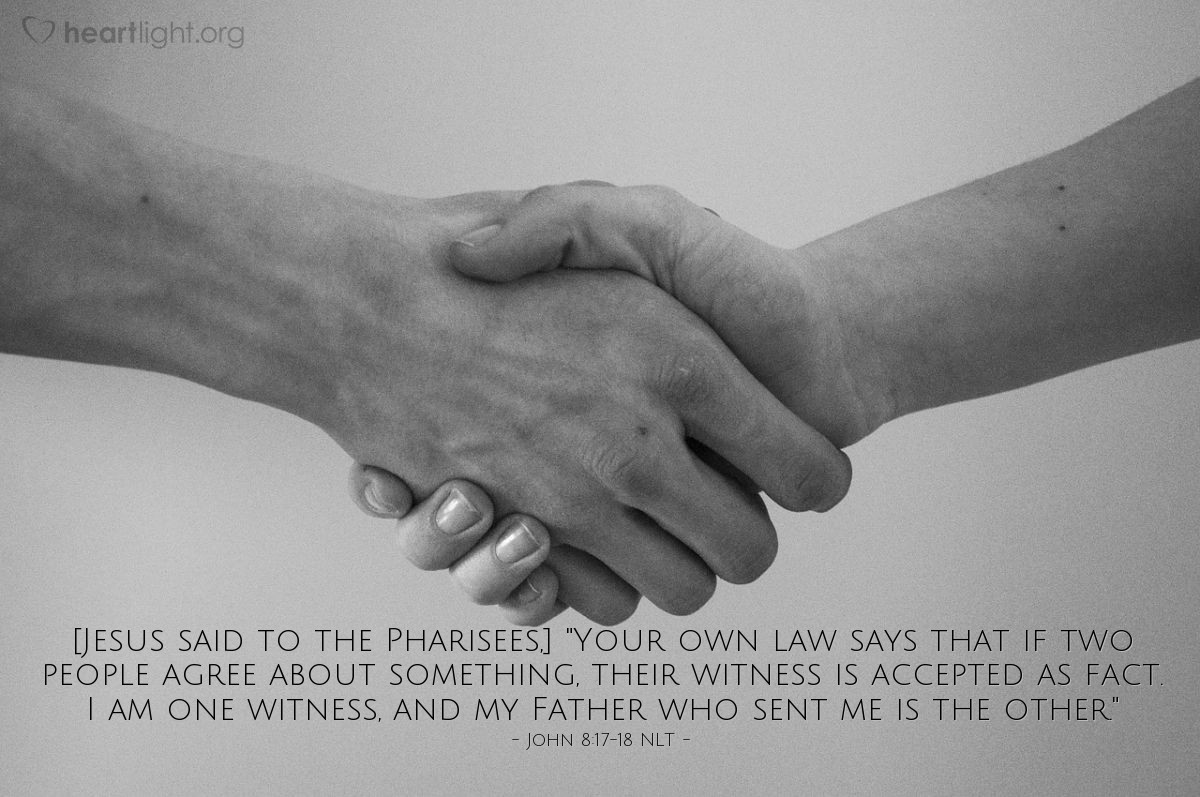
  <a class=John 8:17-18 NLT Illustrated: "What Greater Witness ..." />   Are Jesus and God the Father two separate individuals? This seems like a strange question to ask. Trinitarians try to explain how their doctrine works with explanations such as this: “While the three persons of the Godhead are distinct, they cannot be separated. That is, the Father, Son, and Holy Spirit are co-equal and co-eternal. They exist simultaneously, not consecutively” (Trinitarian website). Does this make any sense? They claim the doctrine is true, yet, they admit it is extremely difficult, if not impossible, to understand. Let’s examine what the Bible says, and see if the truth is really that difficult to understand.    John 8:16-18 “If I do judge, my decisions are true, because I am not alone. I stand with the Father, who sent me. In your own Law it is written that the testimony of two witnesses is true. I am one who testifies for myself; my other witness is the Father, who sent me” (NIV). In these verses, Jesus twice says “the Father . . . sent” him, which means they are two separate and distinct people, because the sender and the one sent cannot be the same, nor can they be in the same location. He also says the Father is with him, indicating they are separate and distinct. Jesus also says the witness of “two” individuals is true. ‘I’m one, and my Father who sent me is the other,’ he says.  Obviously, Jesus and his Father are two separate and distinct people.

John 10:30 – Are the Father and Jesus “one” within a Trinity? Or, are they “one” in unity, the same as the disciples are in John 17:11,20-23?  Since the disciples are not “God”, yet are to be “one” with God and Jesus and with one another, obviously they are “one” in unity. The Greek word “hen” is in the neuter gender, and is translated as “one”, but this is not the numeral “one”. To be the numeral “one” it would have to be in the masculine gender. Anyway, at John 8:17,18, Jesus said that he and his Father are “two”, numerically speaking. read more
Was Jesus Created?

Was Jesus Created?

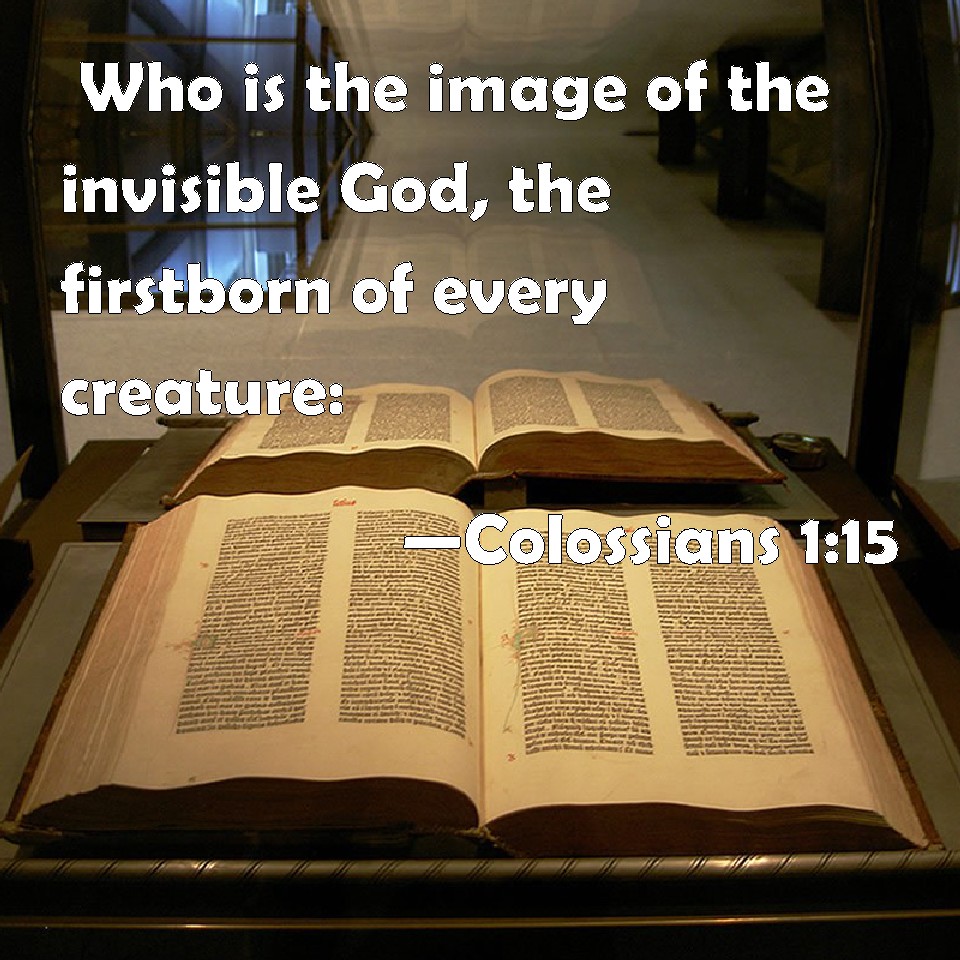
<a class=Colossians 1:15 Who is the image of the invisible God, the ..." />

Was Jesus created? – No. not according many Bible scholars, preachers, creeds, and Christian denominations, who say Jesus has existed from eternity. Notice:

“The Son uncreated . . . the Son eternal”—Athanasian Creed

“Within the one Being that is God, there exists three eternally . . . coeternal persons”—The Forgotten Trinity, by James White, p 23

Since this is the case, why is there even any question about whether or not Jesus was created? — The reason why is because of what the Bible has to say. read more

Is Jesus the Only Begotten God?

Is Jesus the Only Begotten God?

 
The Gospel of John

Is Jesus “the only begotten God” (John 1:18). Most translations render the phrase as, “the only begotten Son”. However, the very important Greek manuscript P66 from about 175-200 CE, shown above, has “the only begotten God” at John 1:18. But, why the difference? Which rendering from the Greek text of John 1:18 is more accurate? How can Jesus be “God” (John 1:1), and also be “the begotten from the Father” (John 1:14)

John 1:18“No one has seen God at any time; the only begotten God who is in the bosom of the Father, He has explained Him” (NASB). read more

Is The Holy Spirit A Person?

Is The Holy Spirit A Person?

Trinitarians have used some scriptures out of context to assert “proof” of their dogma that the holy Spirit is a person. Is the holy Spirit a person? This article analyzes some of the assertions Trinitarians have made about certain scriptures, claiming the holy Spirit is a person. These so-called “proofs of the personhood of the holy Spirit” are each debunked, one by one, as follows. The Trinitarian “proofs” of “the personhood of the holy Spirit” are shown in italics, and the Biblical explanations of truth follow each one. read more

Was Jesus Incarnated as a God-man with a Dual Nature?

Was Jesus Incarnated as a God-man with a Dual Nature?

Two natures of Christ | Hypostatic Union, Description ...

Was Jesus really a God-man with a Dual Nature?

“Thy calf . . . the invention of Israel: a workman made it, and it is no god”—Hosea 8:5,6 Douay-Rheims

The Trinity doctrine of ‘the Father, the Son and the holy Spirit each being God, yet there is only one God,’ was finally formulated in 381 CE at the Council of Constantinople, almost 300 years after the Bible was complete. But this doctrine created some problems with things the Bible said. Almighty God is “eternal”, “who alone has immortality” (1 Timothy 1:17 NIV; 6:16 NAB). Since Jesus Christ is said to be God, how could someone who is eternal and immortal die?  Seventy years later, in 451 CE, over 350 years after the Bible was complete, at the Council of Chalcedon, the Trinitarian church leaders came up with a way to solve the problem of Jesus being God, yet he died.  They came up with a seemingly ingenious, yet mysterious, idea that Jesus became a “God-man” who had an “Incarnation” with a “Dual Nature”,  something they called a “Hypostatic Union”, thus claiming that the man Jesus died, but the God Jesus continued to live on. These ideas became a central component of the Trinity doctrine, as we can see from the following quotes: read more

Does Jesus Being Called “Lord” Mean He is God?

Does Jesus Being Called “Lord” Mean He is God?

Jesus is Lord — Grace Bible Church Maui

Even though the Bible is clear that there are, “in fact there are many gods and many lords” (1 Corinthians 8:6 NRSV). a question arises, Does Jesus being called “Lord” mean he’s God?

THE LORD JESUS CHRIST HAS A GOD OVER HIM

Ephesians 1:3 – “…to the God and Father of our Lord Jesus Christ.” This verse clearly indicates that Jesus has a God over him. This God of Jesus is his Father. Someone who has God over him cannot be God. The fact that Jesus is called “Lord” obviously doesn’t make him God.

Ephesians 4:5,6 – “one Lord, one faith, one baptism, one God and Father of all.” (ESV) Jesus is the “one Lord” here, and Yahweh, his Father, is the “one God.” This unity is expressed in very simple terms. A key takeaway from this verse is that the “one God” does not include the “one Lord”, Jesus Christ. Without Jesus being God, the Trinity doctrine collapses.

1 Corinthians 8:6 – “there is for us only one God, the Father, who is the Creator of all things and for whom we live; and there is only one Lord, Jesus Christ, through whom all things were created and through whom we live.” (GNB) – An obvious distinction is here made here between God, who is “the Creator of all things”, and ‘Jesus Christ, through whom God created everything’. Even though Jesus is called “Lord”, that doesn’t make him either “God”, or “the Creator”. Those titles belong to the “the Father”, as we can see from this verse. read more

WP2Social Auto Publish Powered By : XYZScripts.com