Browsed by
Category: Trinity

John 1:1

John 1:1

There is some controversy as to how should John 1:1 be translated. Trinitarians often use the verse to support their contention that Jesus is the eternal Almighty God.

The traditional rendering in English is:

In the beginning was the Word, and the Word was with God, and the Word was God.

There are many other variations of rendering John 1:1 which are more accurate according to the Greek text, both in translation or paraphrase, John 1:1c also exist:

  • 1808: “and the Word was a god” – Thomas Belsham The New Testament, in an Improved Version, Upon the Basis of Archbishop Newcome‘s New Translation: With a Corrected Text, London.
  • 1822: “and the Word was a god” – The New Testament in Greek and English (A. Kneeland, 1822.)
  • 1829: “and the Word was a god” – The Monotessaron; or, The Gospel History According to the Four Evangelists (J. S. Thompson, 1829)
  • 1863: “and the Word was a god” – A Literal Translation of the New Testament (Herman Heinfetter [Pseudonym of Frederick Parker], 1863)
  • 1864: “and a god was the Word” – The Emphatic Diaglott by Benjamin Wilson, New York and London (left hand column interlinear reading)
  • 1879: “and the Word was a god” – Das Evangelium nach Johannes (J. Becker, 1979)
  • 1885: “and the Word was a god” – Concise Commentary on The Holy Bible (R. Young, 1885)
  • 1911: “and [a] God was the word” – The Coptic Version of the New Testament in the Southern Dialect, by George William Horner.[17]
  • 1924: “the Logos was divine” – The Bible: James Moffatt Translation, by James Moffatt.
  • 1935: “and the Word was divine” – The Bible: An American Translation, by John M. P. Smith and Edgar J. Goodspeed, Chicago.[19]
  • 1955: “so the Word was divine” – The Authentic New Testament, by Hugh J. Schonfield, Aberdeen.
  • 1958: “and the Word was a god” – The New Testament of Our Lord and Saviour Jesus Anointed (J. L. Tomanec, 1958)
  • 1970, 1989: “and what God was, the Word was” – The New English Bible and The Revised English Bible.
  • 1975 “and a god (or, of a divine kind) was the Word” – Das Evangelium nach Johnnes, by Siegfried Schulz, Göttingen, Germany
  • 1975: “and the Word was a god” – Das Evangelium nach Johannes (S. Schulz, 1975);
  • 1978: “and godlike sort was the Logos” – Das Evangelium nach Johannes, by Johannes Schneider, Berlin
  • 1985: “So the Word was divine” – The Original New Testament, by Hugh J. Schonfield.
  • 1998: “and what God was the Word also was” – This translation follows Professor Francis J. Moloney, The Gospel of John, ed. Daniel J. Harrington.
  • 2017: “and the Logos was god” – The New Testament: A Translation, by David Bentley Hart.

GREEK ANALYSIS

Jn 1:1 should rigorously be translated ‘the word was with the God [= the Father], and the word was a divine being'” (Dictionary of the Bible, 1965, by scholar John L McKenzie, S J). read more

Trinity Doctrine Jokes

Trinity Doctrine Jokes

 Since the Trinity doctrine is a joke, and is simply unbiblical nonsense, why don’t we look at some Trinity doctrine jokes.
image

“The Trinity: Try to Understand It, and You’ll Lose Your Mind. Try to Deny It and You’ll LOSE YOUR SOUL!” (anonymous quote, often attributed to Augustine).

We  keep looking for the Trinity God in the scriptures, but we just can’t seem to find him, reminiscent of Elijah making fun of Baal not showing up for the fire contest as to who is the true God:

“‘He’s a god, so maybe he’s busy. ‘Maybe he’s relieving himself. ‘Maybe he’s busy someplace. Maybe he’s taking a nap and somebody needs to wake him up'”—1 Kings 18:27 ISV read more

Children of God, Brothers and Sisters of Christ

Children of God, Brothers and Sisters of Christ

Picture

Trinitarians often refer to Jesus Christ as “God the Son”. According to the scriptures, he is “the Son of God,” but not “God the Son”. Christians are “children of God”, and “brothers and sisters”  of Christ (Matthew 25:40; Hebrews 2:11; Matthew 12:50; Mark 3:35; Luke 8:21), but never “children of Christ” in the scriptures. According to the scriptures, Christians are “born of God” ( John 1:13; 1 John 3:9; 4:7; 5:1,4,18), but never “born of Christ”. Christ has “brothers and sisters” (Matthew 25:40; Hebrews 2:11; Matthew 12:50; Mark 3:35; Luke 8:21), but no children. God has “children”, but no brothers (Romans 8:14,15; Galatians 3:26; Revelation 21:6,7). read more

Biblical Truths About God, Jesus, and the Holy Spirit

Biblical Truths About God, Jesus, and the Holy Spirit

WHO IS GOD?

-Jesus himself referred to his “Father” as “the ONLY true God” (John 17:1,3).

“There is . . . one Lord, one faith, one baptism; ONE GOD AND FATHER”—Ephesians 4:4-6 LSB

“For us there is ONLY one God, the Father”—1 Corinthians 8:6 NASB

WHO IS JESUS?

“The true God” has “his Son, Jesus Christ” (1 John 5:20).

“Yahweh” “God Almighty” “has glorified His servant Jesus” (Exodus 3:15; 6:2,3; Acts 3:13 LSB). read more

Does the Holy Spirit Have a Name?

Does the Holy Spirit Have a Name?

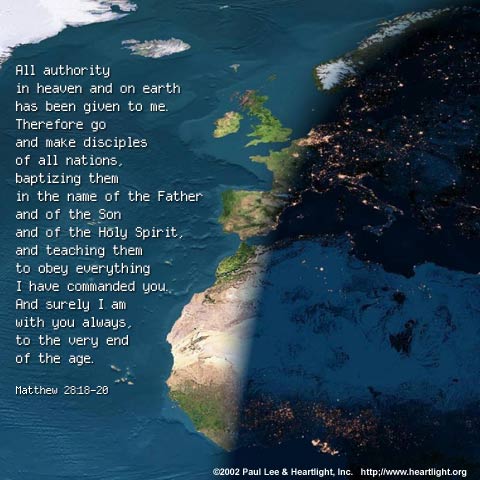
 Trinitarians sometimes claim the holy Spirit is person because of Jesus’ words:“Baptizing them in the name of the Father and the Son and the Holy Spirit” (Matthew 28:19 LSB), and conclude that the holy Spirit has a personal name. Therefore, we do well to ask, “Is the holy Spirit a person”?

EXAMINING MATTHEW 28:18-20

“Baptizing them in the name of the Father and the Son and the Holy Spirit”—Matthew 28:19 LSB

If we take “name”t literally at Matthew 28:19, then the three have only one name, because “name” is singular, not plural. read more

Are “God the Son” & “God the Holy Spirit” Biblical?

Are “God the Son” & “God the Holy Spirit” Biblical?

Christ in Glory with Four Saints and a Donor (c. 1492 painting by Ghirlandaio) depicts God the Son seated in Heaven.

Catholics and most Protestant groups embrace the Trinity as one of their primary, if not their main, doctrine, including the titles “God the Son” and “God the Holy Spirit”. Are these titles Biblical?

JESUS’ EXAMPLE

Jesus left “an example” for us to “follow closely” (1 Peter 2:21 NIV), which we should endeavor to do, albeit imperfectly.

Jesus publicly confronted and exposed false teachers and their “false doctrines” (1 Timothy 1:3). For example: read more

Is the Trinity in Jeremiah, Ezekiel and Daniel?

Is the Trinity in Jeremiah, Ezekiel and Daniel?

Is the Bible reliable?
Is the Trinity in Jeremiah, Ezekiel and Daniel?

It is sometimes said that the Trinity is the main teaching of the scriptures. During a crucial time for God’s people, before and after the destruction of Jerusalem, and thereafter God’s people taken off into exile to the world power of Babylon, God raised up and mightily used his prophets Jeremiah, Ezekiel and Daniel as major prophets for his people then, and for us now. Their recorded prophecies are in books bearing their names in the Bible’s Hebrew-Aramaic Scriptures, the Old Testament, and comprise a total 112 chapters. Naturally, we would expect to see the Trinity doctrine in these very important Bible books if the doctrine is true. No one can rightly say Trinitarians are not very imaginative and creative in their trying to find something in the Bible to support their doctrine. For example: “It has been said that Ezekiel is the prophet of the Spirit, as Isaiah is the prophet of the Son, and Jeremiah the prophet of the Father”  (brothersoftheson.com).” In the light of such glowing claims, we do well to ask, “Is the Trinity in Jeremiah, Ezekiel and Daniel?” read more

Is the Trinity In Genesis?

Is the Trinity In Genesis?

  God looked over all that He had made, and it was excellent in every way. This ended the sixth day. On the seventh day God rested. God blessed the seventh day and declared it holy, because it was when He ceased His work of creation. – Slide 22  

“The doctrine of the Trinity is embedded in the Scriptures from Genesis to Revelation” (The Master’s Seminary Blog). With such a bold statement as this, we would surely expect the Trinity to be in Genesis, the first book of the Bible. Is the Trinity in Genesis? 

“In the beginning God created the heavens and the earth” (Genesis 1:1). “Let us make mankind in our own image” (Genesis 1:26 NIV). The Hebrew word “Elohim” is translated “God,” which is the plural of “El,” so it is asserted that “Elohim” stands for the Trinity. In other words, it is claimed that “the Trinity created the heavens and the earth,” and “the Trinity spoke to itself (“us”) about creating humans.” Since, however, the Hebrew “Elohim” is also used for excellence or majesty, and, in the Bible, often is used for the Almighty God, Yahweh. Even the singular pagan god Dagon is described as “Dagon our god [Elohim]” (1 Samuel 5:7). So the use of “Elohim” does not guarantee that the “God” referred to is plural. The Biblical Almighty God is a singular God, according to the Bible. Notice: “Yahweh is our God. Yahweh in one!” (Deuteronomy 6:4 LSB).  The Hebrew word for “one” used here is “echad”, the numeral “one”. Jesus quoted this by saying, “YAHWEH OUR GOD IS ONE YAHWEH” (Mark 12:29 LSB margin). The Greek word for “one” used here is “heis”, the numeral “one”. “God is only one” (Galatians 3:20 NASB). “There is no God but one . . . for us there is but one God” (1 Corinthians 8:4,6). Even if “Elohim” had been used in its plural sense in Genesis 1:1,26, there is nothing to indicate a threesome. Thus, Trinitarians simply imagine the Triune God right into the text Genesis 1:1,26. and never stop to really think it through. There isn’t even one single aspect of the Trinity dogma in this context, i.e., nothing about three being God, or Almighty, or eternal, or equal, or of three being of one “substance”, “essence”, or “being”, etc. There’s simply nothing in the text to even hint at three of anything. read more

Is the Trinity in Psalms?

Is the Trinity in Psalms?

Psalms is one of the longest books in the Bible. Based on what many scholars and experts assert, we would expect to find this doctrine in such a long and prominent Bible book. Is the Trinity in Psalms? 

Does it strike you as odd that even the most scholarly proponents of the doctrine admit it is neither understandable nor explainable?

“The most difficult thing about the Christian concept of the Trinity is that there is no way to completely understand it or explain it. God is infinitely greater than we are; therefore, we should not expect to be able to fully understand Him. But we do trust the Bible, which teaches that the Father is God, Jesus is God, and the Holy Spirit is God. At the same time, the Bible also teaches there is only one God. So, the one God exists in three Persons.
It’s possible to understand some facts about the Trinity and some of the relationships the different Persons of the Trinity have to one another. But, ultimately, how a single Being can exist in three distinct Persons is incomprehensible to us. Our inability to understand, however, does not mean the doctrine of the Trinity is untrue or unbiblical. The word Trinity is not found in Scripture. It is a useful term in discussions of the triune God, as we speak of three coexistent, co-eternal divine Persons who are One. Although the word itself is not found in the Bible, the concept represented by the word Trinity certainly is.”-–GotQuestions.org read more

Is the Trinity in the Book of Job?

Is the Trinity in the Book of Job?

<a class=Joshua 1:1 as recorded in the Aleppo Codex" width="220" height="108" data-file-width="728" data-file-height="356" />

Trinitarians claim that the doctrine of the Trinity is found throughout the Bible. The Old Testament book of Job, with its 42 chapters, is one of the longest Bible books, so if what is asserted to be the main doctrine of Christianity is true, one would expect to find at least some evidence of it in Job. Is the Trinity in the book of Job?

Job 1:6; 2:1“Now it was the day that the sons of God came to stand before Yahweh and Satan also came among them.” “Again it was the day that the sons of God came to stand before Yahweh, and Satan also came among them to stand himself before Yahweh” (LSB). “In the Old Testament, “sons of God” often refers to angelic beings. This phrase suggests a gathering of divine beings in the heavenly court. The term is used similarly in Genesis 6:2 and Job 38:7, indicating beings created by God who serve Him . . . The use of “LORD” in all capitals signifies the divine name YHWH, emphasizing God’s sovereignty and authority. This setting underscores God’s supreme rule over all creation, including the spiritual realm” (Bible Hub Study Bible). Jesus, at Matthew 22:41-46 quotes and applies Psalm 110:1 in a way that makes it obvious he is not Yahweh. At these two heavenly meetings, Yahweh, the angels and Satan were in attendance. But where are Jesus and the holy Spirit, since they are supposedly equal members of the Trinitarian “Godhead”?  Are they AWOL? Jesus is real, and has existed since his “origin . . . from of old, from ancient days” (Micah 5:2 NRSV). Even though Jesus was alive back then, and may have been at that heavenly meeting, it was Yahweh God who handled matters with Satan. As we will see later in this article, the holy Spirit is not a person, so it couldn’t attend the meeting. These views into the heavenly realm give evidence against the Trinity. read more

WP2Social Auto Publish Powered By : XYZScripts.com