Browsed by
Author: BibleAuthenticity

Why Does The Legacy Standard Bible Use “Yahweh”?

Why Does The Legacy Standard Bible Use “Yahweh”?

Is the Bible reliable?
Why does the Legacy Standard Bible use “Yahweh”?

The vast majority of translations of the Bible use “LORD” for God’s name. Why does the Legacy Standard Bible use “Yahweh” instead of the usual “LORD’ for God’s name?

TRADITIONAL VIEW

“‘Yahweh declares, ‘ . . . My people shall know My name'”—Isaiah 52:5,6 LSB

First of all, notice the reasons given for substituting “LORD” for “Yahweh” in the preface to to NRSV: 

Careful readers will notice that here and there in the Old Testament the word Lord (or in certain cases God) is printed in capital letters. This represents the traditional manner in English versions of rendering the Divine Name, the “Tetragrammaton” (see the notes on Exodus 3.14, 15), following the precedent of the ancient Greek and Latin translators and the long established practice in the reading of the Hebrew Scriptures in the synagogue. While it is almost if not quite certain that the Name was originally pronounced “Yahweh,” this pronunciation was not indicated when the Masoretes added vowel sounds to the consonantal Hebrew text. To the four consonants YHWH of the Name, which had come to be regarded as too sacred to be pronounced, they attached vowel signs indicating that in its place should be read the Hebrew word Adonai meaning “Lord” (or Elohim meaning “God”). Ancient Greek translators employed the word Kyrios (“Lord”) for the Name. The Vulgate likewise used the Latin word Dominus (“Lord”). The form “Jehovah” is of late medieval origin; it is a combination of the consonants of the Divine Name and the vowels attached to it by the Masoretes but belonging to an entirely different word. Although the American Standard Version (1901) had used “Jehovah” to render the Tetragrammaton (the sound of Y being represented by J and the sound of W by V, as in Latin), for two reasons the Committees that produced the RSV and the NRSV returned to the more familiar usage of the King James Version. (1) The word “Jehovah” does not accurately represent any form of the Name ever used in Hebrew. (2) The use of any proper name for the one and only God, as though there were other gods from whom the true God had to be distinguished, began to be discontinued in Judaism before the Christian era and is inappropriate for the universal faith of the Christian church. read more

Scientists Now Say Humans Used Fire 350,000 Years Earlier

Scientists Now Say Humans Used Fire 350,000 Years Earlier

Scientists have recently discovered that humans used fire 350,000 years earlier than previously thought, as the BBC article reports. The Bible, however, reported 3,500 years ago that the earliest humans used fire. If scientists had believed the Bible, they would have already known this, which gives Bible believers quite an advantage over non-believers.  

“The law of Yahweh is perfect, restoring the soul, The testimony of Yahweh is sure, making wise the simple” (Psalm 19:7 LSB). ” . . . making the inexperienced wise” (Psalm 19:7 CSB)   Secular history of events prior to the global flood of Genesis 6-8, 4,500-5,500 years ago, is non-existent, so the only reliable history of that time is recorded in the Bible, which is one way that ‘Yahweh God makes the inexperienced wise’.   The BBC reports on the recent discovery that the earliest humans used fire 350,000 years earlier than previously thought: read more

Does the Holy Spirit Have a Name?

Does the Holy Spirit Have a Name?

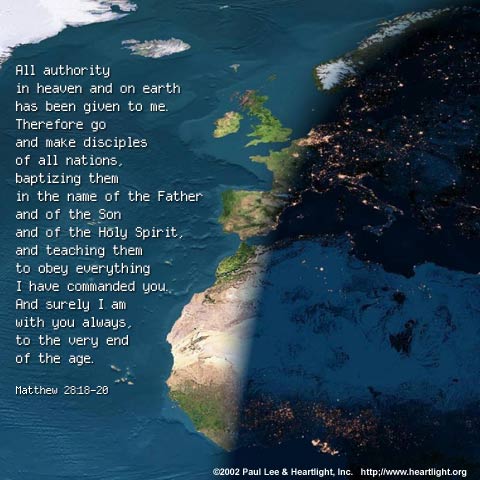
 Trinitarians sometimes claim the holy Spirit is person because of Jesus’ words:“Baptizing them in the name of the Father and the Son and the Holy Spirit” (Matthew 28:19 LSB), and conclude that the holy Spirit has a personal name. Therefore, we do well to ask, “Is the holy Spirit a person”?

EXAMINING MATTHEW 28:18-20

“Baptizing them in the name of the Father and the Son and the Holy Spirit”—Matthew 28:19 LSB

If we take “name”t literally at Matthew 28:19, then the three have only one name, because “name” is singular, not plural. read more

Our Citizenship In Heaven Or Christian Nationalism?

Our Citizenship In Heaven Or Christian Nationalism?

Philippians

Christian Nationalism seems to be coming more and more into the forefront of the news, especially in the United States. How does Christian Nationalism harmonize with Bible principles which indicate that, for a Christian, “our citizenship is in heaven”?

“But our citizenship is in heaven. And we eagerly await a Savior from there, the Lord Jesus Christ” (Philippians 3:20 NIV).“‘But our citizenship is in heaven’. This phrase emphasizes the believer’s true identity and allegiance. In the Roman world, citizenship was a prized status, granting rights and privileges. Philippi, a Roman colony, was populated by many Roman citizens who understood the value of this status. Paul uses this concept to remind believers that their ultimate allegiance is not to earthly kingdoms but to the heavenly kingdom. This aligns with Jesus’ teaching in John 18:36, where He states His kingdom is not of this world. The idea of heavenly citizenship also connects to Hebrews 11:13-16, where the faithful are described as strangers and exiles on earth, seeking a better, heavenly country.”—Bible Hub Study Bible read more

Scientists Have Finally Discovered the First Humans Used Tools

Scientists Have Finally Discovered the First Humans Used Tools

 
Pure iron chips with an iron cube
Scientists have recently come to the realization that the first humans used tools. If they had believed the Bible, they would have already known this, which gives Bible believers quite an advantage over non-believers.   “The law of Yahweh is perfect, restoring the soul, The testimony of Yahweh is sure, making wise the simple” (Psalm 19:7 LSB). ” . . . making the inexperienced wise” (Psalm 19:7 CSB)   Secular history of events prior to the global flood of Genesis 6-8, 4,500-5,500 years ago, is non-existent, so the only reliable history of that time is recorded in the Bible, which is one way that ‘Yahweh God makes the inexperienced wise’.   The BBC reports on the recent discovery that the earliest humans used tools.

Stone tool discovery suggests very first humans were inventors
BBC, November 4, 2025

The very first humans millions of years ago may have been inventors, according to a discovery in northwest Kenya.
Researchers have found that the primitive humans who lived 2.75 million years ago at an archaeological site called Namorotukunan used stone tools continuously for 300,000 years.
Evidence previously suggested that early human tool use was sporadic: randomly developed and quickly forgotten.
The Namorotukunan find is the first to show that the technology was passed down through thousands of generations.
According to Prof David Braun, of George Washington University, in Washington DC, who led the research, this find, published in the journal Nature Communications, provides incredibly strong evidence for a radical shake-up in our understanding of human evolution.
“We thought that tool use could have been a flash in the pan and then disappeared. When we see 300,000 years of the same thing, that’s just not possible,” he said.
“This is a long continuity of behaviour. That tool use in (humans and human ancestors) is probably much earlier and more continuous than we thought it was.”
The stone tools were so sharp that the researchers could cut their fingers on some of them
Archaeologists spent ten years at Namorotukunan uncovering 1,300 sharp flakes, hammerstones, and stone cores, each made by carefully striking rocks gathered from riverbeds. These are made using a technology known as Oldowan and is the first widespread stone tool-making method.
The same kinds of tools appear in three distinct layers. The deeper the layer the further back the snapshot in time. Many of the stones were specially chosen for their quality, suggesting that the makers were skilled and knew exactly what they were looking for, according to the senior geoscientist on the research team, Dr Dan Palcu Rolier of the University of São Paulo in Brazil.
“What we see here in the site is an incredible level of sophistication,” he told BBC News.
“These guys were extremely astute geologists. They knew how to find the best raw materials and these stone tools are exceptional. Basically, we can cut our fingers with some of them.”
Geological evidence suggests that tool use probably helped these people survive dramatic changes in climate.
The landscape shifted from lush wetlands to dry, fire-swept grasslands and semideserts,” said Rahab N. Kinyanjui, senior scientist at the National Museums of Kenya.
These sharp environmental changes would normally force animal populations to adapt through evolution or move away. But the toolmakers in the region managed to thrive by using technology rather than biological adaptation, according to Dr Palcu Rolier.
“Technology enabled these early inhabitants of East Turkana to survive in a rapidly changing landscape – not by adapting themselves, but adapting their ways of finding food.”
The evidence of stone tools at different layers shows that for a long and continuous period, these primitive people flew in the face of biological evolution, finding a way of controlling the world around them, rather than letting the world control them.
And this happened at the very beginning of the emergence of humanity, according to Dr Palcu Rolier.
“Tool use meant that they did not have to evolve by modifying their bodies to adapt to these changes. Instead, they developed the technology they needed to get access to the food: tools for ripping open animal carcasses and digging up plants.”
The Namorotukunan site, located in Kenya’s Turkana Basin, lies close to the ancient course of a long dried up major river which once attracted settlements of early humans and their ancestors
There is evidence for this at the site: of animal bones being broken, being cut with these stone tools, which means that through these changes, they were consistently able to use meat as a way of sustenance.
“The technology gives these early inhabitants an advantage, says Dr Palcu Rolier.
“They are able to access different types of foods as environments change, their source of sustenance is changing, but because they have this technology, they can bypass these challenges and access new food.”
At around 2.75 million years ago, the region was populated by some of the very first humans, who had relatively small brains. These early humans are thought to have lived alongside their evolutionary ancestors: a pre-human group, called australopithecines, who had larger teeth and a mix of chimpanzee and human traits.
The tool users at Namorotukunan were most likely one of these groups or possibly both.
And the finding challenges the notion held by many experts in human evolution that continuous tool use emerged much later, between 2.4 and 2.2 million years ago, when humans had evolved relatively larger brains, according to Prof Braun.
“The argument is that we’re looking at a pretty substantial brain size increase. And so, often the assertion has been that tool use allowed them to feed this large brain.
“But what we’re seeing at Namorotukunan is that these really early tools are used before that brain size increase.”
“We have probably vastly underestimated these early humans and human ancestors. We can actually trace the roots of our ability to adapt to change by using technology much earlier than we thought, all the way to 2.75 million years ago, and probably much earlier.” read more

Are “God the Son” & “God the Holy Spirit” Biblical?

Are “God the Son” & “God the Holy Spirit” Biblical?

Christ in Glory with Four Saints and a Donor (c. 1492 painting by Ghirlandaio) depicts God the Son seated in Heaven.

Catholics and most Protestant groups embrace the Trinity as one of their primary, if not their main, doctrine, including the titles “God the Son” and “God the Holy Spirit”. Are these titles Biblical?

JESUS’ EXAMPLE

Jesus left “an example” for us to “follow closely” (1 Peter 2:21 NIV), which we should endeavor to do, albeit imperfectly.

Jesus publicly confronted and exposed false teachers and their “false doctrines” (1 Timothy 1:3). For example: read more

Is Salvation Easy?

Is Salvation Easy?

The Second Great Awakening, when altar calls became popular

Some churches, at the close of their Sunday service, have what is known as an “altar call”, where attendees are invited to the front of the church, and speak with the preacher, with some becoming very emotional. After this the preacher sometimes announces to the congregation that ‘so and so’ has been “saved”. Indeed, according to some Christians, all one has to do is “believe in Jesus, and they will be saved”. At that point in time, that person is “saved” for all time, and can never lose their “salvation”. Is this true? Is salvation really that easy, and guaranteed from that point forward, no matter what?  read more

Is Exposing False Teaching Wrongly Judging?

Is Exposing False Teaching Wrongly Judging?

Is the Bible reliable?
Is Exposing False Teaching Wrongly Judging?
 

“It is God who judges” (Psalm  75:7), ultimately, but is exposing false teaching wrongly judging?

Indeed, “who are you to judge someone else’s servant? To their own master, servants stand or fall, for the Lord is able to make them stand . . . You, then, why do judge your brother or sister? Or why do you treat them with contempt? For we will all stand before God’s judgment seat” (Romans  14:4,10 NIV).

However, in certain areas we are called upon to make judgments, reasonable people will agree. For example: read more

What Is The True Religion?

What Is The True Religion?

What is the true religion? Where is the truth? 

Is there one true denomination or religion that qualifies? Or, is it something else? Let’s search and see.

THE TRUE RELIGION IS  BASED ON THE BIBLE

All Scripture is God-breathed and is useful for teaching, rebuking, correcting and training in righteousness, so that the servant of God may be thoroughly equipped for every good work.” (2 Timothy 3:16-17) The right religion accepts the Bible, the Old and New Testaments (the 66 books from Genesis to Malachi), as the word of God.  read more

Is the Trinity in Jeremiah, Ezekiel and Daniel?

Is the Trinity in Jeremiah, Ezekiel and Daniel?

Is the Bible reliable?
Is the Trinity in Jeremiah, Ezekiel and Daniel?

It is sometimes said that the Trinity is the main teaching of the scriptures. During a crucial time for God’s people, before and after the destruction of Jerusalem, and thereafter God’s people taken off into exile to the world power of Babylon, God raised up and mightily used his prophets Jeremiah, Ezekiel and Daniel as major prophets for his people then, and for us now. Their recorded prophecies are in books bearing their names in the Bible’s Hebrew-Aramaic Scriptures, the Old Testament, and comprise a total 112 chapters. Naturally, we would expect to see the Trinity doctrine in these very important Bible books if the doctrine is true. No one can rightly say Trinitarians are not very imaginative and creative in their trying to find something in the Bible to support their doctrine. For example: “It has been said that Ezekiel is the prophet of the Spirit, as Isaiah is the prophet of the Son, and Jeremiah the prophet of the Father”  (brothersoftheson.com).” In the light of such glowing claims, we do well to ask, “Is the Trinity in Jeremiah, Ezekiel and Daniel?” read more

WP2Social Auto Publish Powered By : XYZScripts.com